EN
EN

Application-Matched Copper Windings
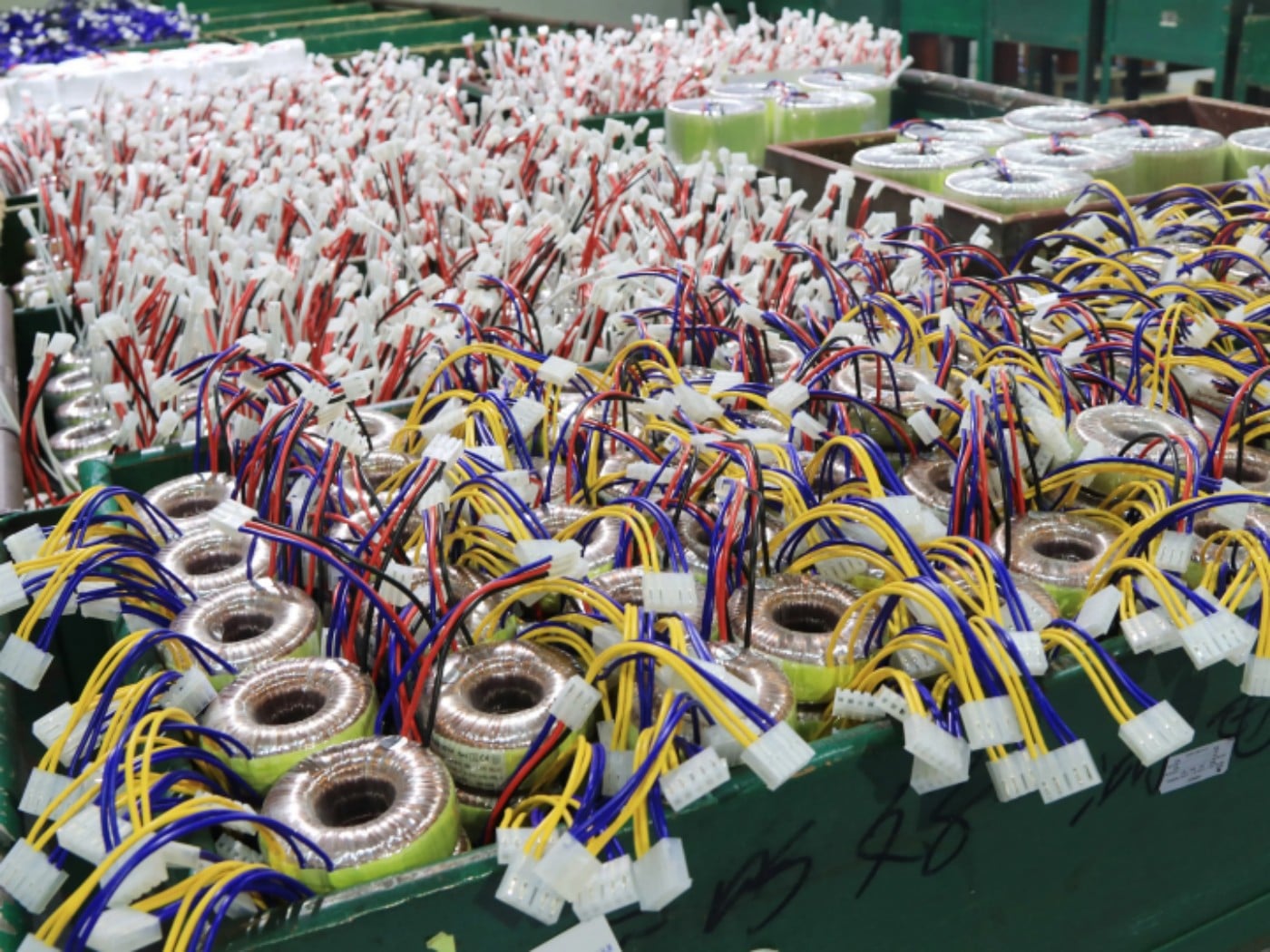
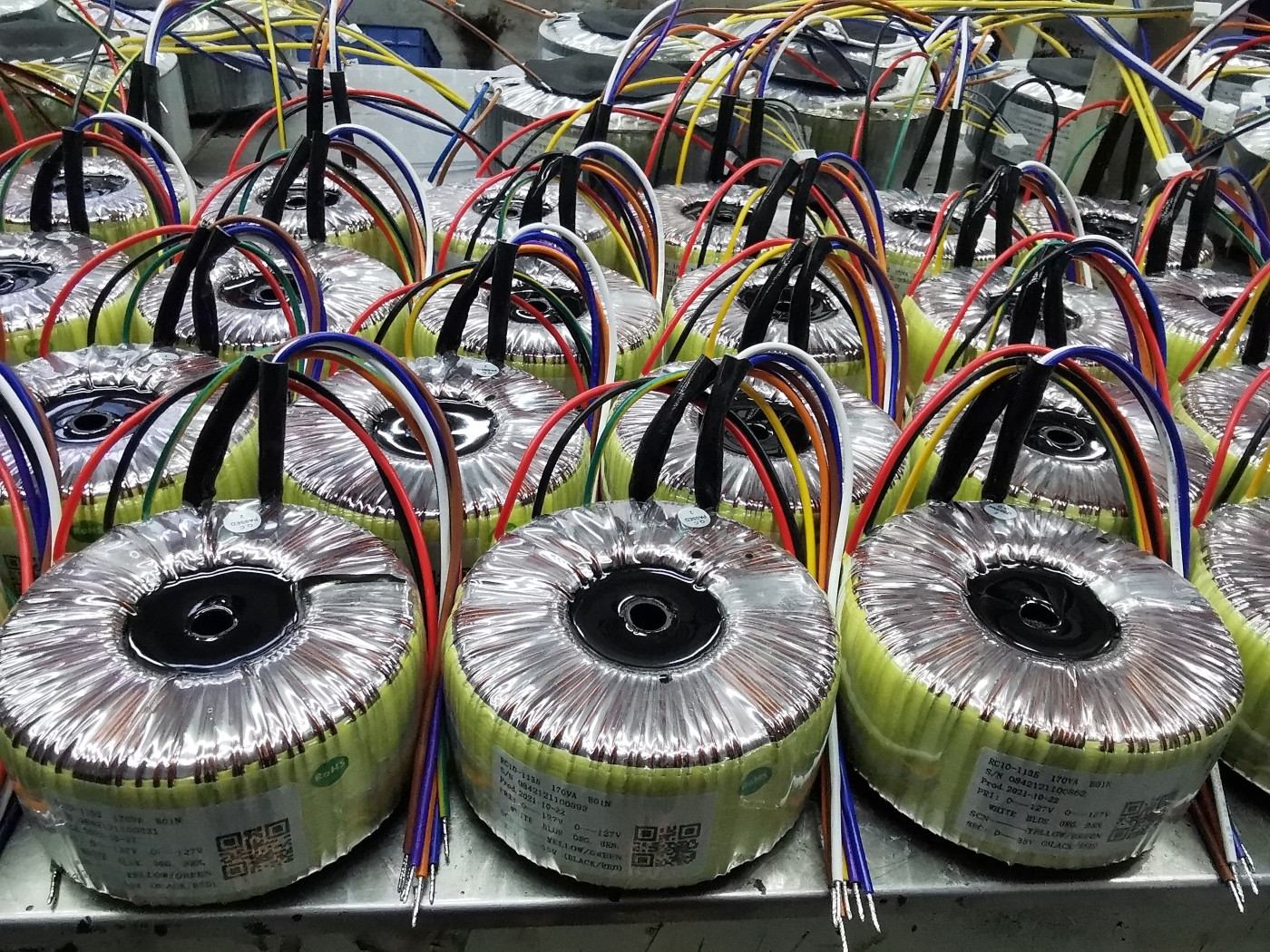
Wire gauge and turns are calculated for the required current, voltage regulation and temperature rise. Single, split and multiple secondary windings can be integrated into one transformer.
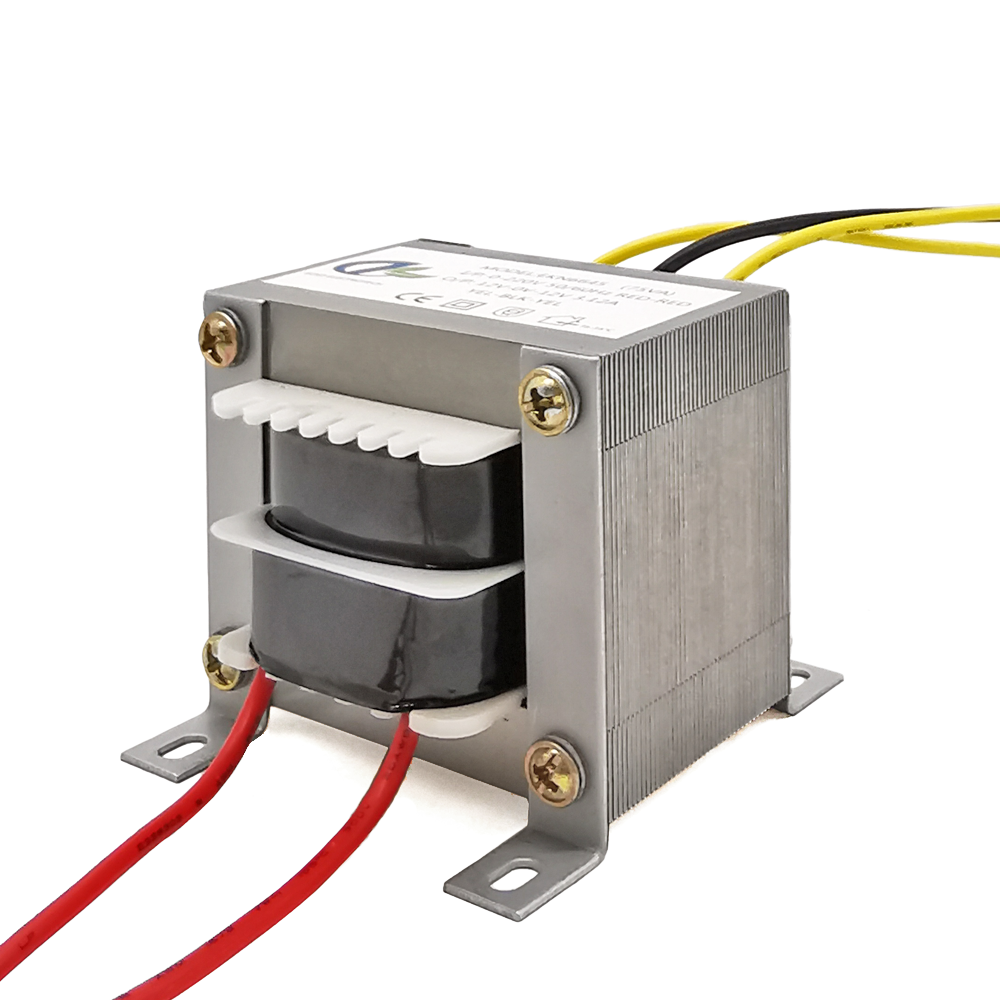
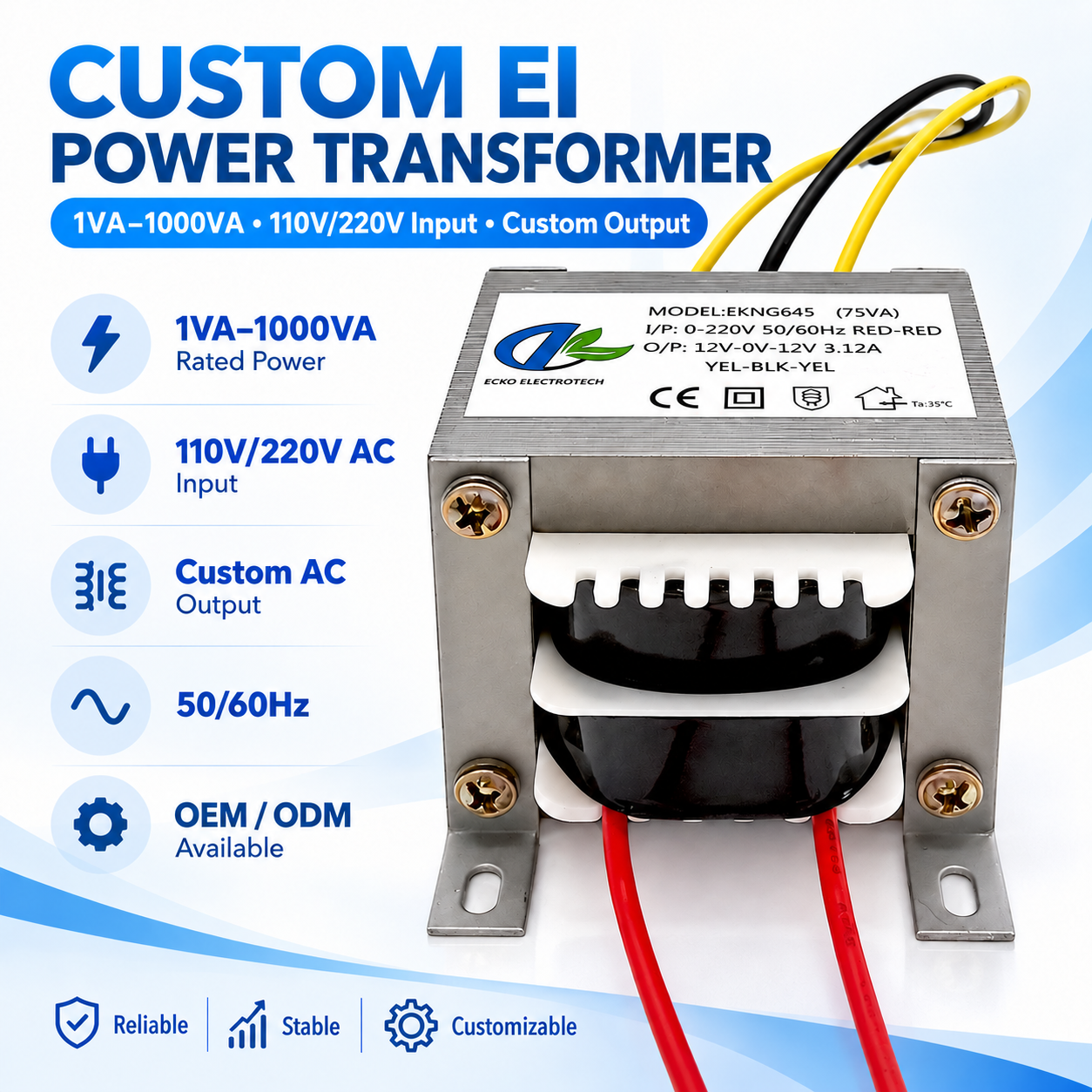
Custom-built laminated EI transformers for stable AC voltage conversion and electrical isolation. Specify the input and output voltage, VA rating, mounting, insulation class, terminations, shielding and protection required by your equipment.
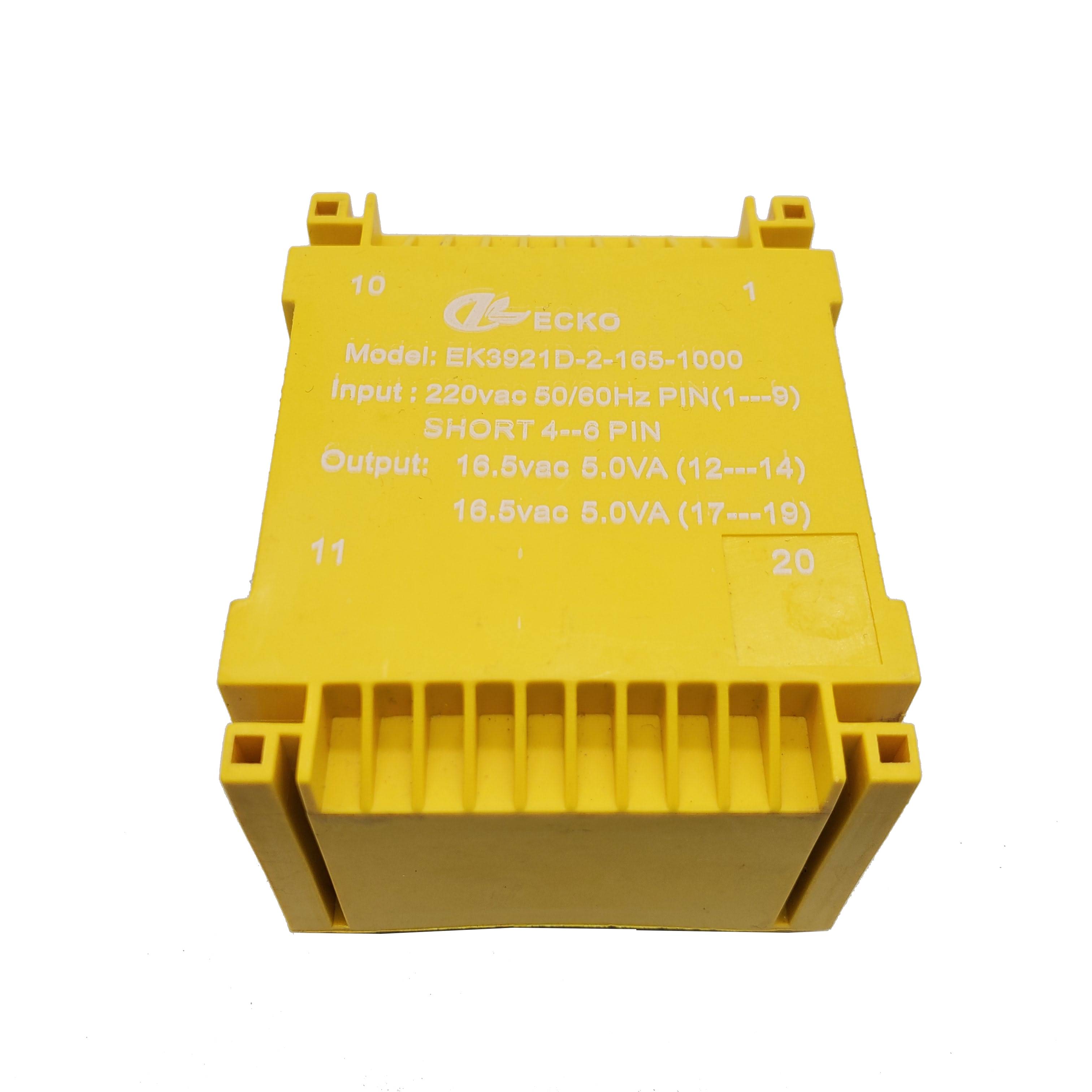
ECKO designs and manufactures single-phase EI core transformers around the actual load, temperature-rise target, available installation space and applicable safety requirements. Every custom model is released against an approved drawing and electrical specification before volume production.
The table below describes ECKO's configurable EI transformer platform. Final values are defined by the approved model drawing and test specification.
| Product type | Single-phase, low-frequency laminated EI core power transformer |
|---|---|
| Rated power | Custom VA rating based on load, duty cycle, core size, allowable temperature rise and enclosure conditions |
| Input voltage | Custom single-voltage, dual-voltage or multi-tap primary; common ranges include 100–120 VAC, 200–240 VAC and industrial mains voltages |
| Output voltage | Custom low-voltage AC output; single, dual, multiple isolated or centre-tapped secondary windings available |
| Frequency | 50 Hz, 60 Hz or 50/60 Hz, as specified |
| Core and winding | Low-loss silicon steel EI laminations with enamelled copper wire windings |
| Electrical configuration | Isolation, step-down or step-up design; autotransformer configuration available when galvanic isolation is not required |
| Insulation system | Class B, F or H options according to the thermal design and applicable requirements |
| Voltage regulation | Specified at the rated input, load and power factor; optimized for the target application |
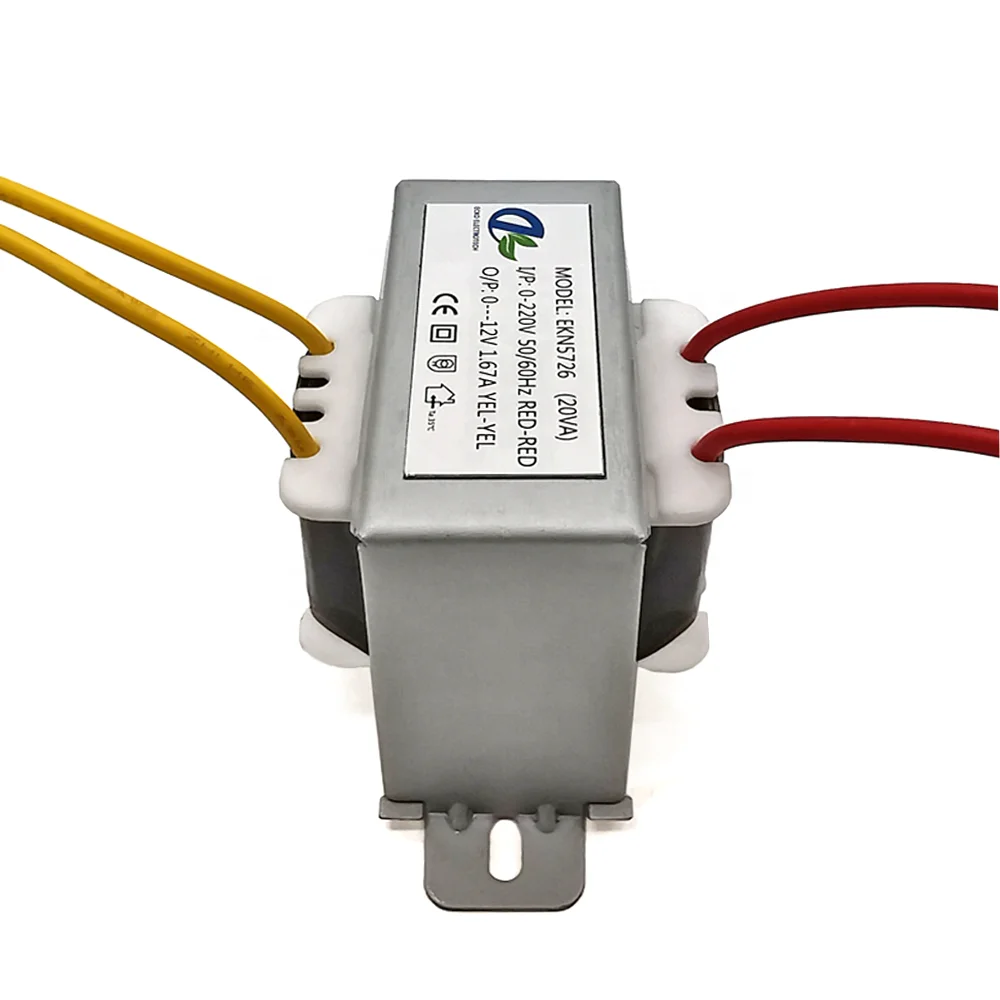
| Mounting options | PCB pins, lead wires, solder tags, terminal blocks, brackets, mounting feet, frames or custom hardware |
| Protection options | Thermal fuse, resettable thermal protector, external fuse provision and other project-specific protection |
| Noise and shielding options | Varnish impregnation, electrostatic shield, magnetic shield or mechanical damping where technically appropriate |
| Documentation | Outline drawing, wiring diagram, electrical specification and project-specific inspection records available |
| Compliance support | CE, UL/cUL, CQC and RoHS-related design support is available; certification status and marking must be confirmed for the exact model |
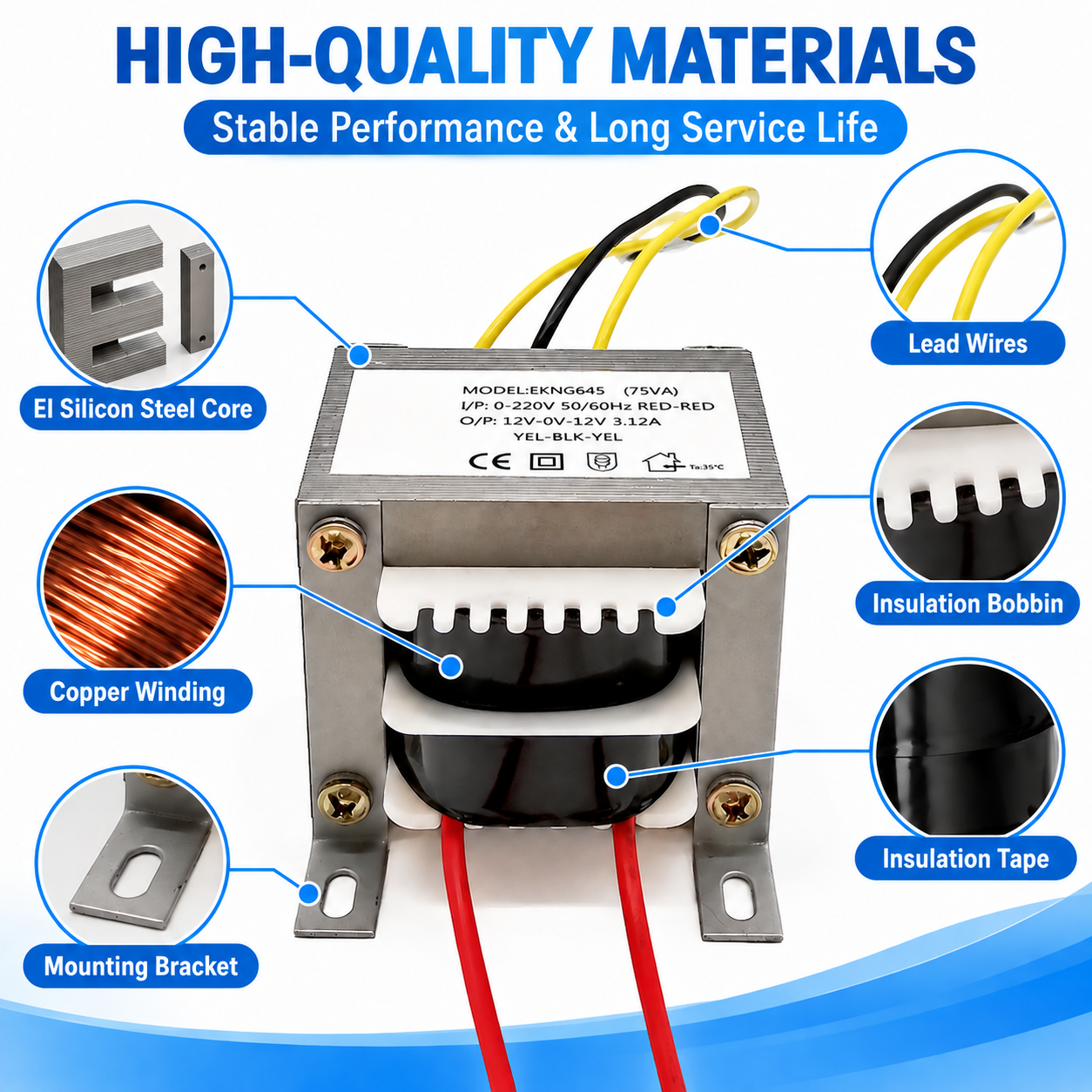
Wire gauge and turns are calculated for the required current, voltage regulation and temperature rise. Single, split and multiple secondary windings can be integrated into one transformer.
The EI lamination stack, flux density and winding design are selected as one thermal system. This helps control no-load loss, loaded voltage and operating temperature.
Bobbin geometry, interlayer insulation, margin tape and lead routing are defined around the required working voltage, dielectric strength and insulation class.
Core clamping, controlled assembly and optional varnish impregnation help limit lamination vibration. Noise targets can be evaluated for audio, office and indoor equipment.
Choose PCB pins, leads, terminals, connectors, brackets or a custom frame. ECKO can work from your available envelope, PCB layout or an existing transformer sample.
Approved drawings, winding data and test limits become the production baseline. Routine electrical checks help maintain consistent polarity, voltage ratio, no-load current and insulation performance.
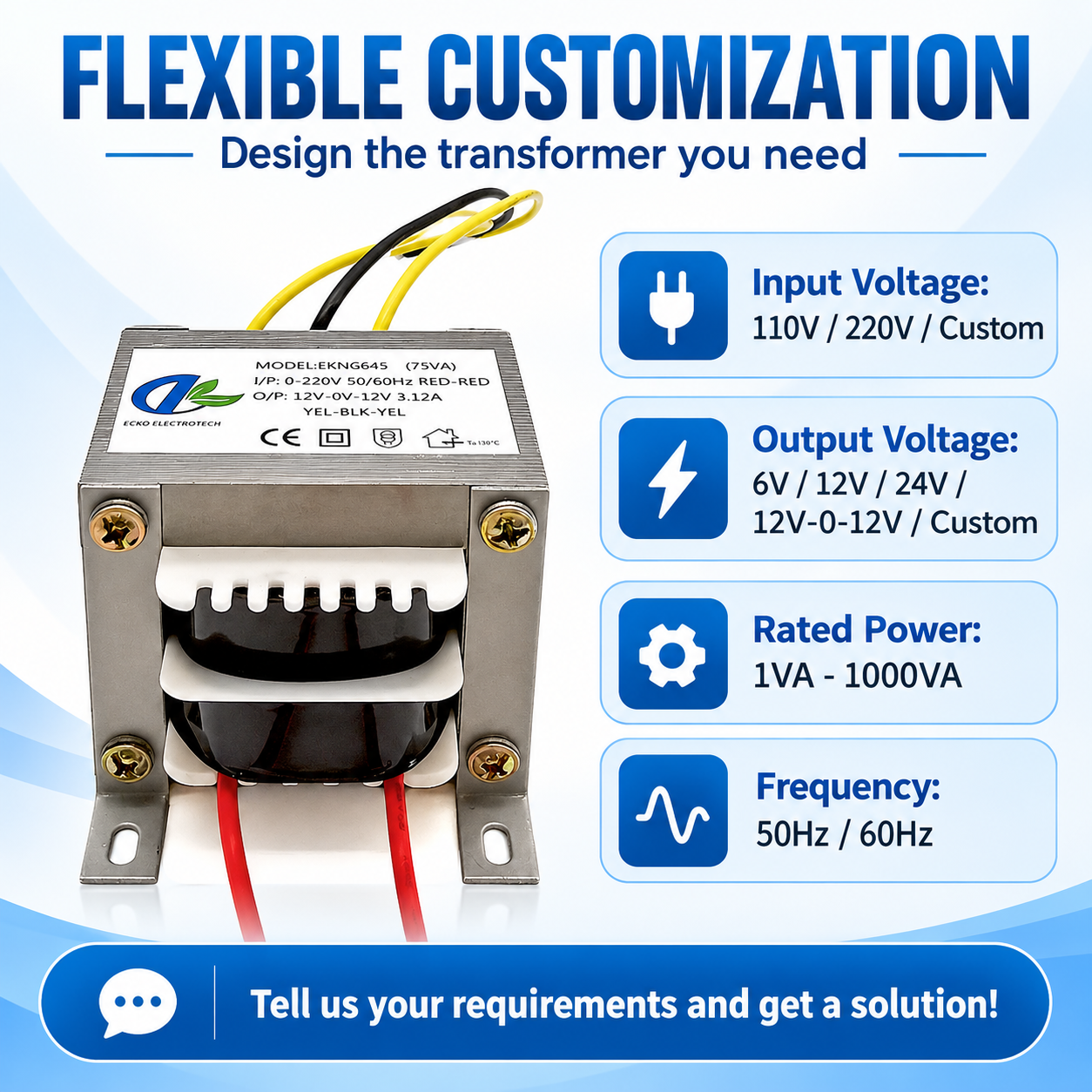
A transformer should be designed around the equipment, not selected by voltage alone. ECKO evaluates the electrical, thermal, mechanical and compliance requirements together.
Input range, primary taps, output voltage and current, VA rating, frequency, duty cycle, regulation and no-load current.
Single, dual, centre-tapped or multiple secondaries; isolated outputs; series/parallel connection and customer-defined polarity.
EI core size, overall dimensions, mounting centres, PCB footprint, brackets, frames, covers and installation orientation.
Lead-wire length and colour, sleeving, Faston tabs, solder tags, PCB pins, terminal blocks and specified connectors.
Insulation class, dielectric requirement, creepage and clearance, thermal fuse, thermal protector and project-specific environmental protection.
Electrostatic shielding, flux shielding, impregnation and mechanical damping, selected only when required by the system design.
Send the following information. If some values are unknown, ECKO's engineering team can help define them from the equipment load and operating conditions.
EI laminated transformers are widely used where dependable mains-frequency isolation, voltage conversion, multiple outputs and flexible mounting are more important than minimum size. The final design must be matched to the load and operating environment.
Supply control circuits, relays, contactors, PLC interfaces, sensors and auxiliary loads inside machinery or control cabinets. Multi-tap primaries can support equipment sold into several mains-voltage markets.
Provide isolated AC rails for amplifier, pre-amplifier and signal-processing power supplies. Flux density, impregnation, shielding and mounting can be optimized to manage audible hum and magnetic coupling.
Power meters, laboratory instruments, control boards and isolated auxiliary circuits. Separate secondary windings can support analogue, digital and relay sections from one magnetic component.
Step mains voltage down for thermostats, control boards, valves, relays and contactors. Thermal design should account for cabinet temperature, ventilation and the intermittent demand of inductive loads.
Supply low-voltage lighting controls, signs, displays and architectural equipment. The transformer can be designed for the required load profile, enclosure and installation method.
Used in vending machines, coffee equipment, massage equipment, small appliances and other products that require isolated low-voltage AC. Compliance and protection are selected for the finished appliance.
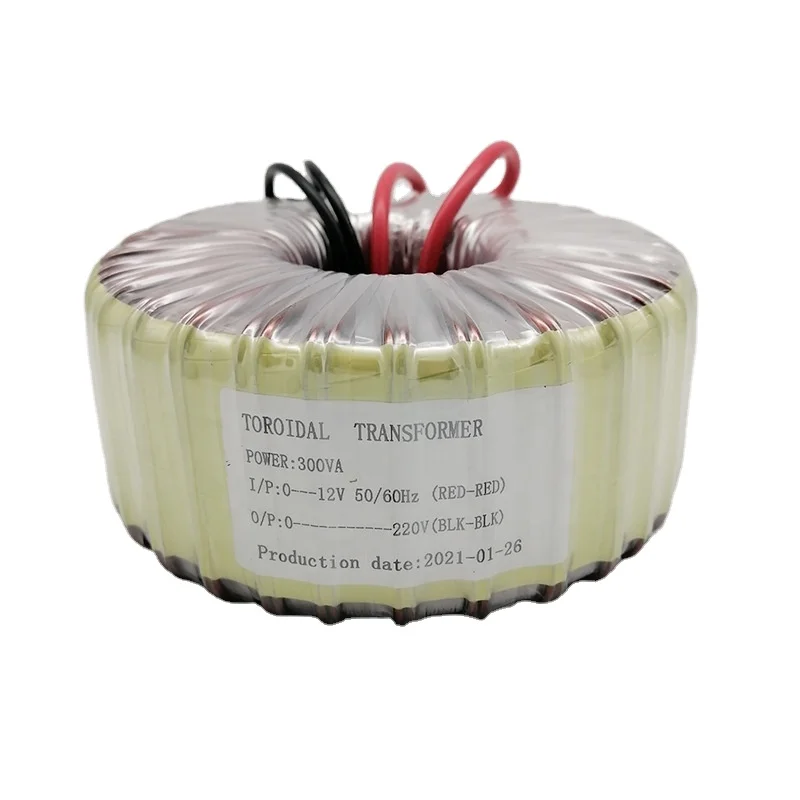
ECKO can compare EI, toroidal, R-core, PCB-mounted or encapsulated constructions against your limits for cost, size, magnetic leakage, inrush current, mounting and production volume.
send your equipment requirements for an engineering recommendation.
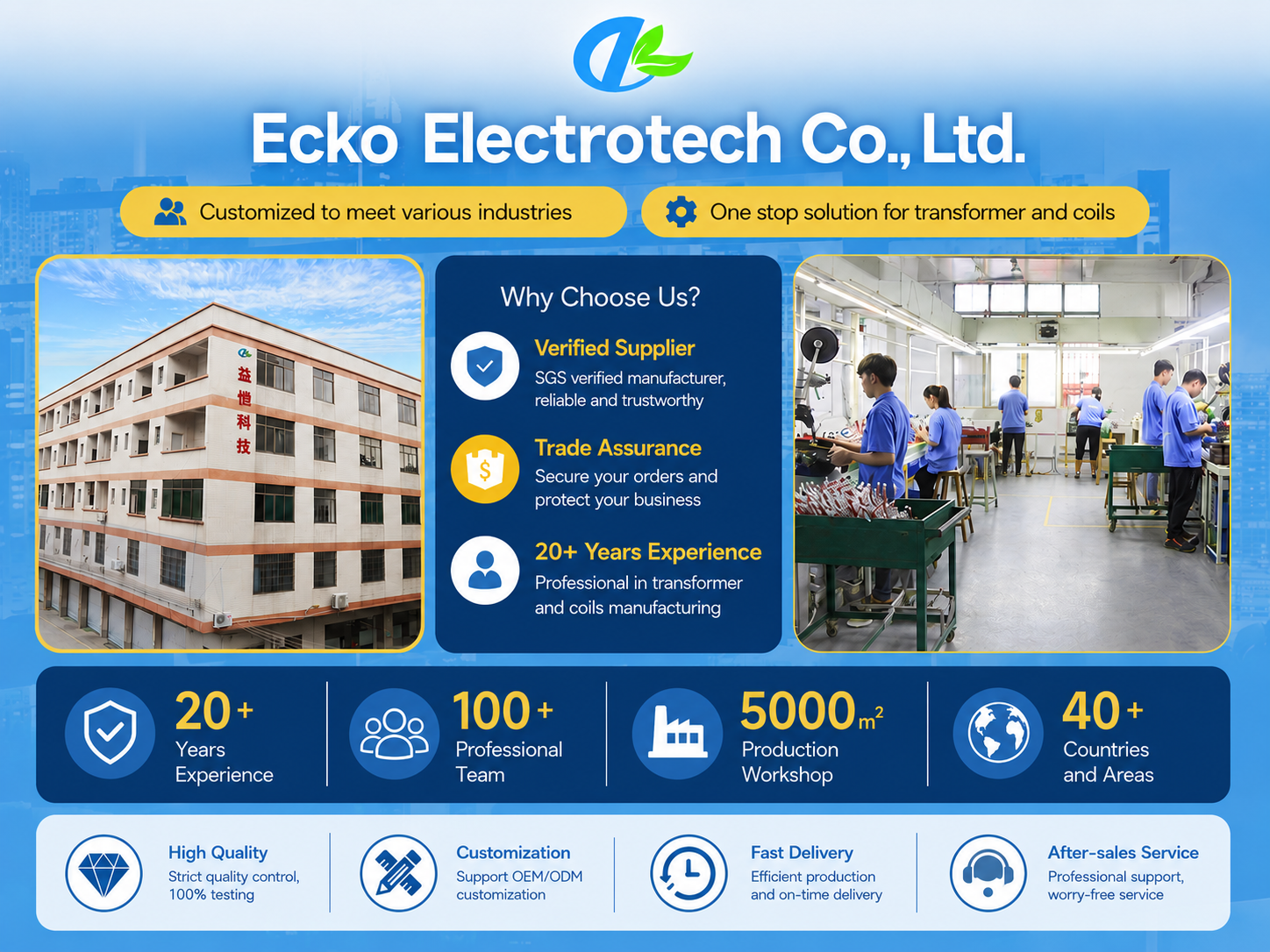
ECKO combines transformer engineering, controlled customization and scalable production. The goal is not simply to supply a transformer, but to release a repeatable component that fits the buyer's equipment, documentation and approval process.
Testing is performed against the approved model specification. Routine tests verify production consistency, while design-validation tests confirm performance under the agreed operating conditions.
| Inspection or test | What it verifies | Typical stage |
|---|---|---|
| Incoming material inspection | Core laminations, wire specification, bobbin, insulation, leads and key purchased components | Incoming quality control |
| Winding and polarity inspection | Turns, wire gauge, winding sequence, taps, polarity and interlayer insulation | In process |
| Continuity and DC resistance | Correct connections, conductor integrity and winding-to-winding consistency | In process / final |
| Turns ratio and no-load voltage | Primary-to-secondary ratio, output tolerance and correct tap identification | 100% routine test |
| No-load current and no-load loss | Core assembly, excitation behaviour and abnormal winding or lamination conditions | Routine or sampling, as specified |
| Load and voltage-regulation test | Rated output, loaded voltage, current capability and regulation | Design validation / sampling |
| Insulation resistance | Integrity of the insulation system between windings and core or accessible metal parts | Routine, as specified |
| Dielectric withstand (Hi-Pot) | Isolation integrity at the agreed test voltage and duration | 100% routine safety test to approved limits |
| Temperature-rise test | Thermal performance at specified input, load, ambient and installation conditions | Prototype / type validation |
| Dimensions and workmanship | Outline size, mounting centres, lead length, labels, terminals, impregnation and assembly | In process / final |
Important: Exact test voltages, acceptance limits, sampling levels and required reports must be confirmed in the approved quality plan. Safety approval for one EI transformer model does not automatically cover every custom variant.
A documented approval process reduces technical misunderstandings and ensures that purchasing, engineering and quality teams evaluate the same transformer specification.
Provide electrical load, mains input, dimensions, mounting, environment, compliance and quantity information.
ECKO reviews core size, windings, thermal margin, insulation, mechanical construction and test requirements.
You receive a commercial quotation together with the key technical assumptions or an outline specification.
Samples are manufactured for electrical, mechanical and equipment-level evaluation. Qualified designs may be accelerated subject to material availability.
Both parties confirm voltage, regulation, temperature, noise, mounting, leads, labels and other agreed characteristics.
The final drawing, wiring diagram, materials, test limits and change controls are approved before production.
Production follows controlled winding data and inspection criteria, with first-batch review when required.
Finished transformers are tested, packed to the agreed method and supported with shipment documents and after-sales response.
These answers address common engineering and purchasing questions for custom EI transformers. Final performance is always governed by the approved specification for the exact model.
Start with the continuous apparent power of every secondary: voltage multiplied by RMS current. Add the outputs, then account for rectifier type, capacitor-input current peaks, motor or relay starting current, duty cycle, ambient temperature, enclosure ventilation and the required regulation. ECKO can calculate the design VA when you provide the real load circuit or measured current waveform.
Winding resistance and leakage impedance cause voltage drop as current increases. An EI transformer is therefore designed with a defined regulation so that the output reaches its target under the specified load. Quote requests should state whether the required voltage is a no-load value or a full-load value.
Yes, if it is designed and marked for 50/60 Hz. A transformer designed for 50 Hz can generally operate at the same voltage on 60 Hz, subject to the approved specification. A 60 Hz-only transformer should not be used at 50 Hz without engineering review because the lower frequency increases core flux and may cause excessive current and heating.
Yes. Series/parallel primaries can support two mains ranges, while multi-tap windings can accommodate several nominal input voltages. ECKO defines the lead colours, terminal numbers and connection diagram to prevent incorrect field wiring.
Yes. Multiple isolated secondaries, centre-tapped outputs and series/parallel windings are available. The current, regulation and isolation requirement for each output must be specified because simultaneous loading affects the thermal and voltage design.
Hum is addressed through appropriate flux density, consistent lamination assembly, secure core clamping, controlled mounting and optional varnish impregnation. The equipment design also matters: DC on the mains, waveform distortion, loose panels and rigid mounting to a resonant chassis can increase audible noise.
Temperature rise depends on copper loss, core loss, load profile, frequency, ambient temperature, enclosure airflow, mounting orientation and nearby heat sources. It should be verified at the defined rated load and installation condition. Insulation class is a material-system rating; it is not a substitute for specifying an acceptable operating temperature.
Yes. State the measurement voltage, frequency, ambient condition and acceptance limit. Core grade, stack size, turns and operating flux density can then be optimized. Tighter limits may increase size, copper usage or cost, so they should reflect the actual system requirement.
Yes, when inductance is a required control parameter. The drawing must define which winding is measured, how other windings are connected, and the test frequency, voltage and instrument condition. For a mains EI transformer, no-load current and loss at rated voltage are often more meaningful production controls than a small-signal inductance reading alone.
Inrush depends on core flux, switching phase, remanence, mains impedance and connected rectifier capacitors. ECKO can optimize the magnetic design and provide engineering data, while high-power systems may also require an NTC thermistor, pre-charge resistor, relay bypass or controlled zero-crossing strategy in the equipment.
An electrostatic shield is normally placed between primary and secondary to reduce capacitive noise coupling and requires a defined earth connection. A magnetic shield or flux band is intended to reduce stray magnetic field. They solve different problems and should be selected from the equipment's EMC or noise requirement.
Not automatically. A standard EI transformer needs correctly rated primary and/or secondary protection in the finished equipment. Thermal fuses, resettable protectors or impedance-limited designs can be considered, but short-circuit-proof performance must be explicitly engineered and verified for the required standard.
No. The transformer secondary supplies AC. A DC load requires rectification and usually filtering or regulation. Please provide the rectifier topology, capacitor value, required DC voltage and DC current because the secondary RMS current can be significantly higher than the DC output current.
Usually, yes, after verification. Send the existing drawing or a sample together with the wiring, rated load, mounting centres, maximum height, lead or terminal details and required approvals. ECKO will check electrical compatibility instead of copying dimensions alone.
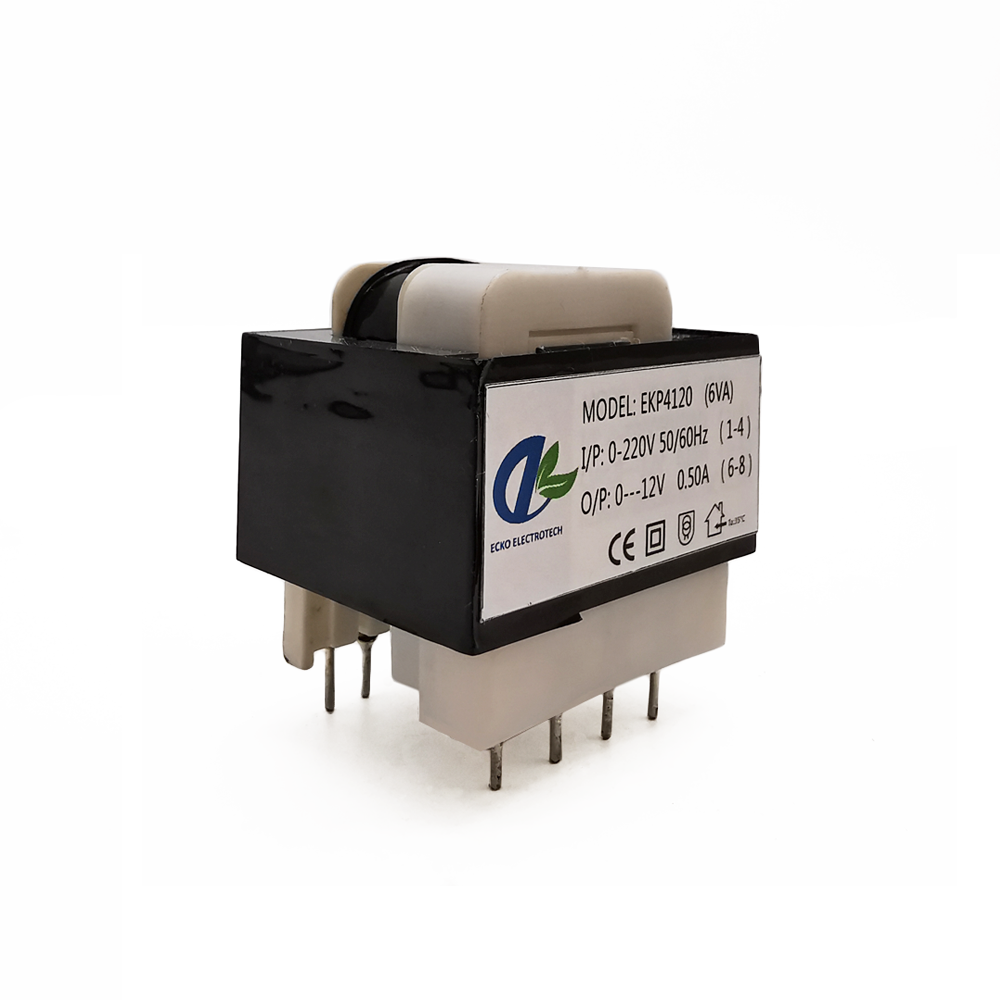
Yes. Provide the PCB drawing or Gerber dimensions, pin coordinates, hole sizes, keep-out area, maximum height and preferred pin assignment. A pin-layout drawing should be approved before tooling or sample production.
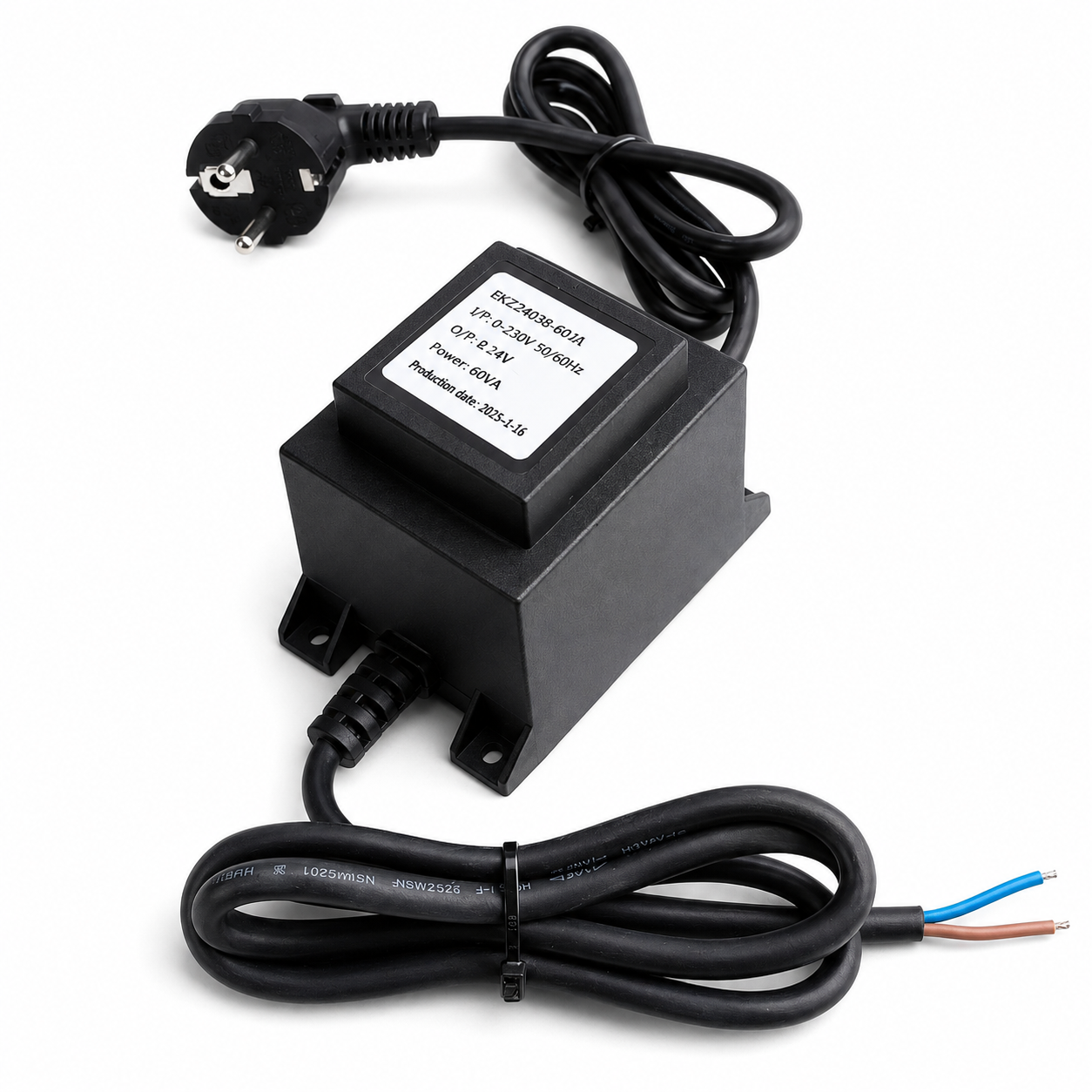
An open-frame transformer is not inherently waterproof. Outdoor, condensing or contaminated environments may require an IP-rated enclosure, encapsulation, protective coating, corrosion-resistant hardware and suitable leads. The complete equipment enclosure and installation method must be considered.
Production EI transformers can receive 100% dielectric withstand testing to the voltage, duration and leakage-current limit defined in the approved specification. The test level must be appropriate for the insulation system and applicable safety standard; it should not be copied from an unrelated transformer model.
ECKO can support designs using applicable materials and construction requirements. However, approvals are model- and application-specific. Confirm the required standard, end-product category, market and whether an agency-recognized component file or project certification is required before quotation.
EI transformers offer flexible bobbin construction, straightforward multi-winding designs and practical mounting options. Toroidal transformers are often smaller for the same rating and may have lower stray magnetic field, but they can have higher inrush and different mounting constraints. The best choice depends on size, noise, leakage field, surge, cost and assembly requirements.
Provide input voltage and frequency, all output voltages and currents, load type, duty cycle, ambient temperature, size and mounting limits, lead or terminal requirements, insulation and test requirements, applicable standard, target quantity and any existing drawing or sample. Sample timing is then confirmed according to design complexity and material availability.
Send your transformer specification, equipment load, drawing or sample. ECKO will review electrical performance, thermal margin, construction, compliance and production feasibility before quoting.
Send Your Requirements

ECKO ELECTROTECH CO.,LTD provides high-quality custom transformers and wound components for industrial, medical, and renewable energy applications. 20+ years of expertise, ISO9001, CE, cUL/UL certified. Global delivery with 24-month warranty. Contact us today.