EN
EN

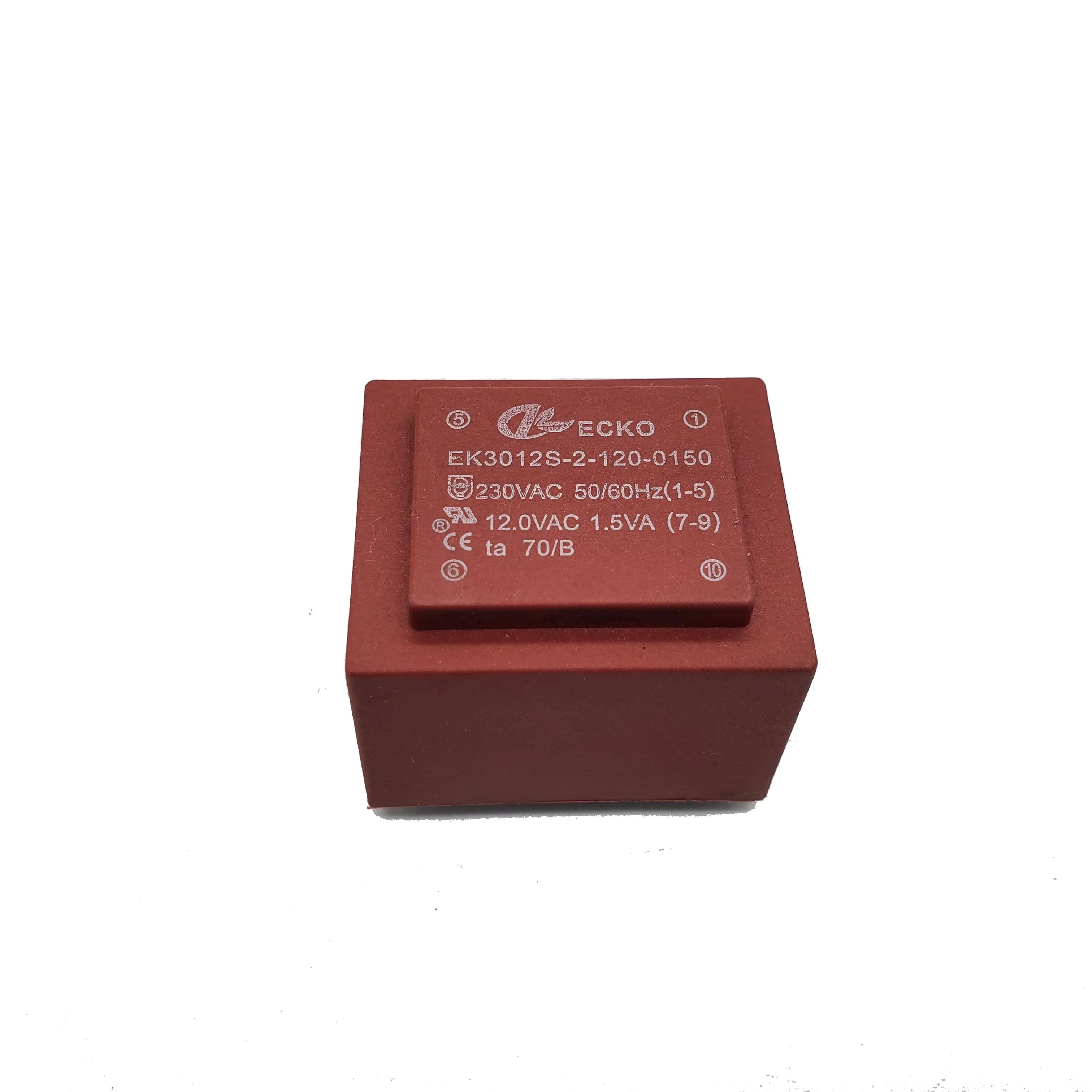
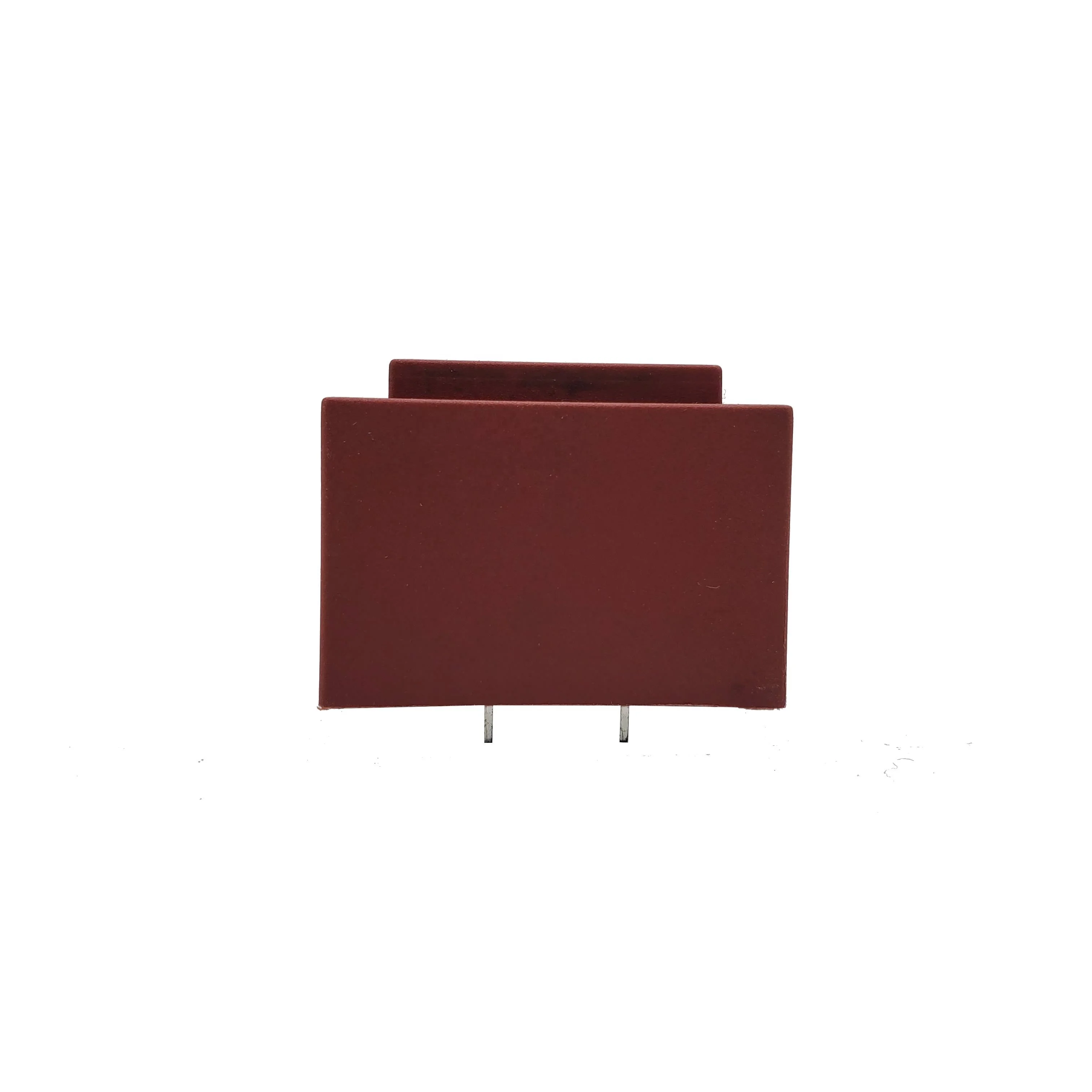
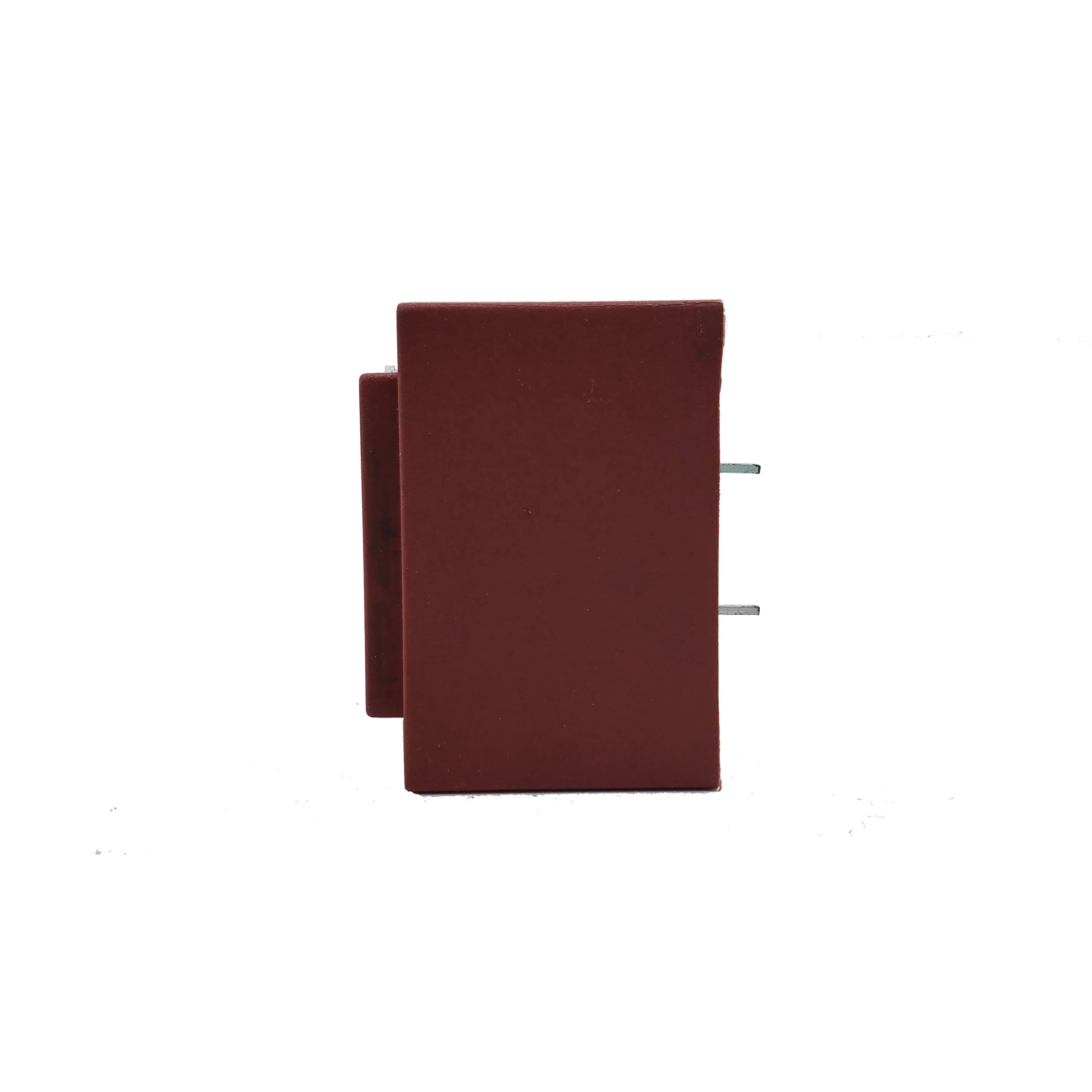
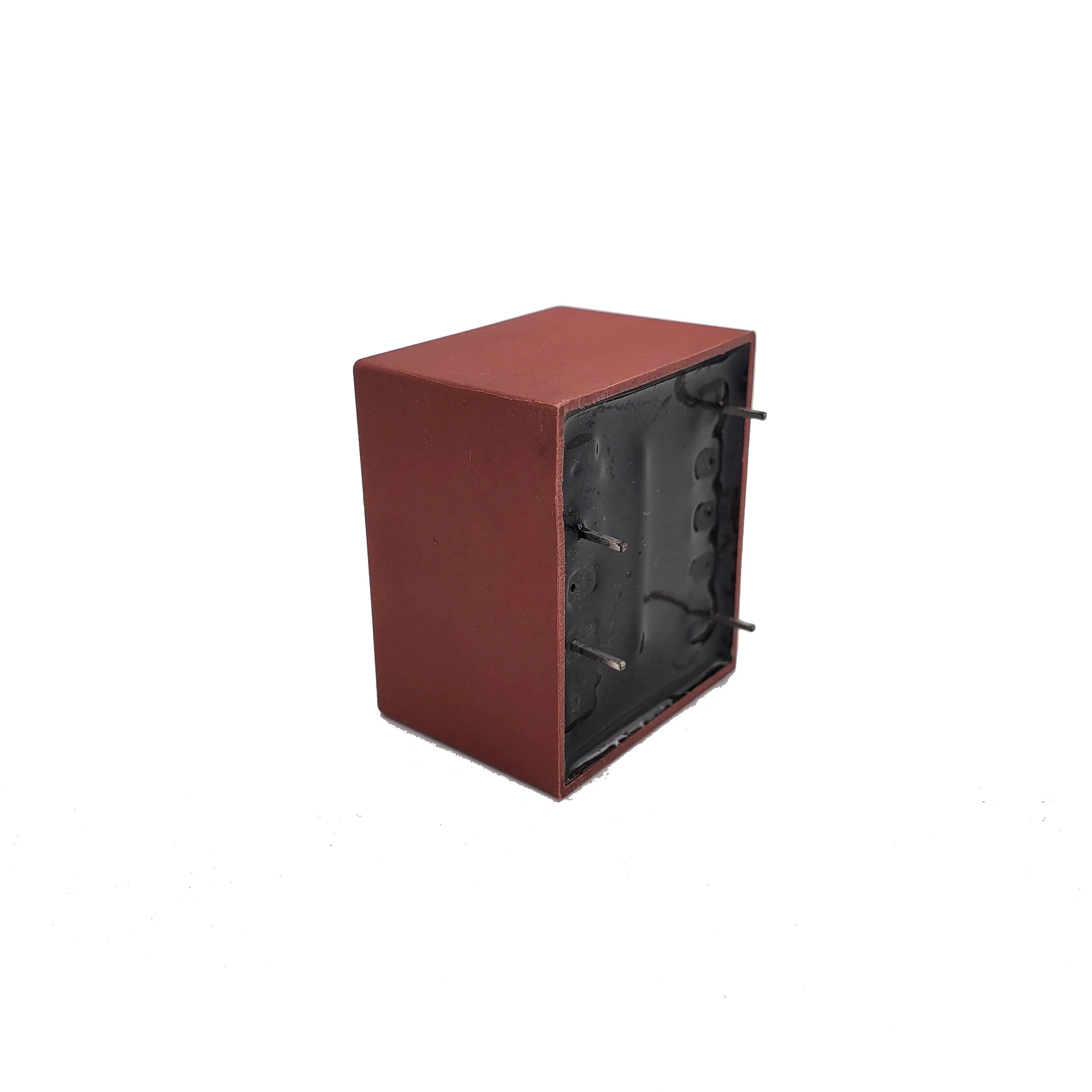
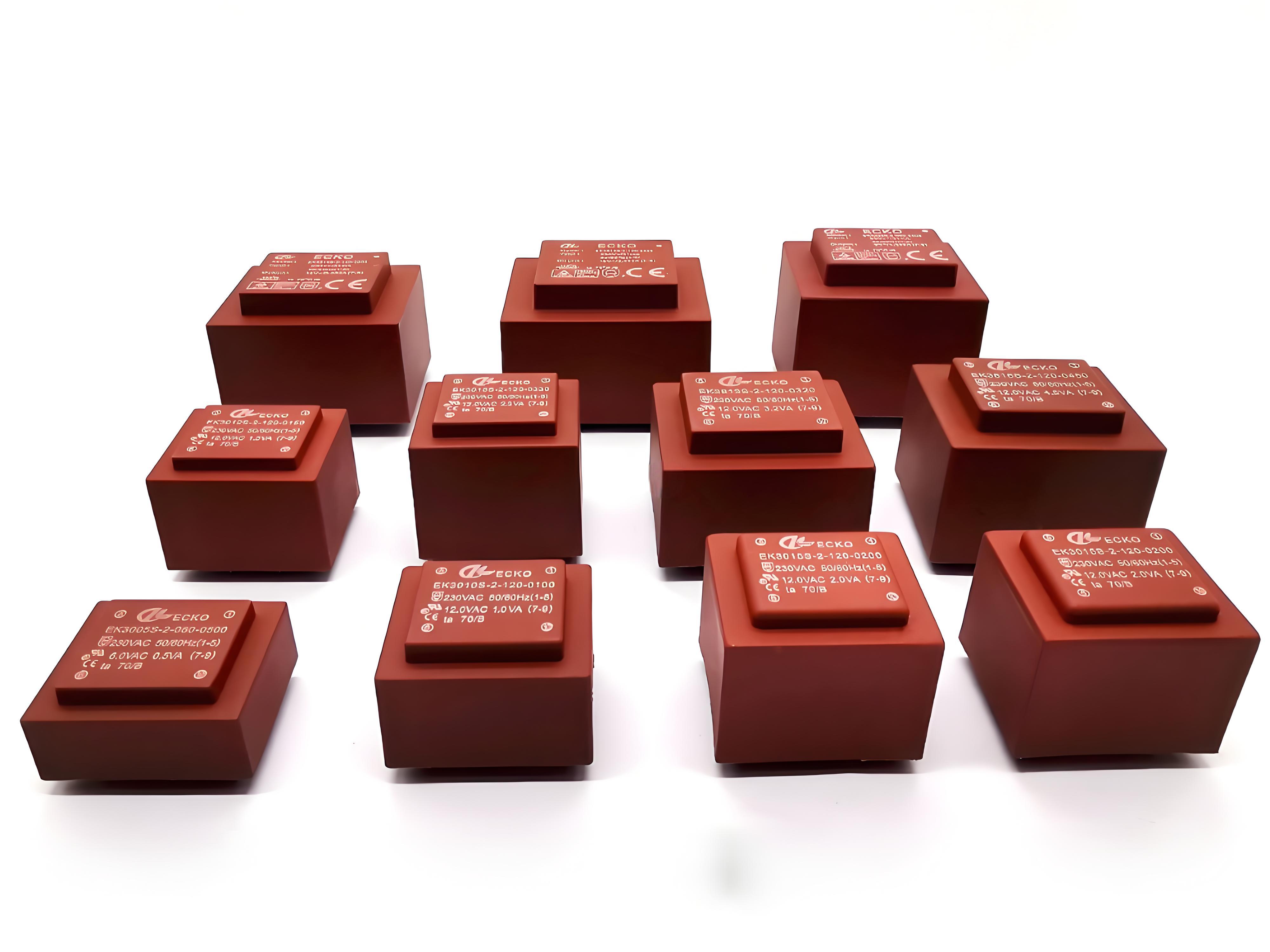
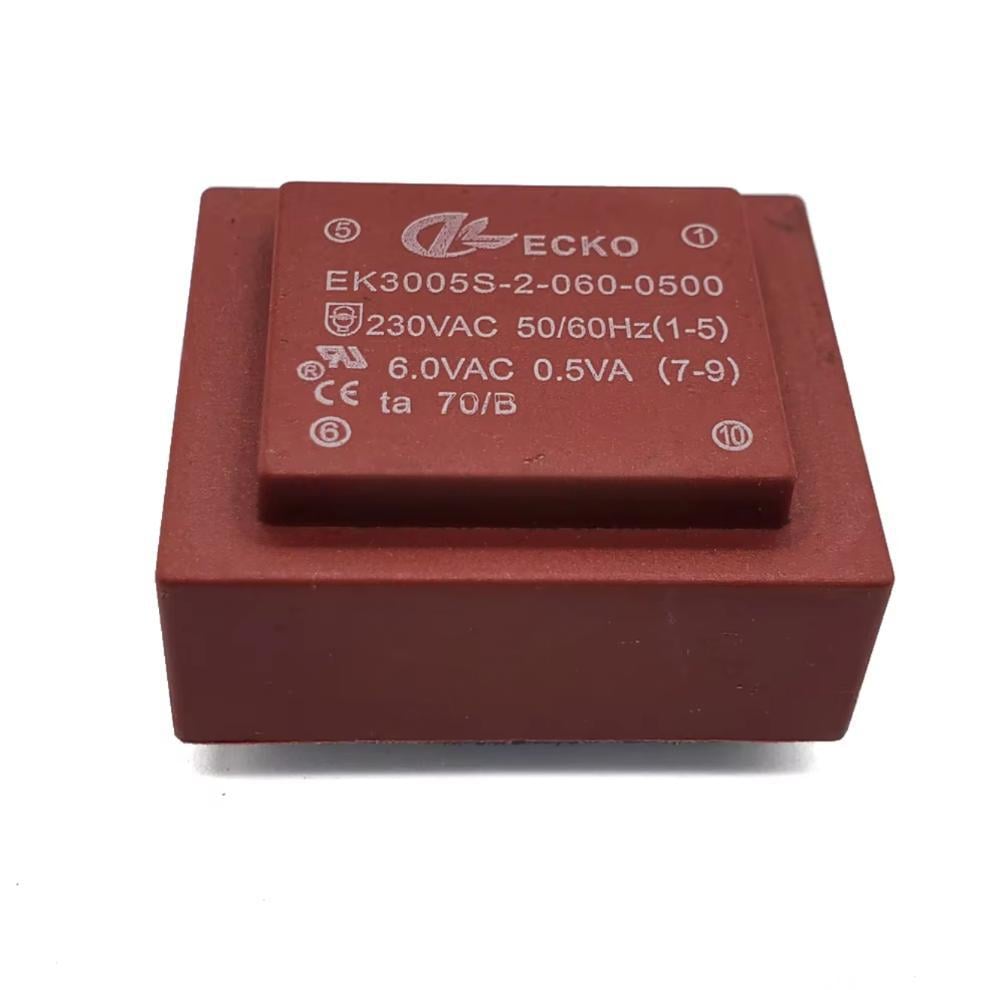
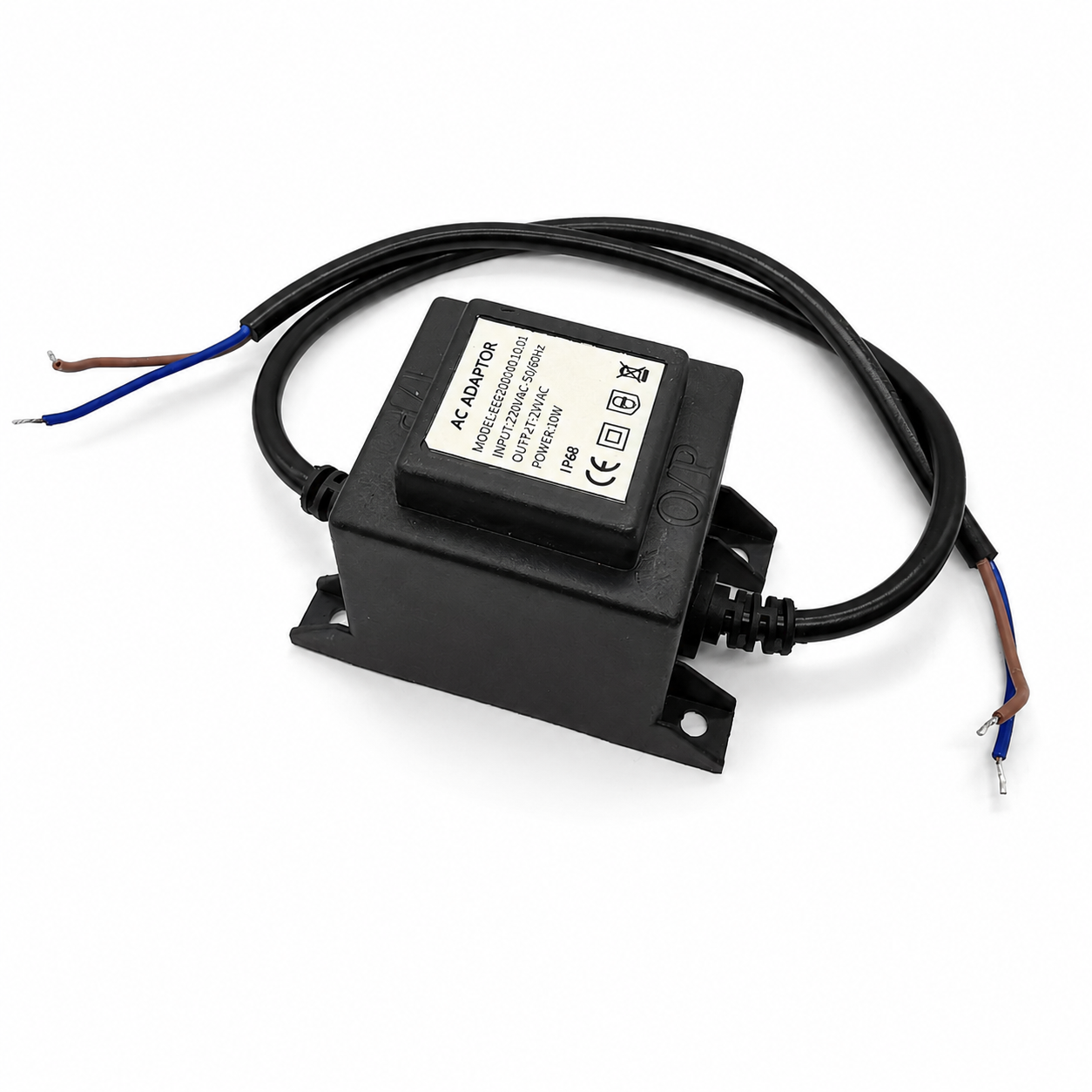
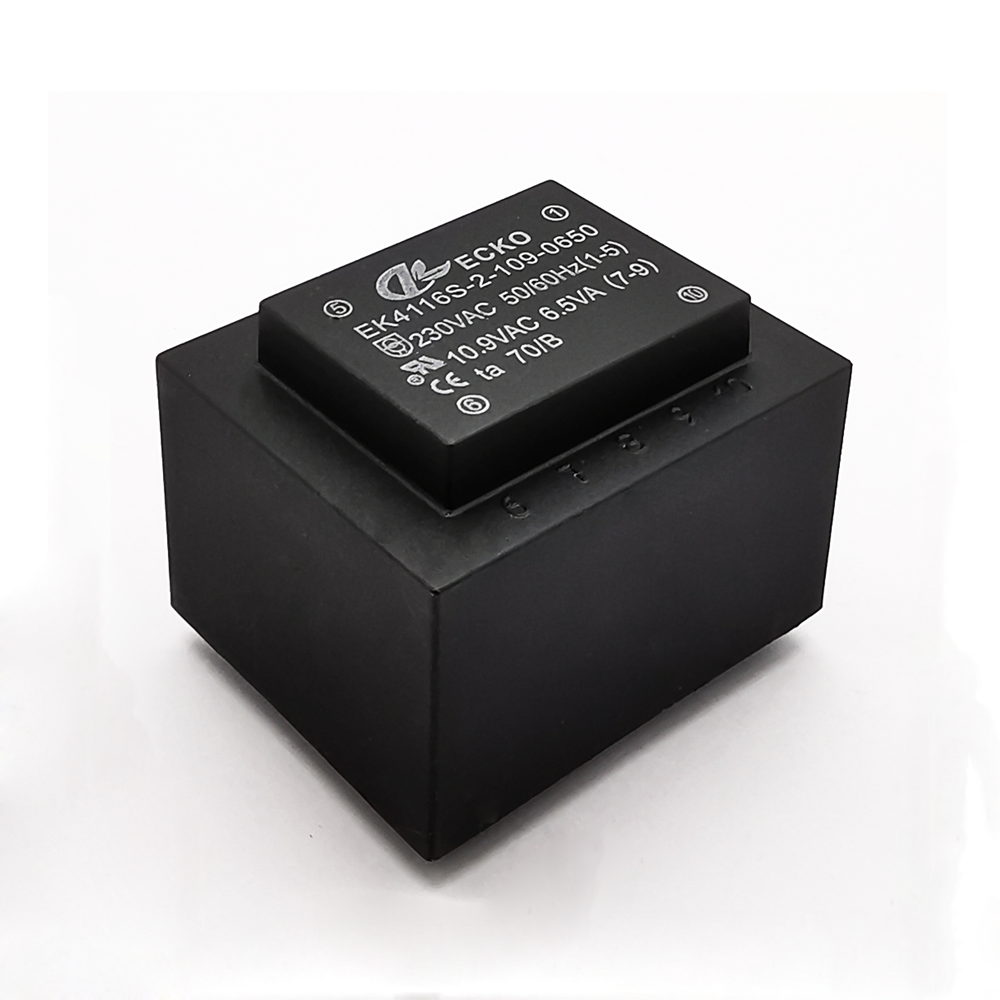
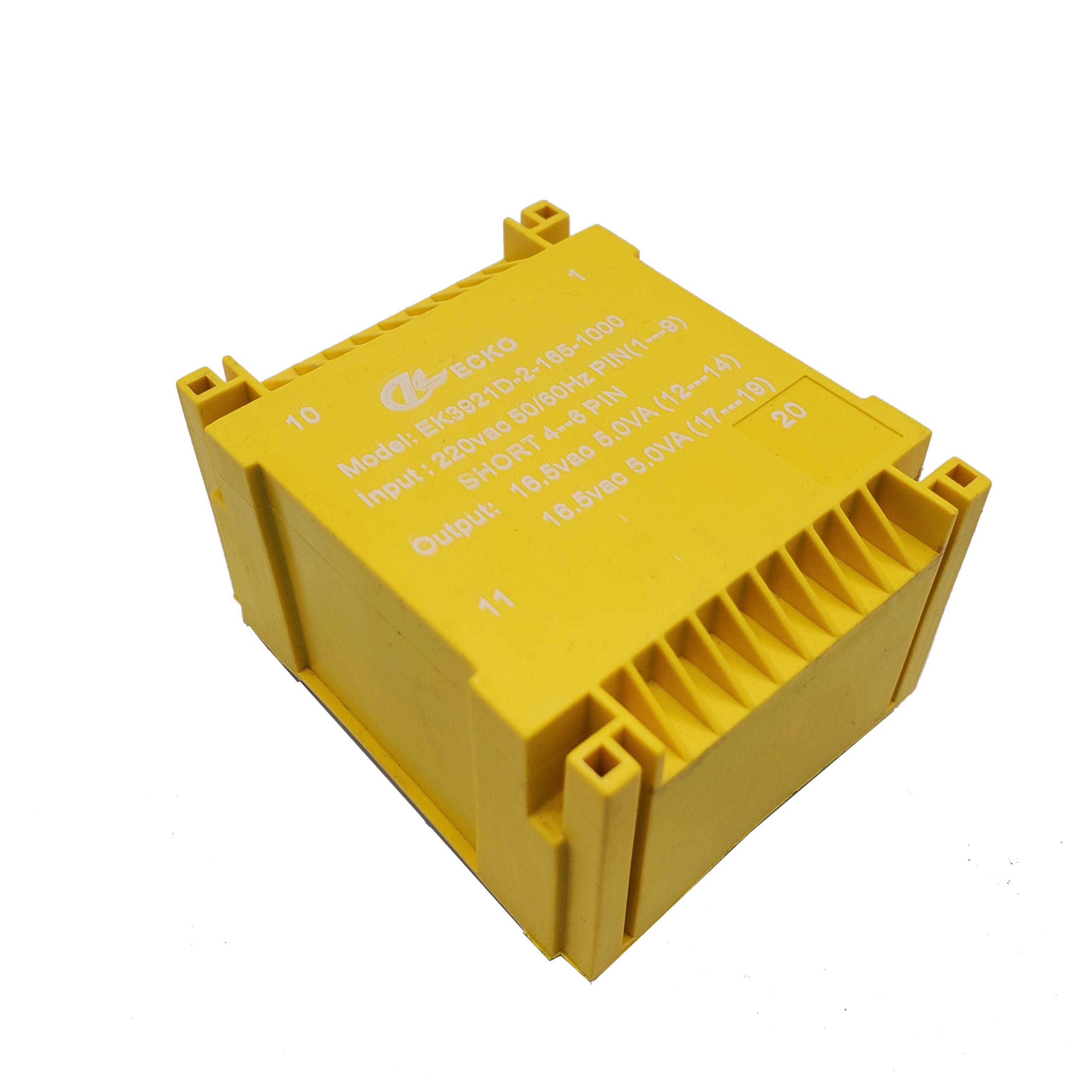
EI Core Encapsulated PCB Transformer for Industrial Control Boards
Fully encapsulated EI-core PCB transformer providing dependable isolation and voltage conversion with customizable power, voltage, dimensions, pin positions and insulation requirements.
- Overview
- Recommended Products
Encapsulated PCB Transformer Specifications
| Parameter | Typical Range / Available Options |
|---|---|
| Product Type | Low-frequency encapsulated PCB-mount transformer |
| Construction | EI laminated core, copper windings, insulated bobbin, protective enclosure and resin encapsulation |
| Rated Power | Typically 0.5 VA to 60 VA; other ratings subject to engineering review |
| Primary Voltage | 100 V, 110 V, 115 V, 120 V, 127 V, 200 V, 208 V, 220 V, 230 V or 240 V AC |
| Dual Primary Options | 2 × 115 V, 2 × 120 V or other series/parallel configurations |
| Secondary Voltage | Typically 3 V to 48 V AC; custom voltage available |
| Secondary Configuration | Single, dual, center-tapped or multiple independent windings |
| Frequency | 50 Hz, 60 Hz or 50/60 Hz |
| Output Type | Isolated AC output |
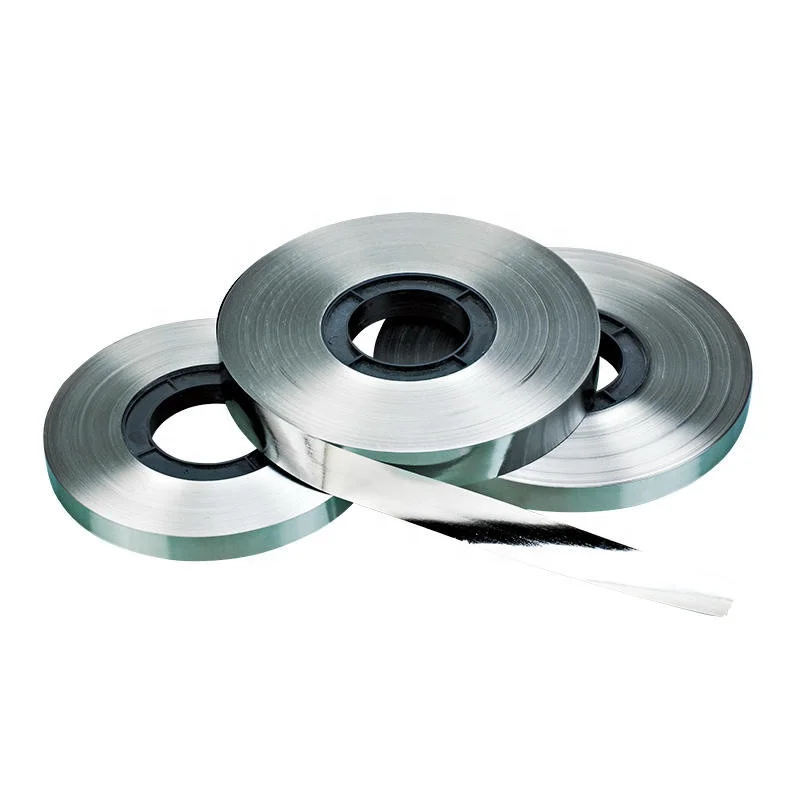
| Core Material | Laminated electrical steel selected according to power, loss and temperature-rise requirements |
| Winding Material | Specified-grade enameled copper wire |
| Dielectric Strength | Commonly designed within a 3,000–4,000 VAC range; final voltage and test duration depend on the approved insulation system and applicable standard |
| Insulation Resistance | Commonly ≥100 MΩ at 500 V DC; final acceptance criteria according to the approved specification |
| Insulation Class | Class B 130°C or Class F 155°C options |
| Temperature Rise | Defined according to rated load, ambient temperature, enclosure condition and applicable standard |
| Voltage Regulation | Optimized according to output voltage, load current, size and temperature-rise requirements |
| Encapsulation | Flame-retardant epoxy or other resin system selected according to project requirements |
| Housing | Standard or custom molded enclosure; flame-retardant material options available |
| Mounting | Through-hole PCB mounting |
| Pin Layout | Standard or fully customized pin spacing and pin assignment |
| Protection Options | Thermal fuse, PTC protection, current-limiting design or short-circuit-resistant design where required |
| Shielding Options | Electrostatic shield between primary and secondary windings |
| Compliance Options | IEC/EN 61558, UL 5085, CE, UL/cUL, RoHS and REACH requirements, subject to model and project scope |
| Marking | Model number, electrical rating, date code, batch code, customer logo or private label |
| Packaging | Individual partitions, trays, cartons and export pallets |
The values above represent common design options rather than the guaranteed specification of every model. Final electrical ratings, dimensions, test limits and compliance requirements are defined in the ECKO-approved product specification and dimensional drawing.
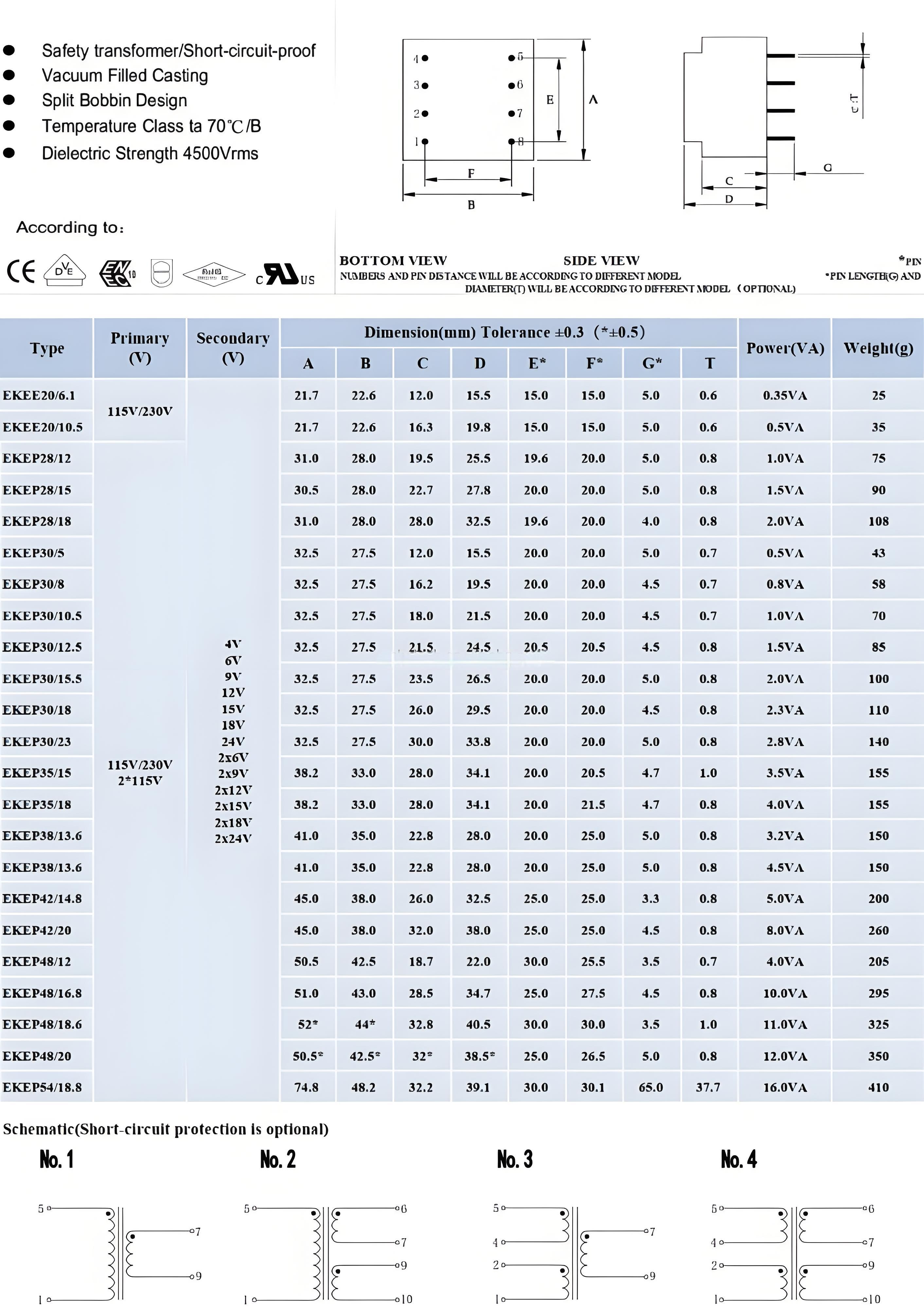
Key Advantages of ECKO Encapsulated PCB Transformers
Custom Encapsulated PCB Transformer Options
Encapsulated PCB Transformer Applications
ECKO encapsulated PCB transformer provide compact AC voltage conversion and electrical isolation for industrial, commercial and consumer electronic assemblies. Each transformer can be customized around the PCB footprint, load profile, operating temperature and safety requirements of the end product.
Why Choose ECKO as Your Encapsulated PCB Transformer Manufacturer?
Engineering Design Based on Your Actual Application
Testing Items and Acceptance Standards
| Test Item | Purpose | Inspection Frequency | Acceptance Basis |
| Visual Inspection | Checks housing, resin surface, marking, pins and workmanship | 100% | Approved appearance criteria and workmanship standard |
| Dimensions and Pin Alignment | Confirms PCB fit and mechanical tolerances | According to control plan | Approved dimensional drawing |
| Winding Continuity | Detects open circuits and termination faults | 100% | Electrical specification |
| Winding Resistance | Confirms winding consistency and connection quality | According to control plan | Approved specification and tolerance |
| Turns Ratio and Polarity | Confirms correct winding ratio and pin assignment | 100% | Approved electrical diagram |
| No-Load Output Voltage | Verifies output voltage without load | 100% | Approved test voltage and tolerance |
| No-Load Input Current | Evaluates core condition, winding consistency and losses | According to approved plan | Approved maximum limit |
| Rated-Load Output Voltage | Confirms output performance at rated current | 100% or sampling, as agreed | Approved full-load voltage tolerance |
| Voltage Regulation | Evaluates the change between no-load and rated-load output | Design validation or agreed inspection | Approved specification |
| Dielectric Withstand/Hi-Pot | Verifies insulation integrity between isolated circuits | 100% | Approved voltage, duration, leakage-current limit and applicable standard |
| Insulation Resistance | Checks resistance between isolated windings and accessible conductive parts | 100% or according to control plan | Approved test voltage and minimum resistance |
| Temperature-Rise Test | Confirms thermal performance at rated operating conditions | Sample qualification and periodic verification | Approved temperature-rise limit and applicable standard |
| Thermal Fuse Function | Verifies operation of the specified protective device | Qualification or sampling | Protective-device specification |
| Overload/Short-Circuit Test | Evaluates abnormal operating behavior where required | Design qualification | Applicable standard and approved safety requirement |
| Terminal Strength | Checks pin and termination mechanical reliability | Qualification or periodic sampling | Approved mechanical test criteria |
| Solderability | Confirms compatibility with the agreed PCB soldering process | Qualification or periodic sampling | Approved solderability criteria |
| Humidity, Thermal Cycling or Vibration | Evaluates environmental reliability when required | Customer-specific qualification | Agreed IEC 60068 method or customer standard |
| RoHS Substance Verification | Supports restricted-substance compliance | Material documentation or laboratory testing | Applicable regulatory limit and IEC 62321 test method |
Custom Encapsulated PCB Transformer Development Process
Encapsulated PCB Transformer FAQ
1. What applications use encapsulated PCB transformers?
They are widely used in industrial control boards, smart home products, instrumentation, power supplies, automation equipment, lighting controls, HVAC systems, security equipment, and electronic devices.
2. Are encapsulated PCB transformers suitable for industrial control equipment?
Yes. Their compact PCB mounting and protected construction make them suitable for many control boards, relay circuits, monitoring devices, and automation systems.
3. Can they be used in smart home devices?
Yes. Custom low-power encapsulated transformers can be designed for control panels, smart switches, access systems, thermostats, and other smart electronic devices.
4. Can they be used in HVAC control boards?
Yes. PCB transformers are commonly used to provide isolated low-voltage power for control circuits in HVAC and related equipment.
5. Can they be used in security systems?
Yes. They can provide isolated power for alarm systems, access control equipment, sensors, control panels, and other security electronics.
6. Are they suitable for audio equipment?
Yes. Transformers with suitable magnetic and electrostatic design can be developed for certain audio and signal-related power supply applications.
7. Can they be used in measuring instruments?
Yes. Encapsulated PCB transformers are suitable for many electronic measuring and control instruments requiring isolated AC power conversion.
8. Can they be used in LED lighting control systems?
Yes. They can be used in lighting controllers, timers, relay boards, control modules, and auxiliary power circuits where an isolated AC output is required.
9. Are they suitable for outdoor equipment?
The transformer itself may be protected by encapsulation, but the complete equipment enclosure and installation environment must also provide the required environmental protection.
10. Can you develop transformers for specialized applications?
Yes. We can evaluate specialized projects according to electrical parameters, mechanical restrictions, insulation requirements, operating environment, and applicable standards.