EN
EN

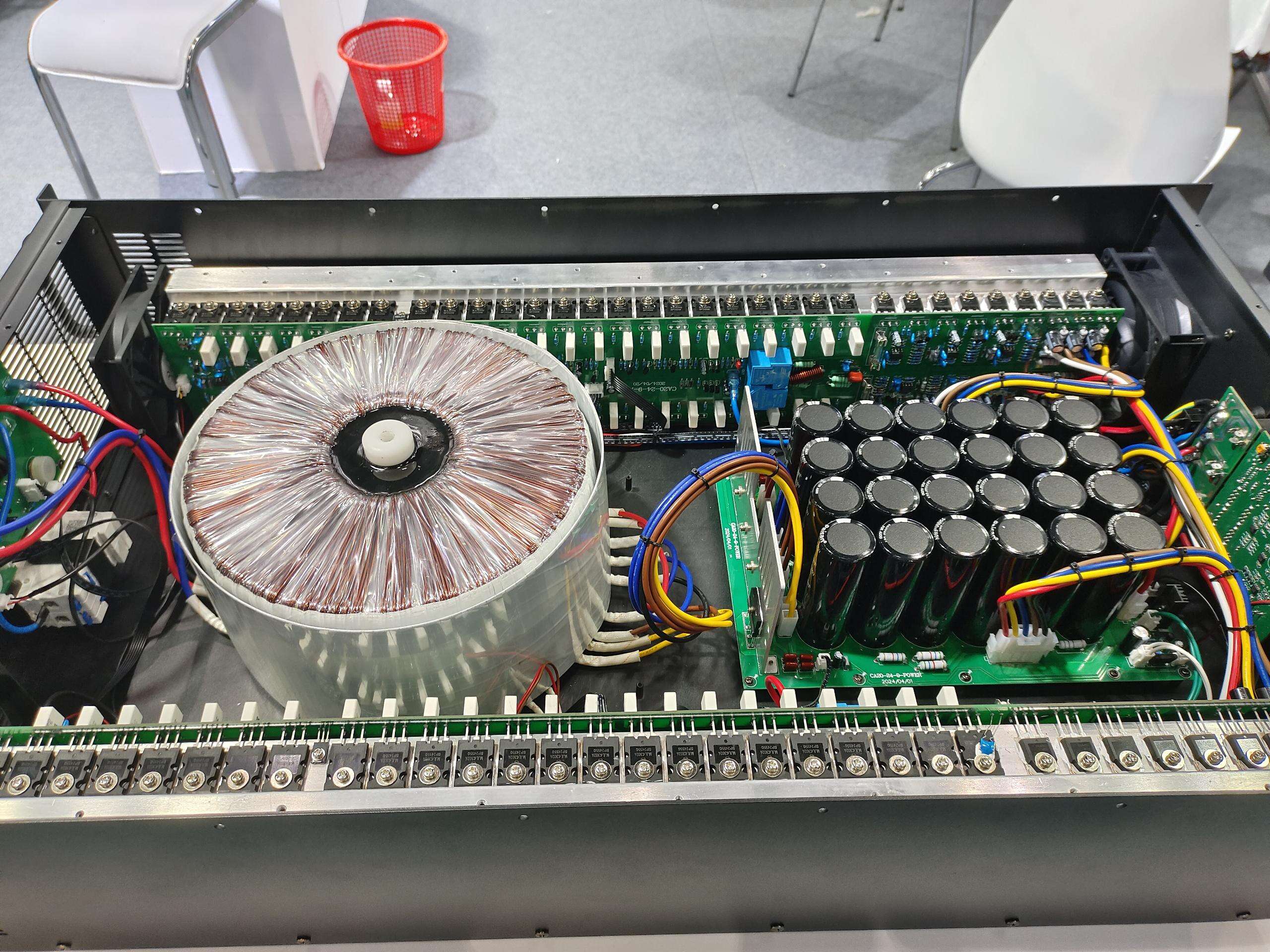
When audiophiles and audio engineers debate what truly shapes the character of a sound system, the conversation often gravitates toward speakers, amplifier circuits, or digital signal processors. Yet one component sits quietly at the heart of every high-performance audio system, exerting a profound influence over everything the listener ultimately hears: the amplifier transformer. This component is not merely a power supply element — it is an active participant in the sonic chain, and its design, construction, and quality directly determine how faithfully an audio signal is reproduced from source to speaker.
Understanding how an amplifier transformer affects sound quality and signal clarity requires looking beyond basic electrical theory. It demands an appreciation of how magnetic flux behavior, core material selection, winding geometry, and electromagnetic interference all interact within the context of audio reproduction. Whether you are designing a professional studio amplifier, a high-end home audio system, or an industrial audio processing unit, the choices made around the amplifier transformer will echo through every note, transient, and frequency the system produces.
The Role of the Amplifier Transformer in Audio Signal Chains
Power Delivery and Its Direct Impact on Audio Performance
At its most fundamental level, the amplifier transformer is responsible for converting incoming mains voltage into the precise DC supply voltages that the amplifier's output stage requires. This might seem like a purely electrical function, but the quality of that power delivery has immediate and measurable consequences for audio performance. An amplifier transformer that delivers unstable, ripple-laden voltage will cause the amplifier's output stage to modulate the audio signal with low-frequency noise, resulting in audible hum, reduced dynamic range, and compressed transient response.
High-quality power delivery means the amplifier's output devices — whether bipolar transistors, MOSFETs, or vacuum tubes — receive a clean, stable supply rail that allows them to track the audio signal with precision. When the supply rail fluctuates under dynamic load conditions, the amplifier cannot maintain the linearity required for accurate signal reproduction. This is why the amplifier transformer must be sized not just for average power demand but for peak transient demand, which in music reproduction can be several times the average level.
A well-engineered amplifier transformer maintains tight voltage regulation across the full dynamic range of the audio program material. This regulation directly supports the amplifier's ability to reproduce low-level detail, preserve spatial imaging, and deliver the kind of dynamic contrast that makes music feel alive and three-dimensional rather than flat and compressed.
Signal Isolation and Ground Noise Rejection
Beyond power delivery, the amplifier transformer plays a critical role in isolating the audio circuit from the mains supply. This galvanic isolation prevents ground loops — one of the most persistent sources of audible noise in audio systems. Ground loops occur when multiple pieces of equipment share a common ground path at different potentials, creating a circulating current that induces a hum into the signal path. A properly designed amplifier transformer breaks this loop by providing complete electrical isolation between the primary and secondary windings.
In professional audio environments, where multiple amplifiers, mixers, and signal processors are interconnected, the isolation provided by each amplifier transformer becomes a system-level noise management tool. Engineers rely on this isolation to maintain signal integrity across complex signal chains, particularly in live sound reinforcement and recording studio environments where even small amounts of noise can compromise the quality of a recording or performance.
How Core Material and Geometry Shape Sonic Character
Toroidal Cores and Their Acoustic Advantages
The geometry of the magnetic core used in an amplifier transformer has a direct bearing on its acoustic performance. Toroidal cores — wound in a continuous ring shape — are widely favored in high-performance audio applications because their closed magnetic path minimizes stray magnetic flux. Stray flux is a primary source of electromagnetic interference (EMI) that can couple into nearby audio circuitry, inducing noise into the signal path. By containing the magnetic field within the core, a toroidal amplifier transformer dramatically reduces this interference.
The toroidal geometry also results in lower mechanical vibration compared to traditional EI-laminated cores. Transformer hum — the audible mechanical vibration caused by magnetostriction in the core laminations — is a well-known nuisance in audio equipment. Because toroidal cores are wound under tension and have a more uniform flux distribution, they exhibit significantly less magnetostrictive vibration. This means the amplifier transformer itself contributes less acoustic noise to the listening environment, which is particularly important in low-noise audiophile and studio applications.
A amplifier transformer built on a toroidal core also benefits from higher efficiency and lower no-load losses, which translates to less heat generation and more stable operating conditions — both of which support consistent audio performance over extended listening sessions or professional use cycles.
Core Material Selection and Frequency Response
The material from which the core of an amplifier transformer is constructed determines its magnetic permeability, saturation characteristics, and hysteresis losses — all of which influence how the transformer behaves under varying load conditions. Grain-oriented silicon steel is commonly used in high-quality audio transformers because it offers high permeability and low core loss at the operating frequencies relevant to audio power supplies. This results in a more linear magnetic response, which supports cleaner power delivery to the amplifier stage.
Core saturation is a particularly important consideration for an amplifier transformer used in high-power audio applications. When a transformer core saturates, its inductance drops sharply, causing a sudden increase in primary current draw and a corresponding distortion of the supply voltage waveform. This saturation-induced distortion can manifest as audible clipping artifacts, increased harmonic distortion, and a general degradation of signal clarity. Selecting a core material and cross-sectional area that keeps the transformer well below saturation under all operating conditions is therefore a fundamental requirement for audio-grade transformer design.
Winding Design and Its Effect on Signal Clarity
Leakage Inductance and Its Consequences
The way the primary and secondary windings of an amplifier transformer are arranged relative to each other determines the degree of magnetic coupling between them. Imperfect coupling results in leakage inductance — a parasitic inductance that appears in series with the load and acts as a frequency-dependent impedance. In power supply applications, leakage inductance interacts with the rectifier and filter capacitors to create voltage spikes and ringing on the supply rails, which can couple into the audio signal path as high-frequency noise.
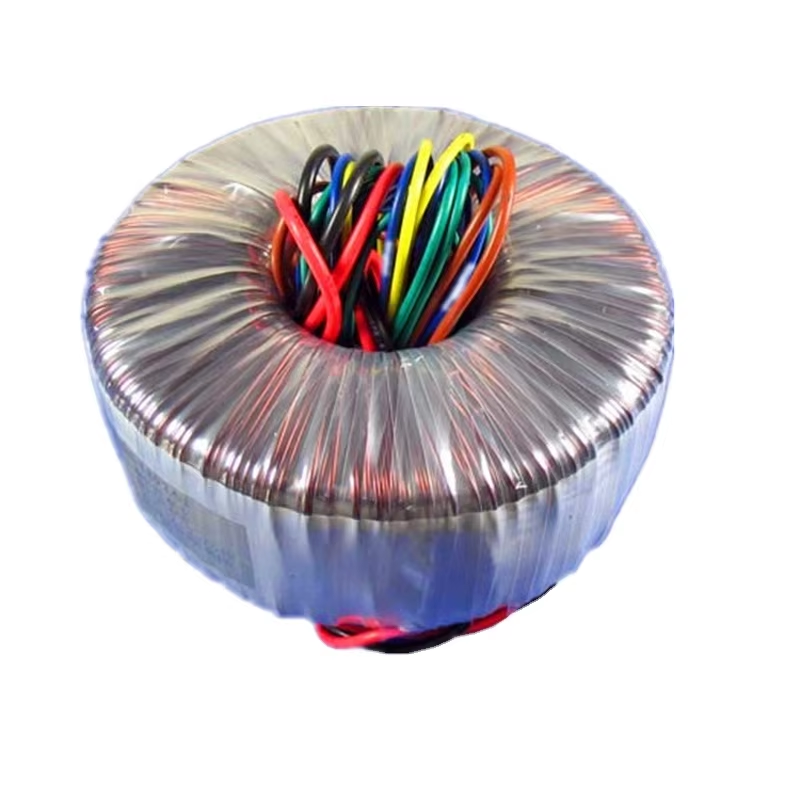
Minimizing leakage inductance in an amplifier transformer requires careful attention to winding interleaving, layer insulation, and the physical proximity of primary and secondary conductors. Tightly coupled windings reduce leakage inductance and improve the transformer's transient response — its ability to respond quickly to sudden changes in load current. In audio amplifiers, where the load current can change dramatically on a millisecond timescale in response to musical transients, good transient response in the amplifier transformer is directly linked to the amplifier's ability to reproduce fast, dynamic passages without compression or distortion.
Capacitive Coupling and High-Frequency Noise
While leakage inductance is a low-frequency concern, inter-winding capacitance in an amplifier transformer becomes significant at higher frequencies. Capacitive coupling between primary and secondary windings provides a path for high-frequency noise from the mains supply — including switching transients from other equipment on the same circuit — to pass through the transformer and appear on the secondary supply rails. This high-frequency contamination can degrade the noise floor of the amplifier and reduce the clarity of fine musical detail.
Electrostatic shielding between the primary and secondary windings is a technique used in premium audio-grade amplifier transformer designs to address this issue. A grounded copper or aluminum foil shield inserted between the winding layers intercepts capacitively coupled noise and diverts it to ground before it can reach the secondary circuit. The result is a measurably lower noise floor and improved high-frequency signal clarity — qualities that are immediately perceptible in critical listening environments.
The conductor gauge and winding tension also influence the DC resistance of the windings, which affects the transformer's regulation under load. Lower DC resistance means less voltage drop under heavy load conditions, which supports the amplifier's ability to maintain consistent output power and signal integrity across the full dynamic range of the audio program.
Transformer Sizing, Load Matching, and Dynamic Performance
VA Rating and Headroom for Musical Dynamics
The VA (volt-ampere) rating of an amplifier transformer defines its continuous power handling capacity, but in audio applications, the relationship between transformer rating and sonic performance is more nuanced than a simple power budget calculation. Music is inherently dynamic — it contains brief peaks of energy that can be many times the average power level. An amplifier transformer that is sized only for average power demand will saturate or exhibit significant voltage sag during these peaks, causing the amplifier to clip or compress the signal at precisely the moments when dynamic impact is most important.
Experienced audio engineers typically specify an amplifier transformer with a VA rating that provides substantial headroom above the amplifier's rated output power. This headroom ensures that the transformer can supply the instantaneous current demanded by musical transients without compromising supply rail stability. The result is an amplifier that sounds more open, dynamic, and effortless — qualities that listeners often describe as the difference between a system that sounds strained under load and one that sounds composed and authoritative at any volume level.
Load Regulation and Its Perceptible Effects
Load regulation — the degree to which the output voltage of an amplifier transformer changes between no-load and full-load conditions — is a specification that directly affects the consistency of the amplifier's operating point. Poor load regulation means the supply voltage drops significantly when the amplifier is driving a demanding load, which shifts the operating bias of the output devices and can introduce crossover distortion or other nonlinearities into the signal path.
An amplifier transformer with tight load regulation maintains a more consistent supply voltage across the full range of operating conditions, allowing the amplifier's bias circuitry to hold the output devices at their optimal operating point. This consistency translates directly into lower distortion, better channel separation, and more accurate stereo imaging — all of which contribute to the overall clarity and fidelity of the reproduced sound.
For Class H amplifier designs, which dynamically vary the supply rail voltage in response to the signal level, the amplifier transformer must be capable of responding quickly to these rail transitions without introducing artifacts. The transformer's combination of low leakage inductance, adequate VA rating, and good load regulation is therefore especially critical in Class H applications, where the interaction between the transformer and the rail-switching circuitry directly shapes the sonic character of the amplifier.
Electromagnetic Interference and Its Impact on Signal Integrity
Stray Field Radiation and Susceptibility
Every amplifier transformer generates a stray magnetic field as a byproduct of its operation. In conventional EI-core designs, this field can extend several centimeters from the transformer body and induce noise into nearby audio circuitry, particularly in sensitive preamplifier stages or phono input circuits. The magnitude of this stray field depends on the core geometry, the operating flux density, and the physical orientation of the transformer relative to sensitive circuit elements.
Toroidal amplifier transformer designs inherently produce much lower stray fields than EI-core designs because the closed toroidal core path contains the magnetic flux more effectively. This reduced stray field allows the transformer to be positioned closer to sensitive audio circuitry without inducing noise, which is a significant practical advantage in compact amplifier designs where physical separation between the power supply and signal stages is limited.
Conducted Noise and Mains Filtering
The amplifier transformer is also the primary interface between the amplifier and the mains supply, which means it is the first line of defense against conducted noise entering the audio system from the power grid. Switching transients, harmonic distortion from nonlinear loads on the same circuit, and radio-frequency interference from nearby equipment can all appear on the mains supply and potentially couple into the amplifier's signal path if the transformer does not provide adequate attenuation.
The combination of the transformer's inherent series impedance and the inter-winding capacitance characteristics determines how effectively it attenuates conducted mains noise. An amplifier transformer designed with attention to these parameters — including the use of electrostatic shielding and careful management of inter-winding capacitance — provides a cleaner power supply environment for the amplifier, which directly supports lower noise floor performance and improved signal clarity across the audio bandwidth.
FAQ
Why does the type of amplifier transformer affect the noise floor of an audio system?
The amplifier transformer determines how much electromagnetic interference, supply rail ripple, and conducted mains noise reaches the amplifier's signal circuitry. A transformer with poor shielding, high leakage inductance, or inadequate core design allows more noise to couple into the supply rails, which raises the noise floor and reduces the clarity of low-level audio detail. High-quality transformer design — including toroidal core geometry, electrostatic shielding, and tight winding coupling — minimizes these noise contributions and supports a lower, cleaner noise floor.
How does the VA rating of an amplifier transformer relate to dynamic sound performance?
The VA rating of an amplifier transformer determines how much instantaneous power it can deliver without voltage sag or core saturation. Music contains brief transient peaks that demand far more current than the average signal level, and a transformer sized only for average demand will compress these peaks, reducing dynamic impact and perceived clarity. Specifying an amplifier transformer with adequate headroom above the amplifier's rated output ensures that transient peaks are reproduced with full energy and without supply-induced compression.
What makes a toroidal amplifier transformer preferable for high-fidelity audio applications?
A toroidal amplifier transformer offers several acoustic advantages over conventional EI-core designs: lower stray magnetic field radiation, reduced mechanical vibration and audible hum, higher efficiency, and better load regulation. These characteristics collectively result in a quieter operating environment for the amplifier's signal circuitry, more stable supply rail voltages under dynamic load conditions, and less electromagnetic interference coupling into sensitive audio stages — all of which contribute to improved sound quality and signal clarity.
Can a poorly specified amplifier transformer cause audible distortion?
Yes. An amplifier transformer that is undersized, poorly regulated, or prone to core saturation can introduce several forms of audible distortion. Supply rail sag under heavy load shifts the operating bias of output devices, potentially introducing crossover distortion. Core saturation causes abrupt changes in primary inductance that distort the supply voltage waveform. High leakage inductance creates voltage spikes that couple noise into the signal path. Each of these mechanisms degrades signal clarity in ways that are perceptible to trained listeners, making the amplifier transformer a critical determinant of overall audio system performance.
Table of Contents
- The Role of the Amplifier Transformer in Audio Signal Chains
- How Core Material and Geometry Shape Sonic Character
- Winding Design and Its Effect on Signal Clarity
- Transformer Sizing, Load Matching, and Dynamic Performance
- Electromagnetic Interference and Its Impact on Signal Integrity
-
FAQ
- Why does the type of amplifier transformer affect the noise floor of an audio system?
- How does the VA rating of an amplifier transformer relate to dynamic sound performance?
- What makes a toroidal amplifier transformer preferable for high-fidelity audio applications?
- Can a poorly specified amplifier transformer cause audible distortion?