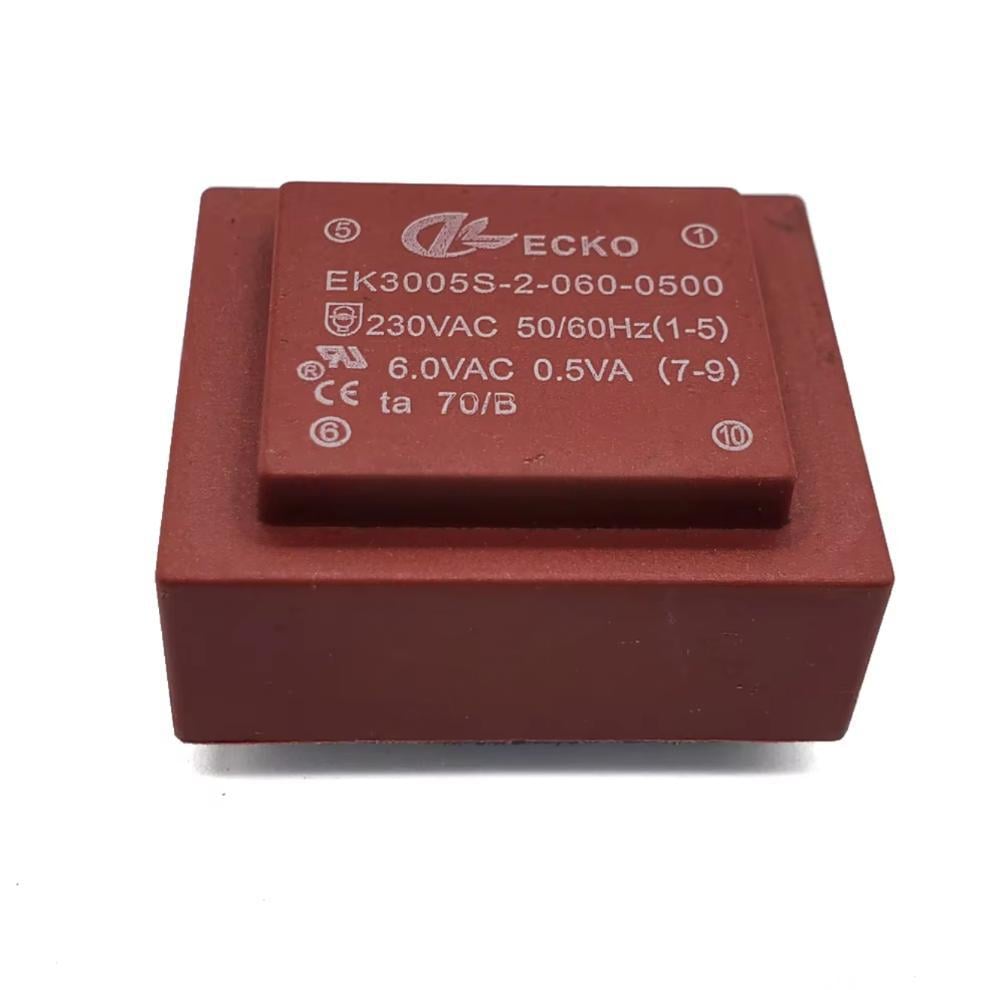
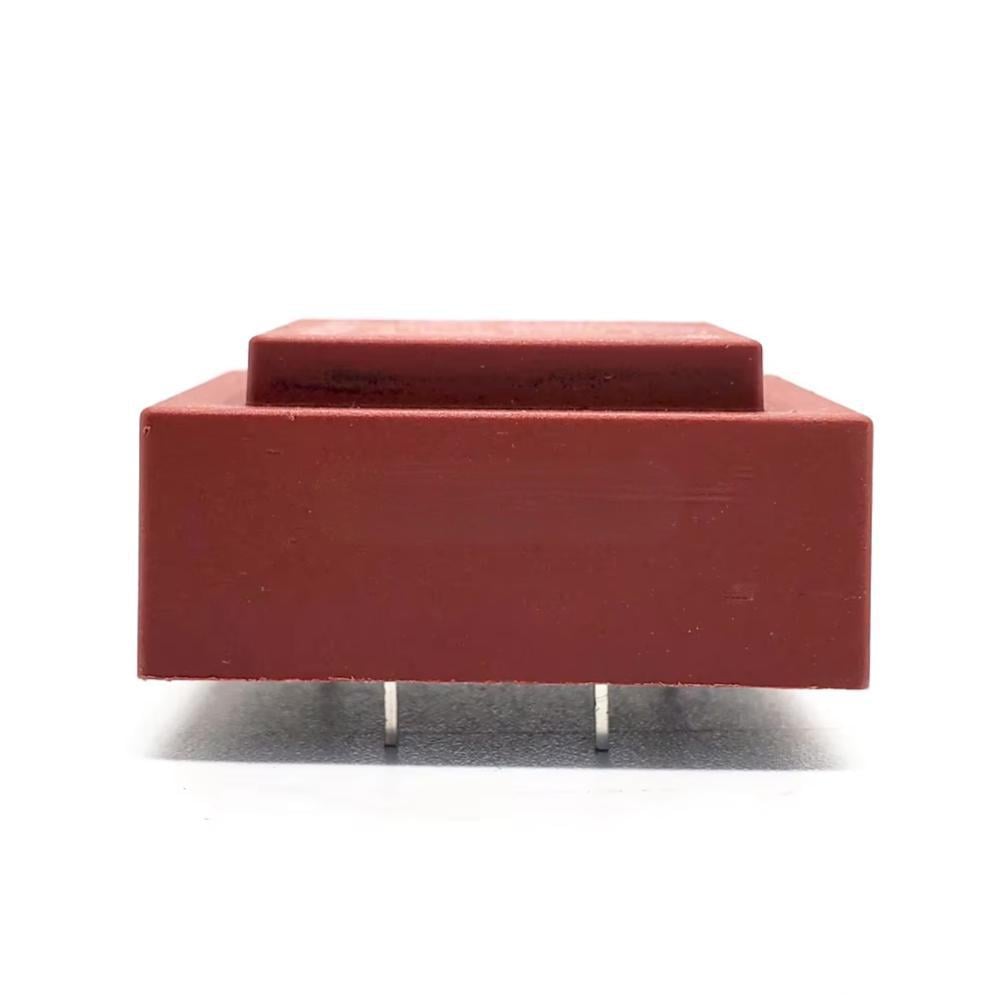
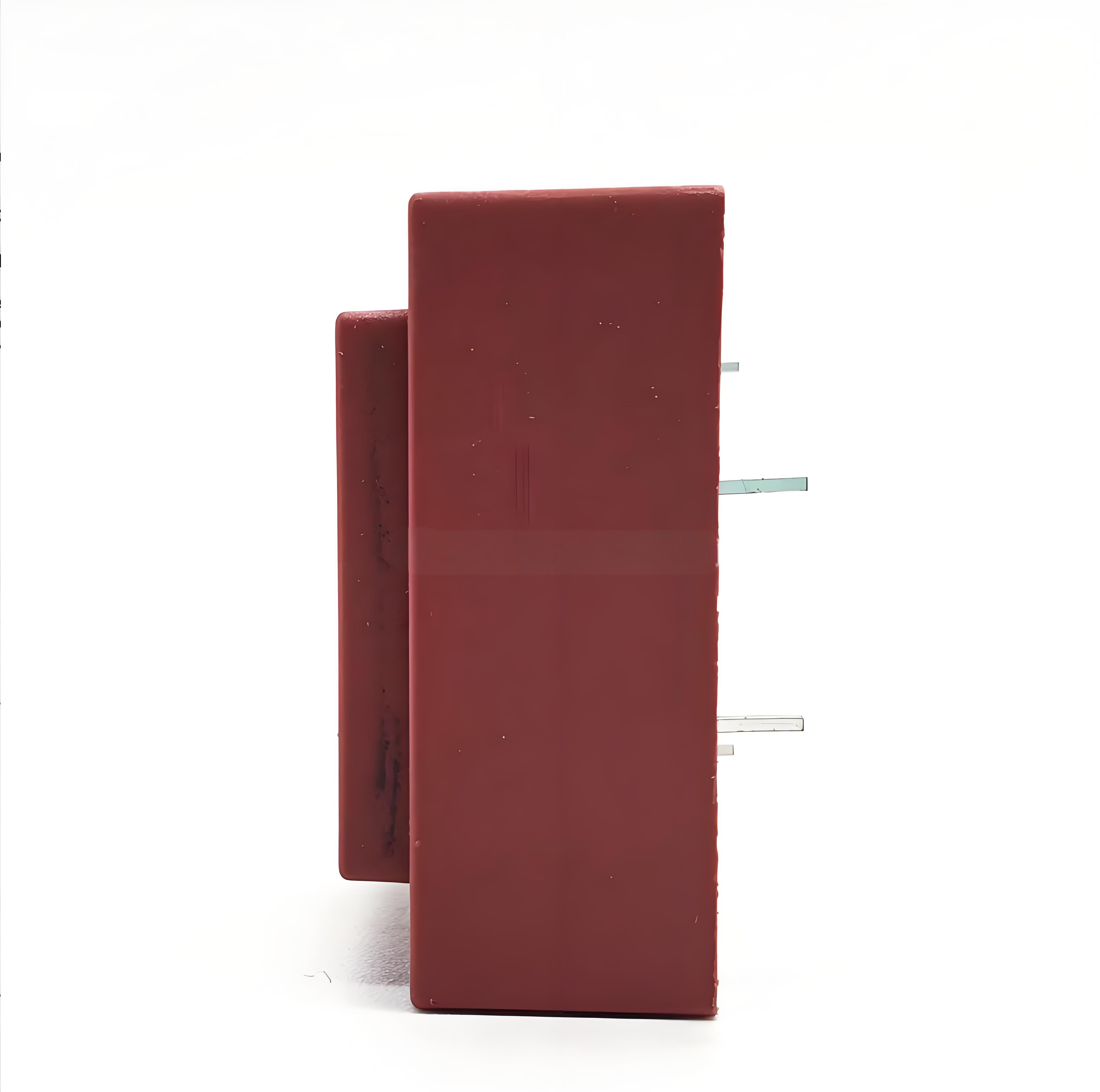
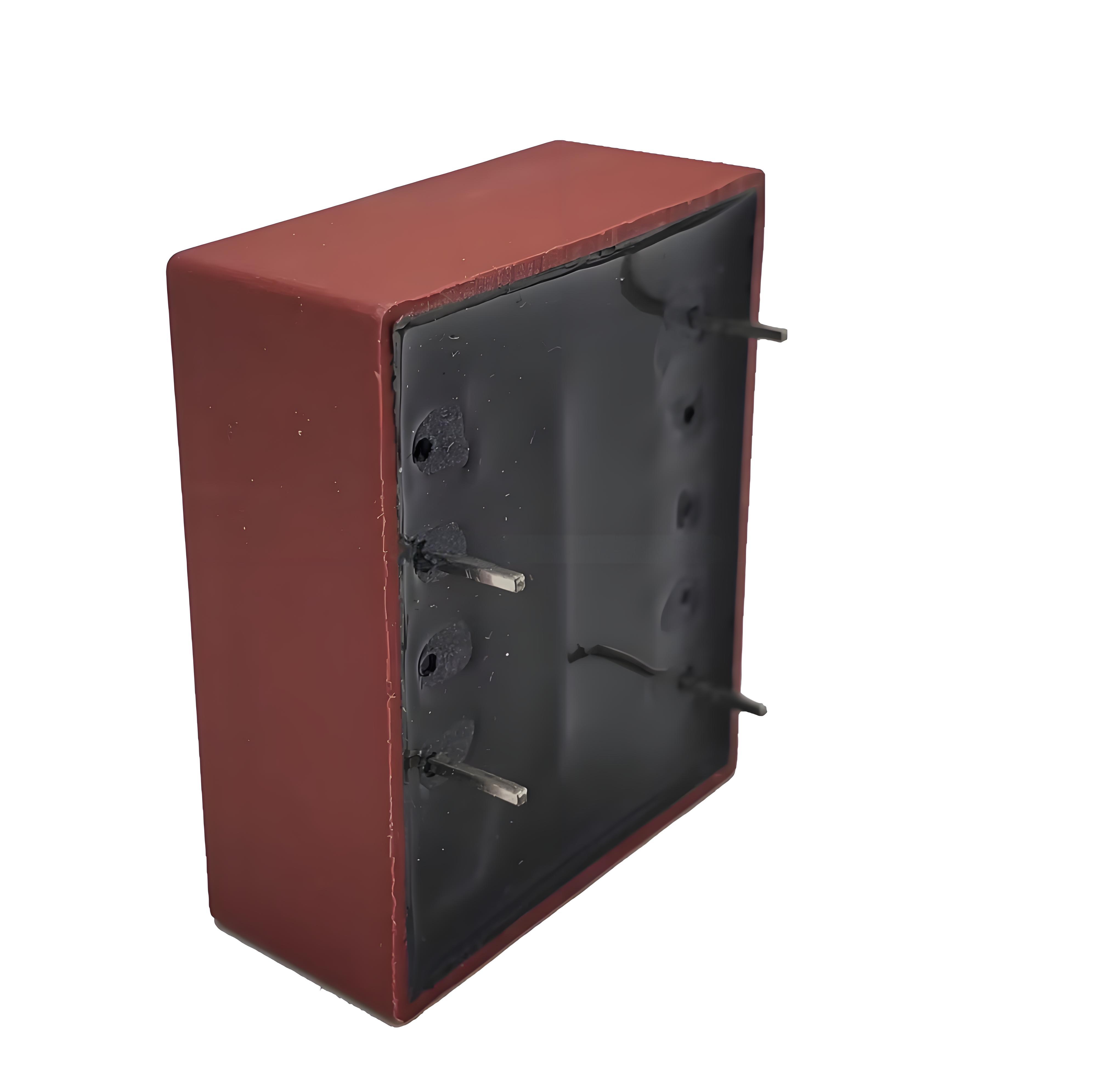
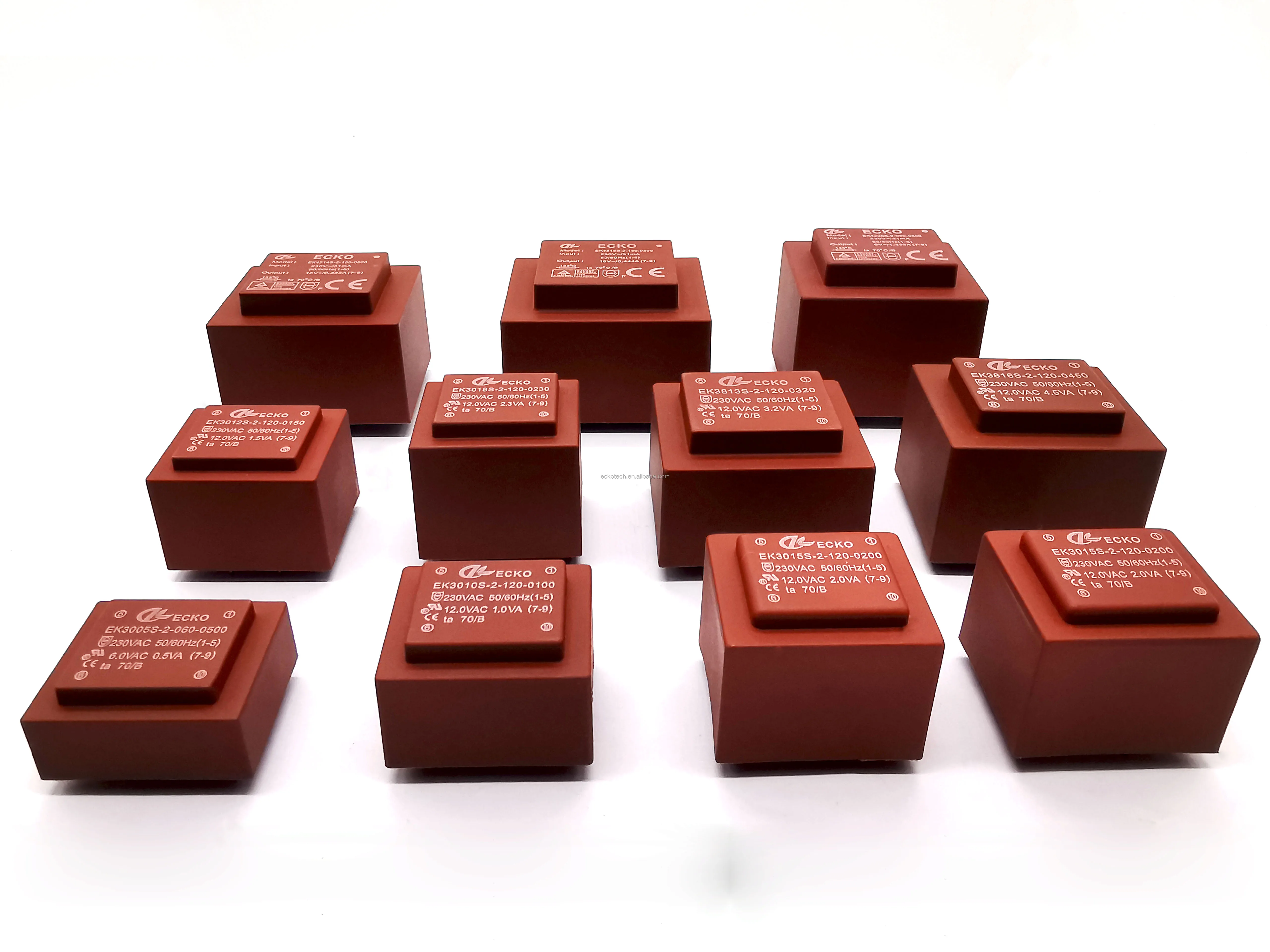
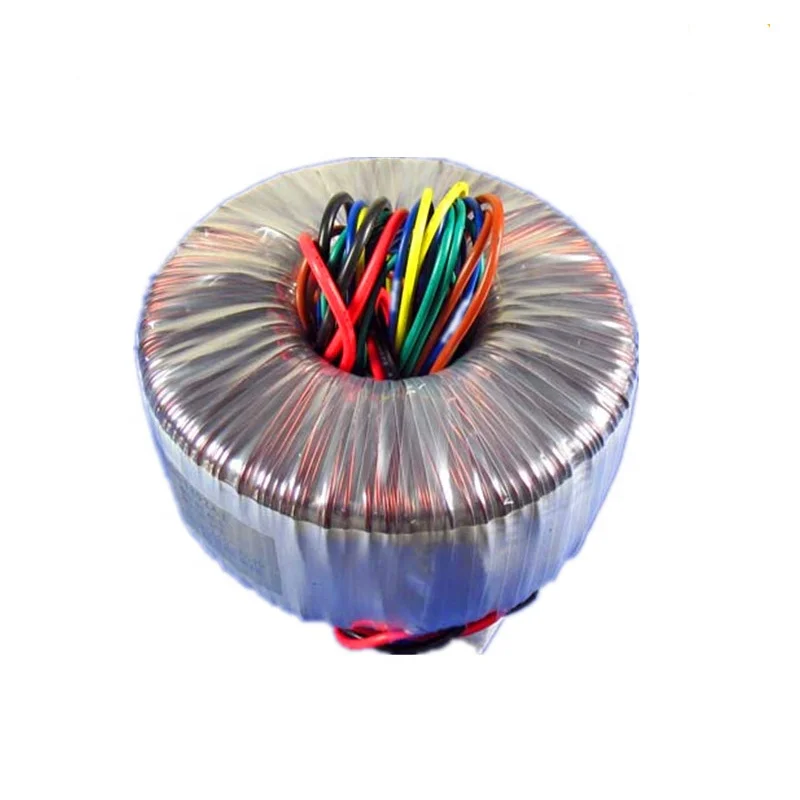
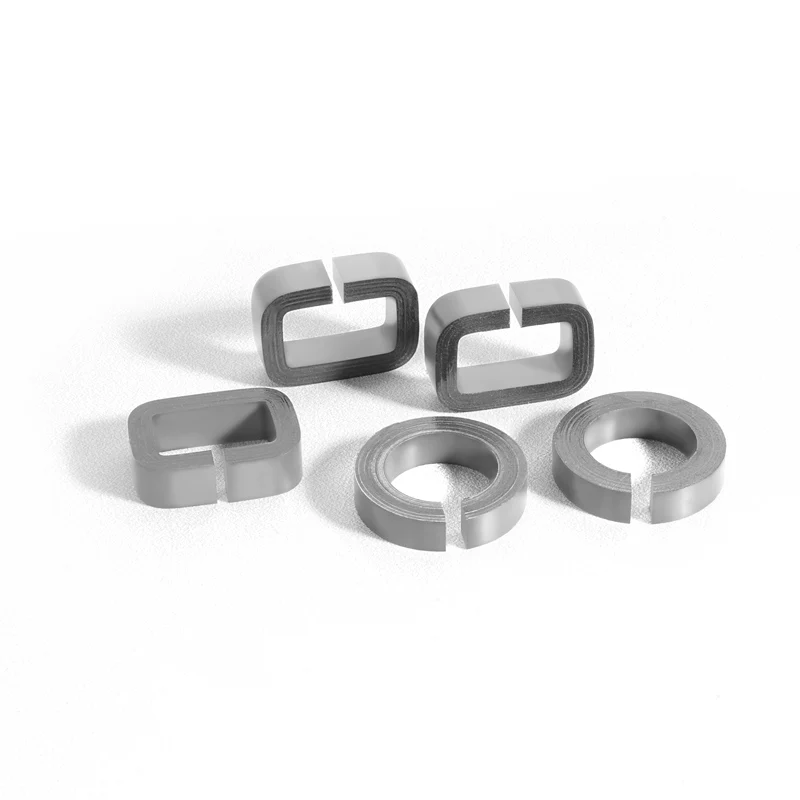
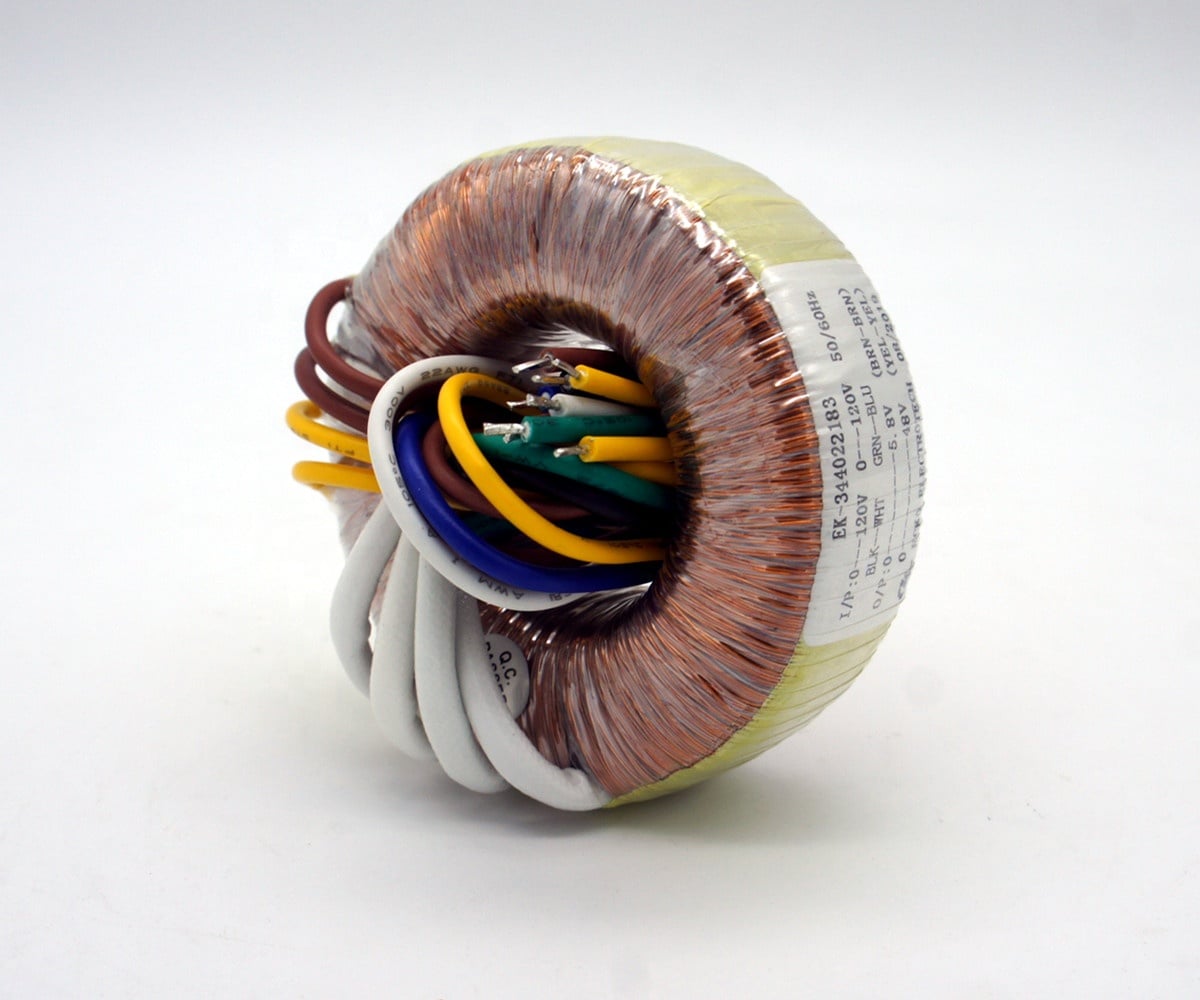
Encapsulated PCB Transformer Specifications
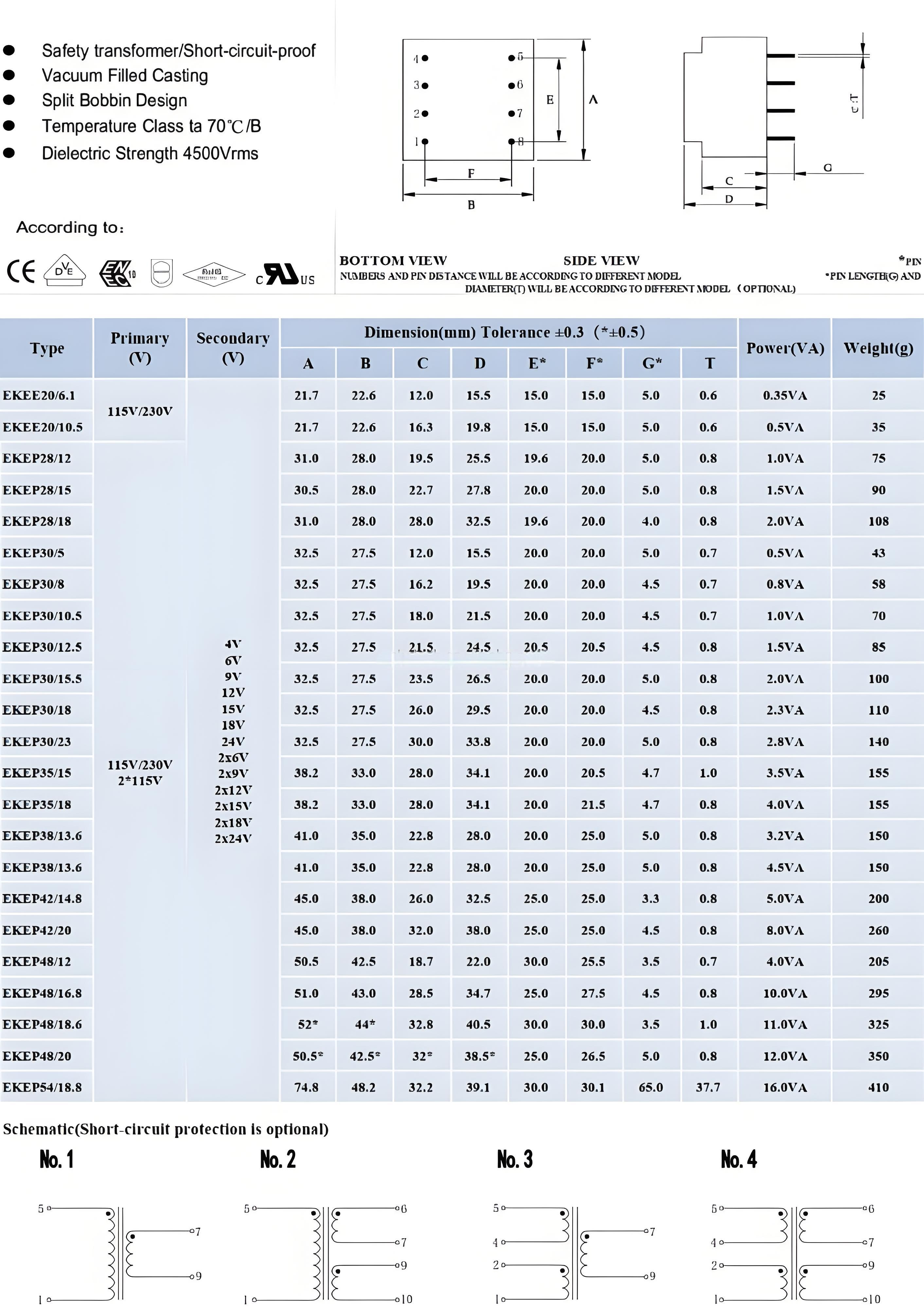
The values above represent common design options rather than the guaranteed specification of every model. Final electrical ratings, dimensions, test limits and compliance requirements are defined in the ECKO-approved product specification and dimensional drawing.
Key Advantages of ECKO Encapsulated PCB Transformers
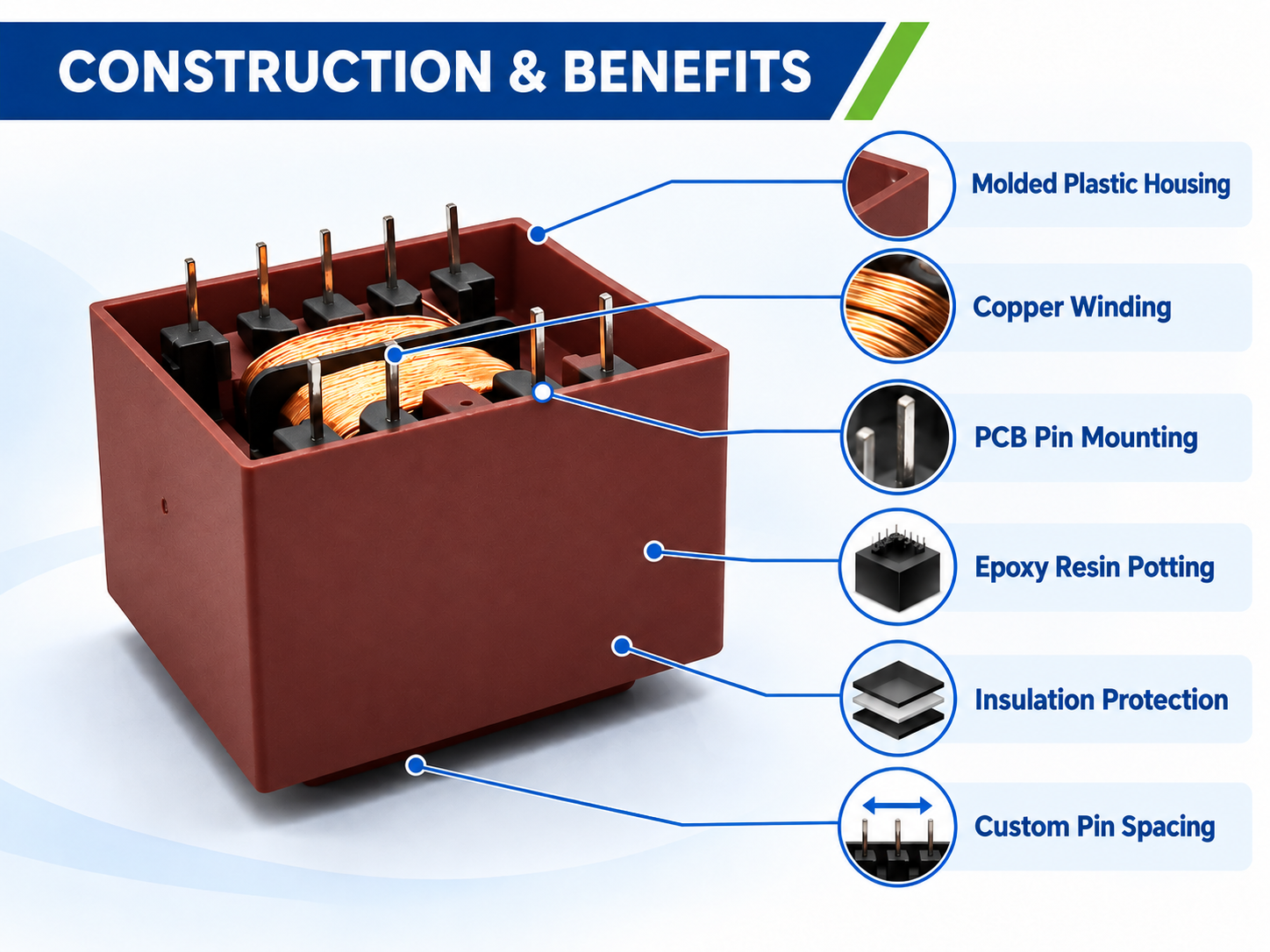
1. Resin-Encapsulated Protection
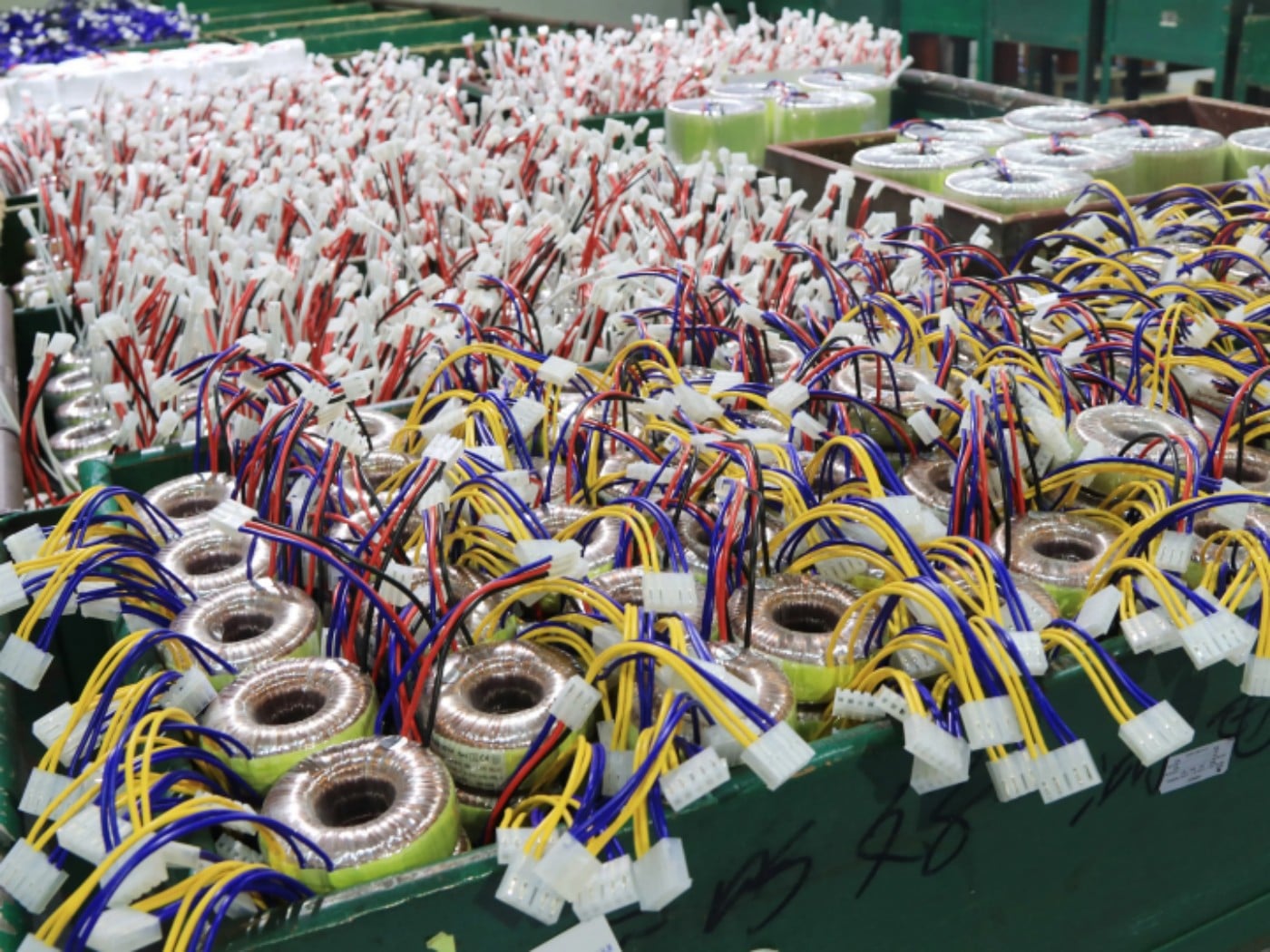
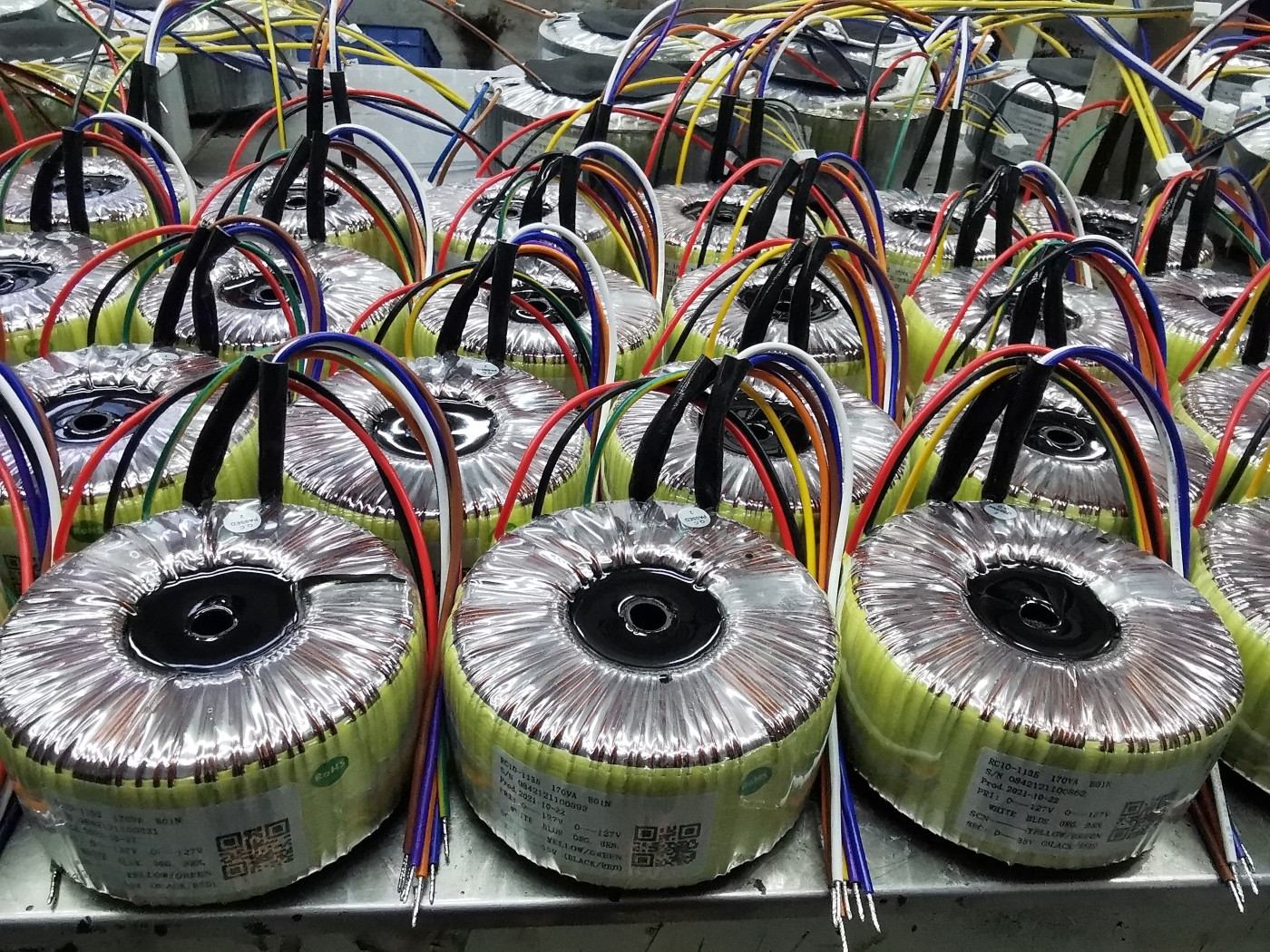
The resin encapsulation immobilizes the windings and internal structure, helping protect the transformer against dust, humidity, vibration and handling damage. It also improves mechanical stability during PCB assembly and long-term equipment operation.
Encapsulation alone does not make the transformer waterproof. Outdoor, washdown or high-condensation applications require a separate environmental and IP protection assessment.
|
2. Compact PCB-Mount Design
The enclosed construction combines electrical isolation and voltage conversion in a space-efficient through-hole component. Customized pin layouts help reduce wiring, simplify assembly and fit the available PCB footprint.
|
3. Stable Voltage and Thermal Performance
The core, winding turns, copper wire size and insulation structure are designed around the actual input range, output load and operating environment. This helps achieve controlled voltage regulation, no-load current, losses and temperature rise.
|
4. Application-Specific Electrical Isolation
Basic, supplementary or reinforced insulation can be considered according to the end-product architecture and applicable safety standard. Creepage distance, clearance, insulation tape, bobbin construction and dielectric test requirements are reviewed during development.
|
5. Reduced Mechanical and Acoustic Noise
Resin encapsulation helps limit movement of the core and windings. Combined with controlled core assembly and production processes, it supports stable and low-noise operation in control, instrumentation and indoor electronic equipment.
|
6. Consistent PCB Assembly
Controlled pin positioning, enclosure dimensions and final inspection improve compatibility with automated or manual PCB assembly. Every approved model is manufactured against controlled drawings, material specifications and electrical test limits.
|
Custom Encapsulated PCB Transformer Options
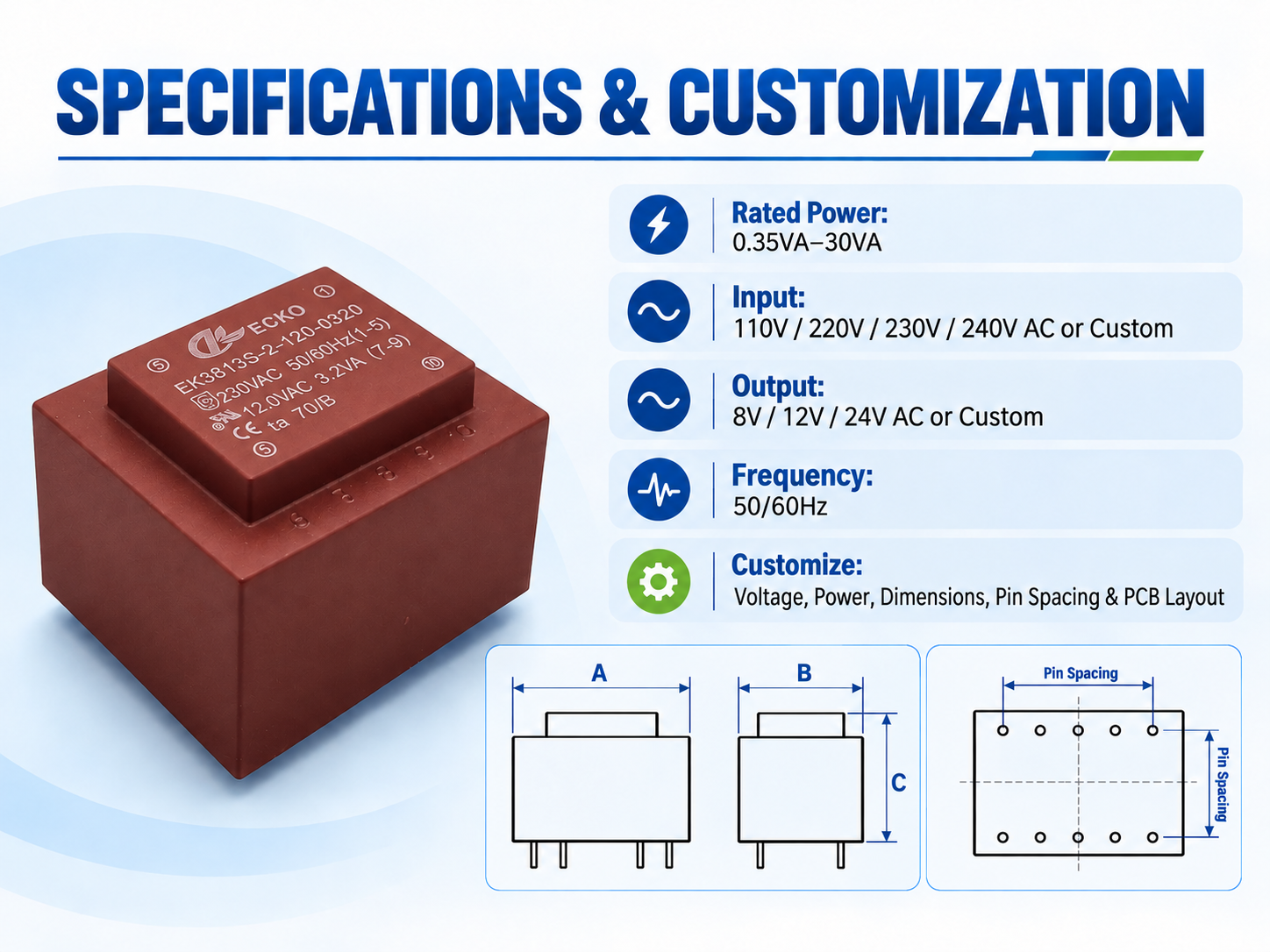
Electrical Customization
- Primary input voltage and input tolerance
- Single or dual primary windings
- Single, dual, center-tapped or multiple secondary outputs
- Rated power and secondary current
- No-load voltage and full-load voltage
- Voltage regulation target
- No-load current and power-loss requirements
- 50 Hz, 60 Hz or universal 50/60 Hz operation
- Basic or reinforced isolation
- Maximum allowable temperature rise
- Continuous, intermittent or application-specific duty cycle
|
Mechanical Customization
- Maximum length, width and height
- PCB pin pitch and row spacing
- Pin diameter, pin length and pin assignment
- Horizontal or vertical PCB-mount construction
- Customer PCB footprint
- Enclosure shape, material and color
- Marking position and orientation
- Customer-specific dimensional tolerances
|
Insulation and Protection Options
- Class B or Class F insulation system
- Thermal fuse embedded in the primary winding
- Resettable PTC protection
- Electrostatic shield with a dedicated grounding pin
- Increased dielectric withstand capability
- Increased creepage and clearance distance
- Short-circuit-resistant design where technically applicable
- Special resin for temperature, humidity or vibration requirements
|
Compliance and Identification
- IEC/EN or UL-oriented construction
- RoHS- and REACH-compliant material options
- UL-recognized insulation materials where required
- Customer logo and private labeling
- Model number, lot number and date-code marking
- Barcode or serialized traceability
- Customer-specific inspection reports and compliance documents
|
Encapsulated PCB Transformer Applications
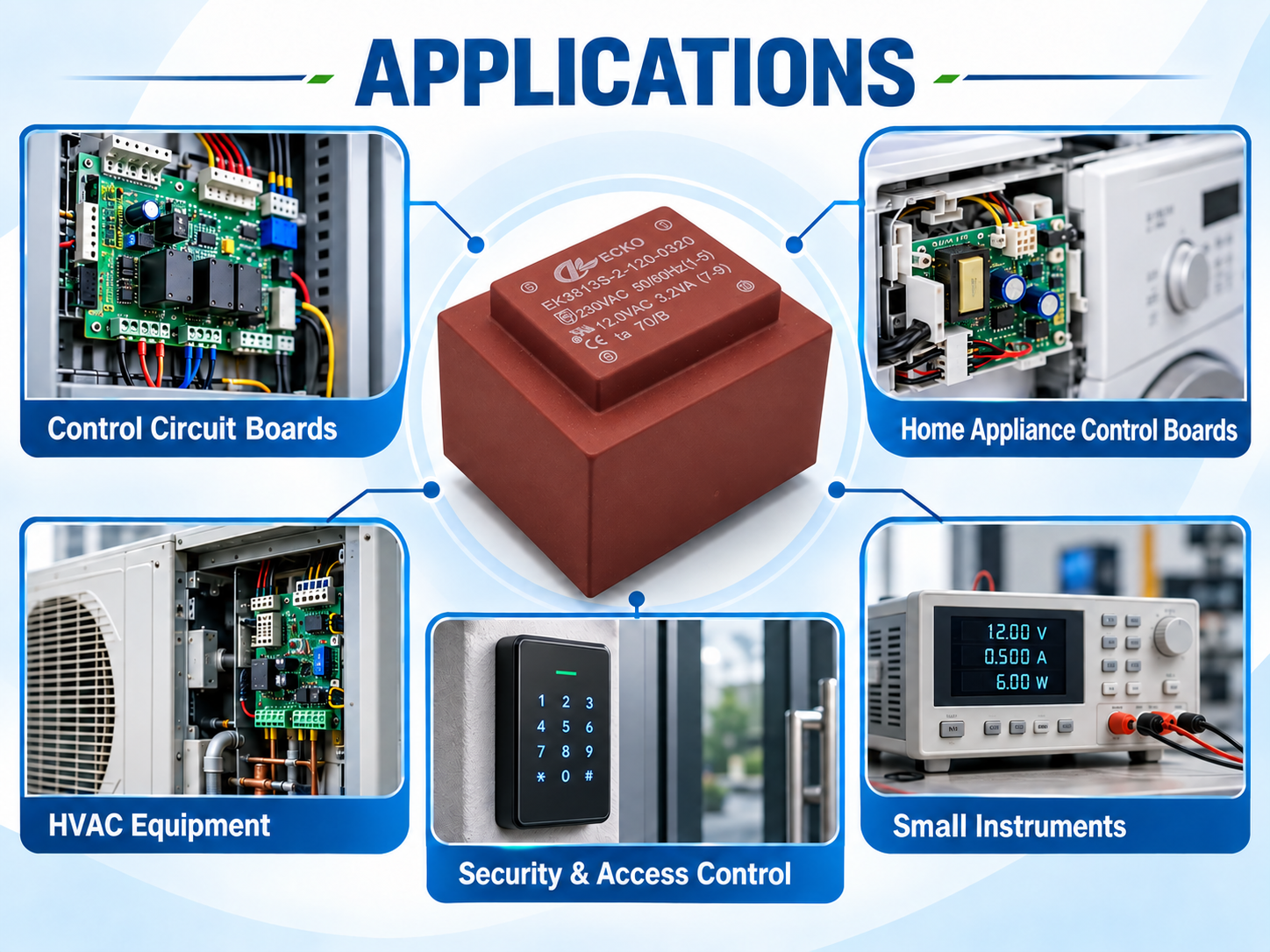
ECKO encapsulated PCB transformer provide compact AC voltage conversion and electrical isolation for industrial, commercial and consumer electronic assemblies. Each transformer can be customized around the PCB footprint, load profile, operating temperature and safety requirements of the end product.
|
Industrial Control and Automation
Supplies isolated low-voltage AC power for PLC interfaces, relays, contactors, timers, sensors and auxiliary control circuits inside industrial controllers and automation equipment.
|
HVAC and Building Controls
Suitable for thermostats, ventilation controllers, boiler controls, access systems and building automation boards requiring a compact board-mounted transformer.
|
Smart Meters and Energy Management
Provides isolated auxiliary power for metering circuits, monitoring devices, energy controllers and power-management electronics.
|
Security and Access Control Equipment
Can be designed for alarm panels, access controllers, intercom systems and other low-voltage security electronics, subject to the approval requirements of the complete end product.
|
|
Household and Smart-Home Appliances
Supports control boards used in kitchen appliances, environmental controls, smart-home devices and other mains-powered electronic products.
|
Test and Measurement Equipment
Delivers isolated AC power for instrumentation, laboratory controllers and measurement circuits. An electrostatic shield can be added when improved capacitive noise isolation is required.
|
Lighting and LED Control Systems
Suitable for lighting controllers, timers, relay boards and auxiliary power circuits that require reliable isolation from the mains input.
|
Communication and Electronic Control Boards
Provides compact board-level power conversion for communication terminals, interface modules and electronic controllers requiring a line-frequency isolated power source.
|
Why Choose ECKO as Your Encapsulated PCB Transformer Manufacturer?
Engineering Design Based on Your Actual Application
|
ECKO does not select a transformer only by input voltage and VA rating. Our engineering review considers:
- Input voltage range and frequency
- Continuous and peak secondary load
- Required no-load and full-load voltage
- Voltage regulation
- Core flux density
- Copper loss and core loss
- Temperature-rise limit
- Insulation structure
- Creepage and clearance distance
- PCB footprint and enclosure restrictions
- End-product safety and compliance requirements
- The resulting design is balanced for electrical performance, thermal behavior, manufacturability and cost.
|
Revision-Controlled Technical Documents
Every customized model is managed through controlled technical documentation, which may include:
- Customer requirement sheet
- Approved electrical specification
- Dimensional and pin-layout drawing
- Bill of materials
- Winding specification
- Insulation construction
- Process instructions
- Approved test limits
- Sample approval record
- Engineering change record
Drawing, specification and material revisions are identified before production. Changes affecting form, fit, function, safety or approved materials are reviewed through the engineering change process instead of being introduced without control.
|
Controlled Raw Materials
ECKO uses specified-grade enameled copper wire, electrical steel laminations, bobbins, insulation materials, housings, pins and encapsulating resin from controlled sources.
Incoming materials are checked according to the applicable inspection plan. Material grade, dimensions, appearance and compliance documentation can be included in the control process according to project requirements.
|
Integrated Manufacturing Capability
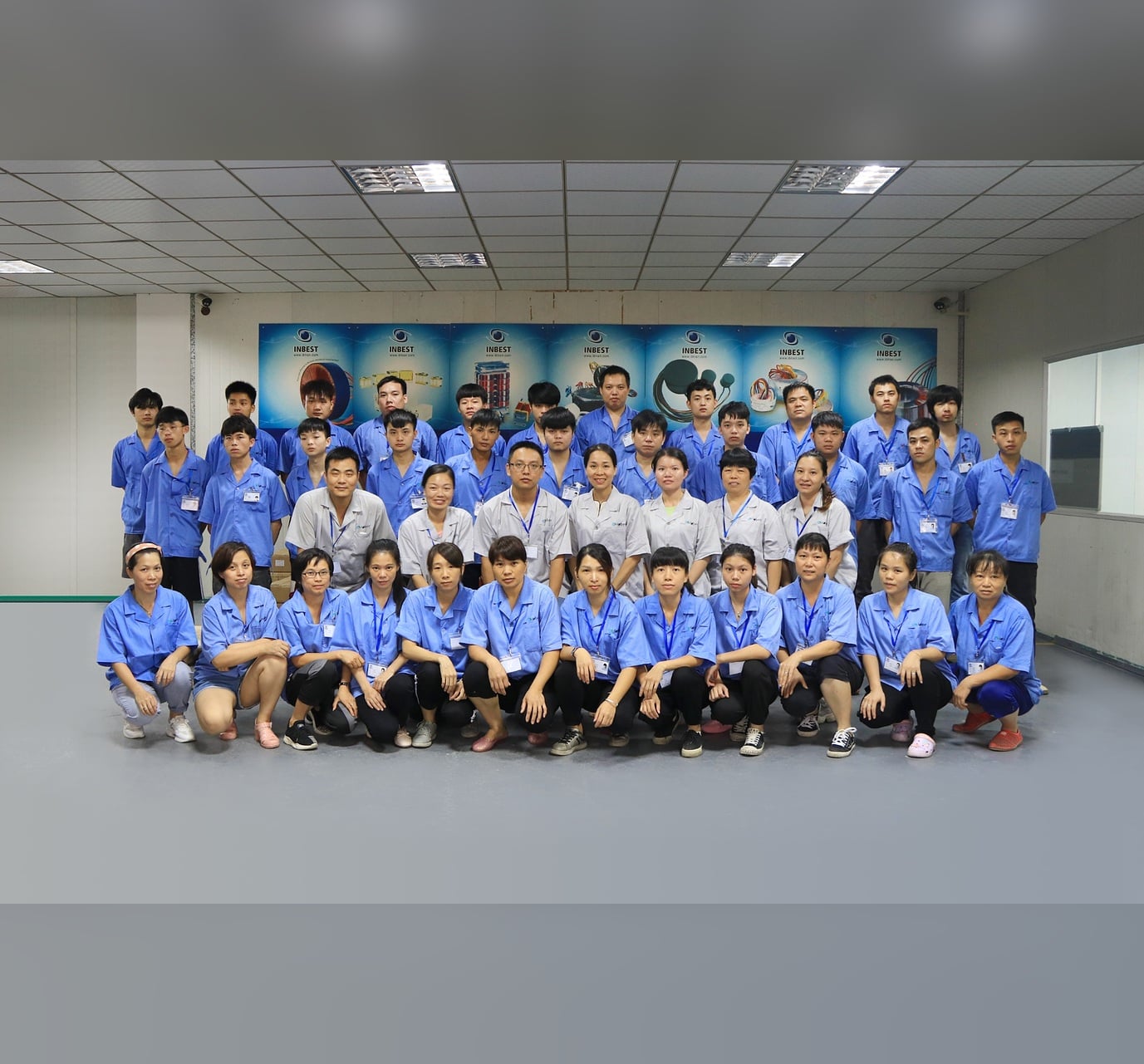
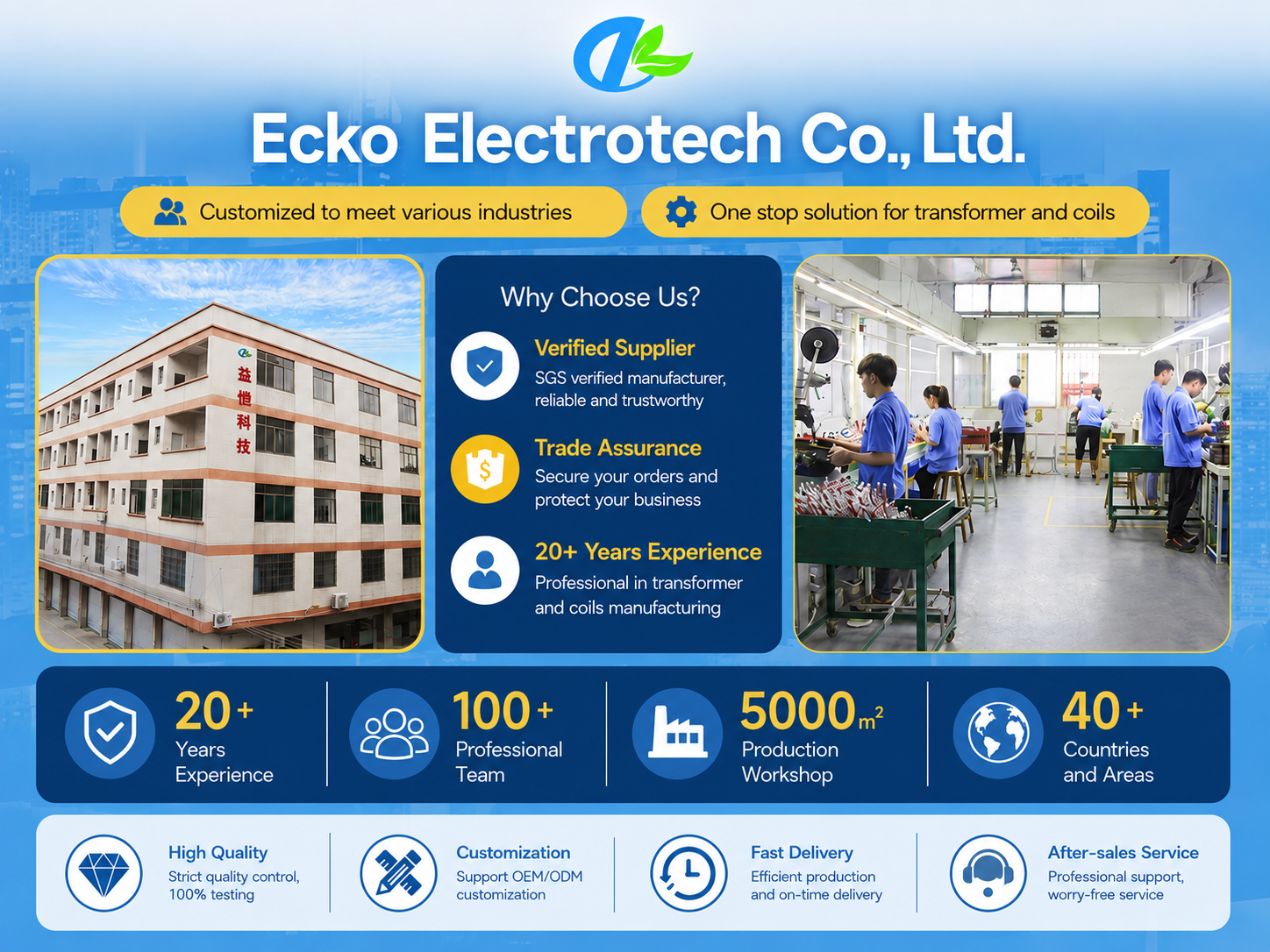
With transformer manufacturing experience since 2000, ECKO operates three workshops covering approximately 5,000 m², supported by around 150 skilled employees and an annual production capacity of up to one million pieces.
Our production capability covers winding, termination, core assembly, resin dispensing, curing, marking, electrical testing, final inspection and export packaging. This integrated workflow supports prototype development as well as repeat-volume production.
|
Traceable Quality Control
Approved models are manufactured according to controlled drawings, work instructions and test limits. Lot identification, material records and test documentation can be maintained according to the agreed quality plan.
Routine electrical tests are performed before shipment, while temperature rise, overload behavior and environmental tests are completed during qualification or according to customer-specific inspection requirements.
|
|
Testing Items and Acceptance Standards
From winding continuity and output voltage to insulation withstand, temperature rise and solderability, ECKO verifies each PCB transformer according to the approved drawing, test specification and inspection plan.
Routine Production Tests
|
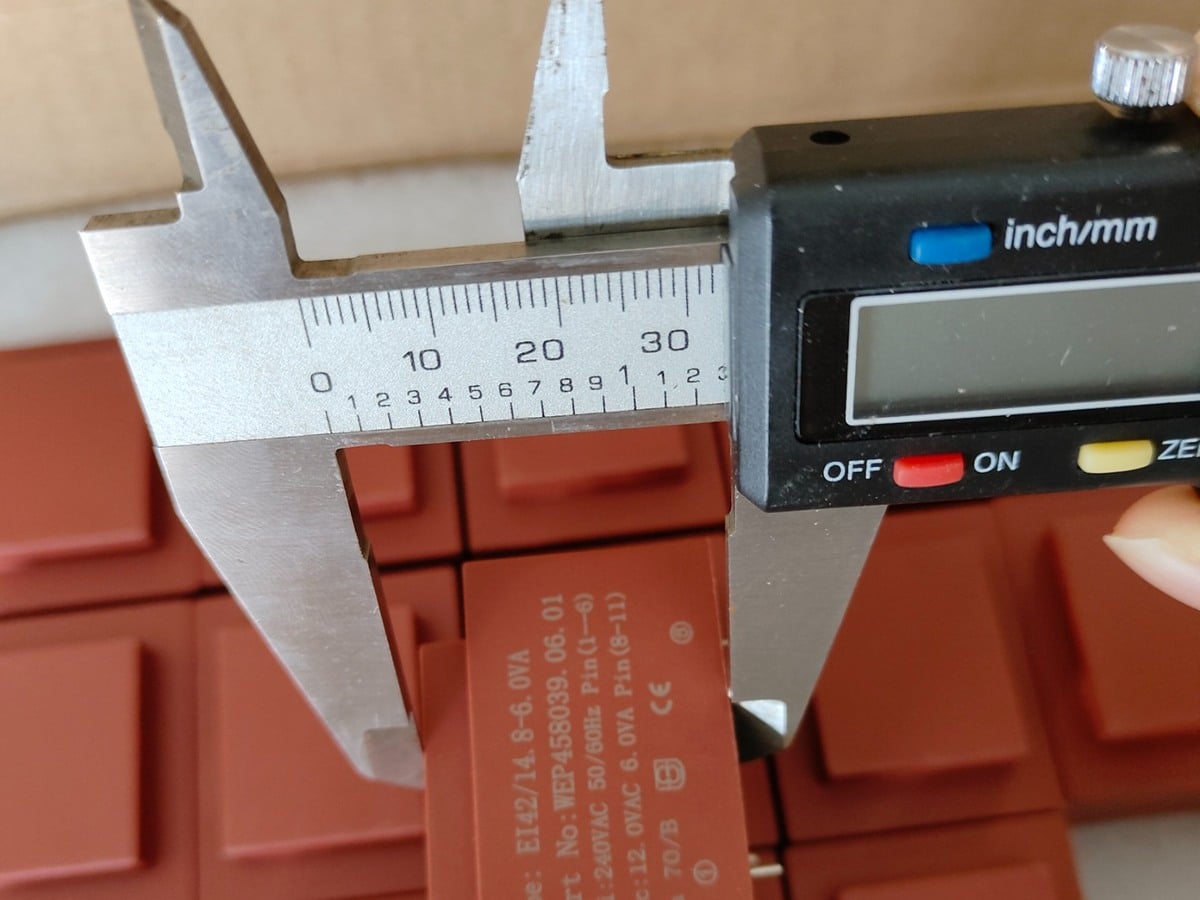
Visual and Dimensional Inspection
Workmanship, labels, polarity marks, pin condition, outline dimensions, seated height, pin pitch and pin position are checked against the approved drawing.
- Visual Inspection: Routine or sampling
- Dimensional Inspection: Sampling, with critical dimensions controlled as specified
|
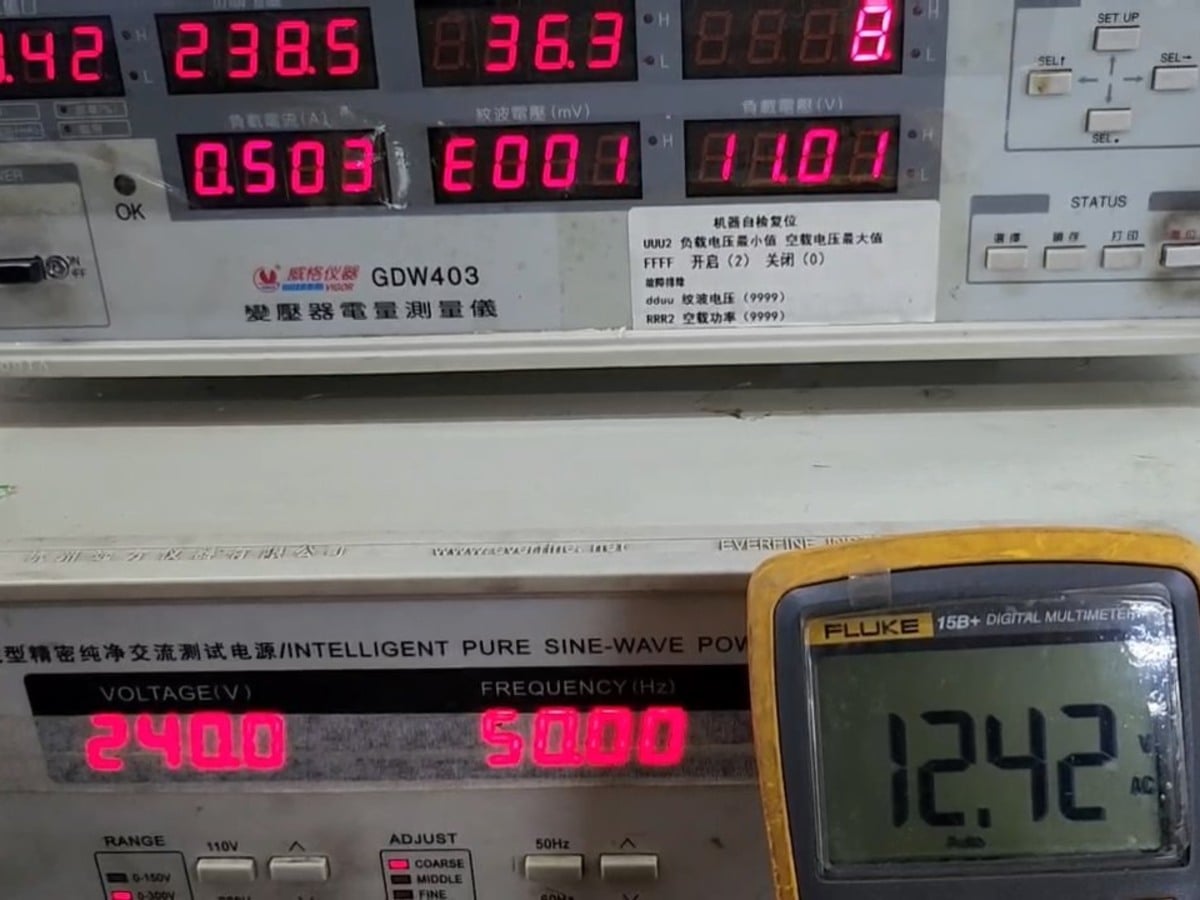
Winding and Output Verification
Winding resistance testing checks conductor continuity and manufacturing consistency. Turns-ratio and output-voltage testing confirm the required secondary voltage and winding polarity at the specified primary input.
- Winding Resistance: Routine test
- Turns Ratio / Output Voltage: 100% routine test
|
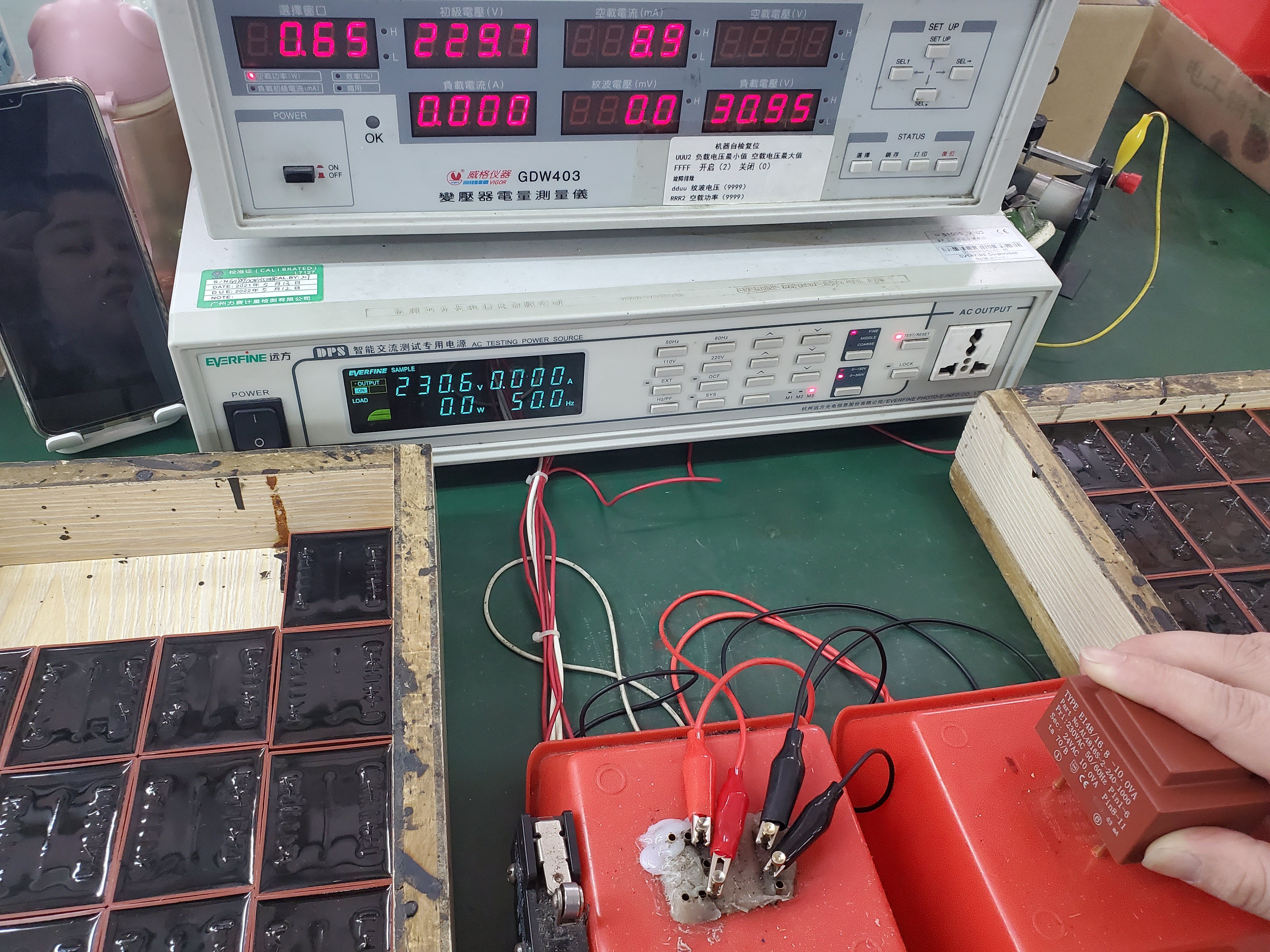
No-Load and Rated-Load Performance
No-load current and no-load loss are evaluated to confirm core assembly, winding consistency and standby performance. Rated-load voltage and regulation are verified under defined input and load conditions.
- No-Load Current: 100% or agreed inspection plan
- No-Load Loss: Sampling or qualification
- Load Voltage and Regulation: Sample and periodic verification
|
|
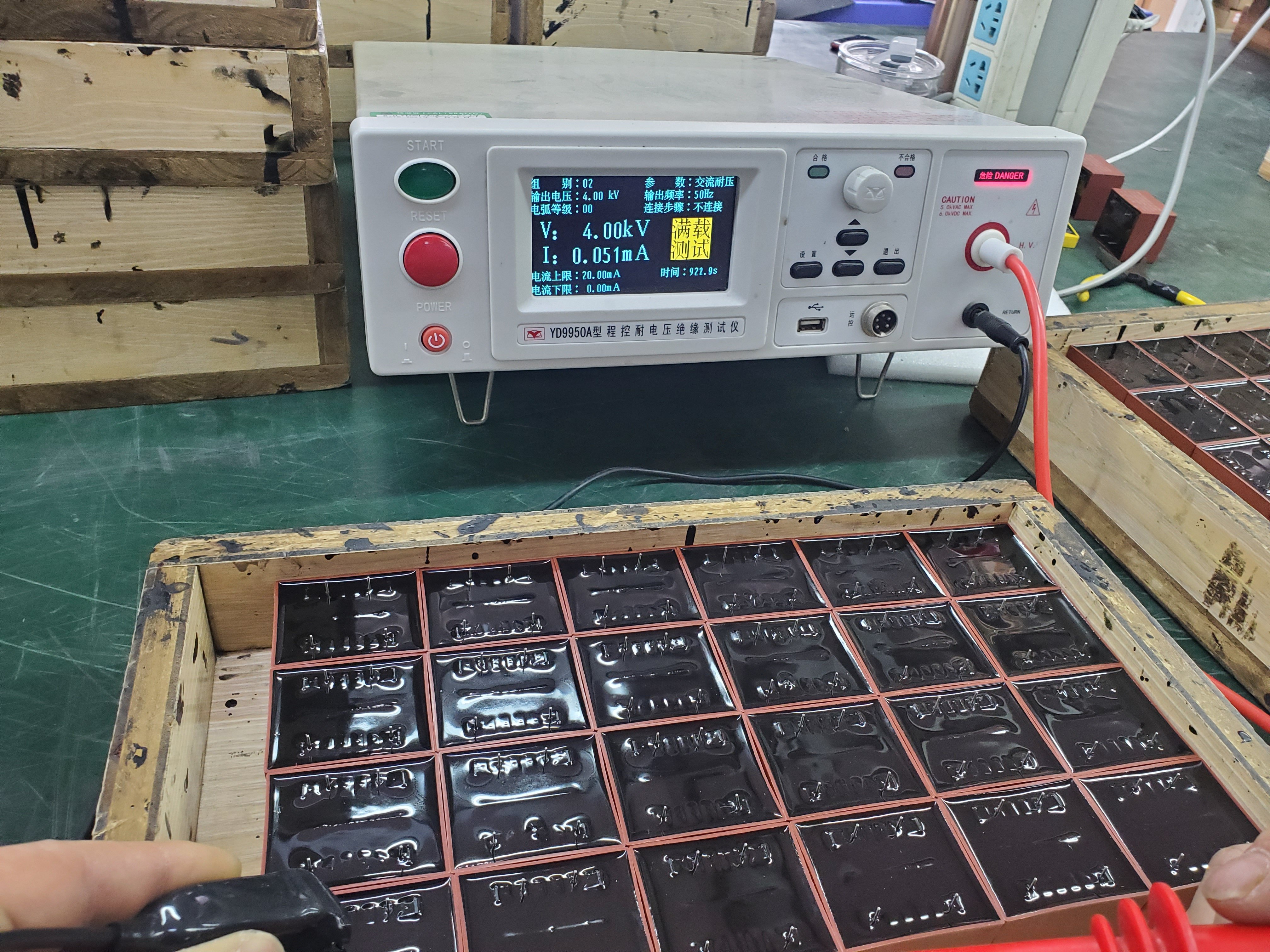
Insulation Safety Testing
Insulation resistance testing checks electrical separation between windings and accessible conductive parts. Dielectric strength testing verifies the specified insulation withstand level at the approved voltage and duration.
- Insulation Resistance: Routine or sampling
- Dielectric Strength / Hi-Pot: 100% at the approved test level
|
Temperature Rise and Audible Noise
Temperature-rise testing verifies thermal performance under defined mounting, ambient and load conditions. Audible-noise evaluation is performed when transformer hum or mechanical vibration is controlled by the project specification.
- Temperature Rise: Type or qualification test
- Audible Noise: When required by the approved specification
|
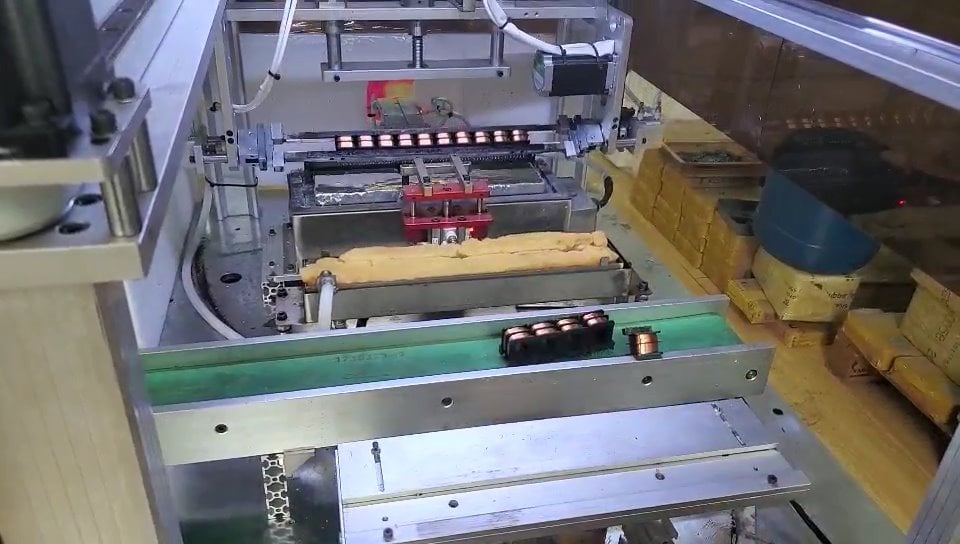
PCB Pin Solderability
PCB pin wetting and resistance to soldering heat are evaluated to support stable PCB assembly and repeatable solder-joint quality.
- Solderability: Qualification or sampling
- Resistance to Soldering Heat: Verified according to the project requirement
|
Custom Encapsulated PCB Transformer Development Process
Step 1: Submit Your Requirements
Provide the input voltage, frequency, output voltage and current, power rating, PCB footprint, maximum dimensions, operating environment and target compliance requirements.
|
Step 2: Engineering Feasibility Review
ECKO evaluates the electrical loading, core size, winding arrangement, insulation structure, temperature rise, pin layout and manufacturability.
|
Step 3: Design Proposal and Quotation
We provide the proposed electrical configuration, mechanical solution, commercial quotation, tooling requirement if applicable and estimated development schedule.
|
Step 4: Specification and Drawing Approval
The electrical specification, outline dimensions, pin assignment, tolerances, test limits, marking and protection features are confirmed before sample production.
|
Step 5: Prototype Manufacturing
Samples are manufactured according to the approved development documents. Critical electrical and mechanical characteristics are inspected before shipment.
|
Step 6: Sample Testing and Customer Approval
The customer evaluates the samples in the actual PCB and end equipment. Any required design adjustments are reviewed, documented and verified.
|
Step 7: Pilot Production
A pilot run can be arranged to verify production repeatability, assembly compatibility, material control and test consistency before volume production.
|
Step 8: Mass Production and Shipment
Mass production is completed according to the approved specification, BOM, process instructions and inspection plan. Final products are tested, packed and shipped with the agreed documents.
|
|
Encapsulated PCB Transformer FAQ
1. What is an encapsulated PCB transformer?
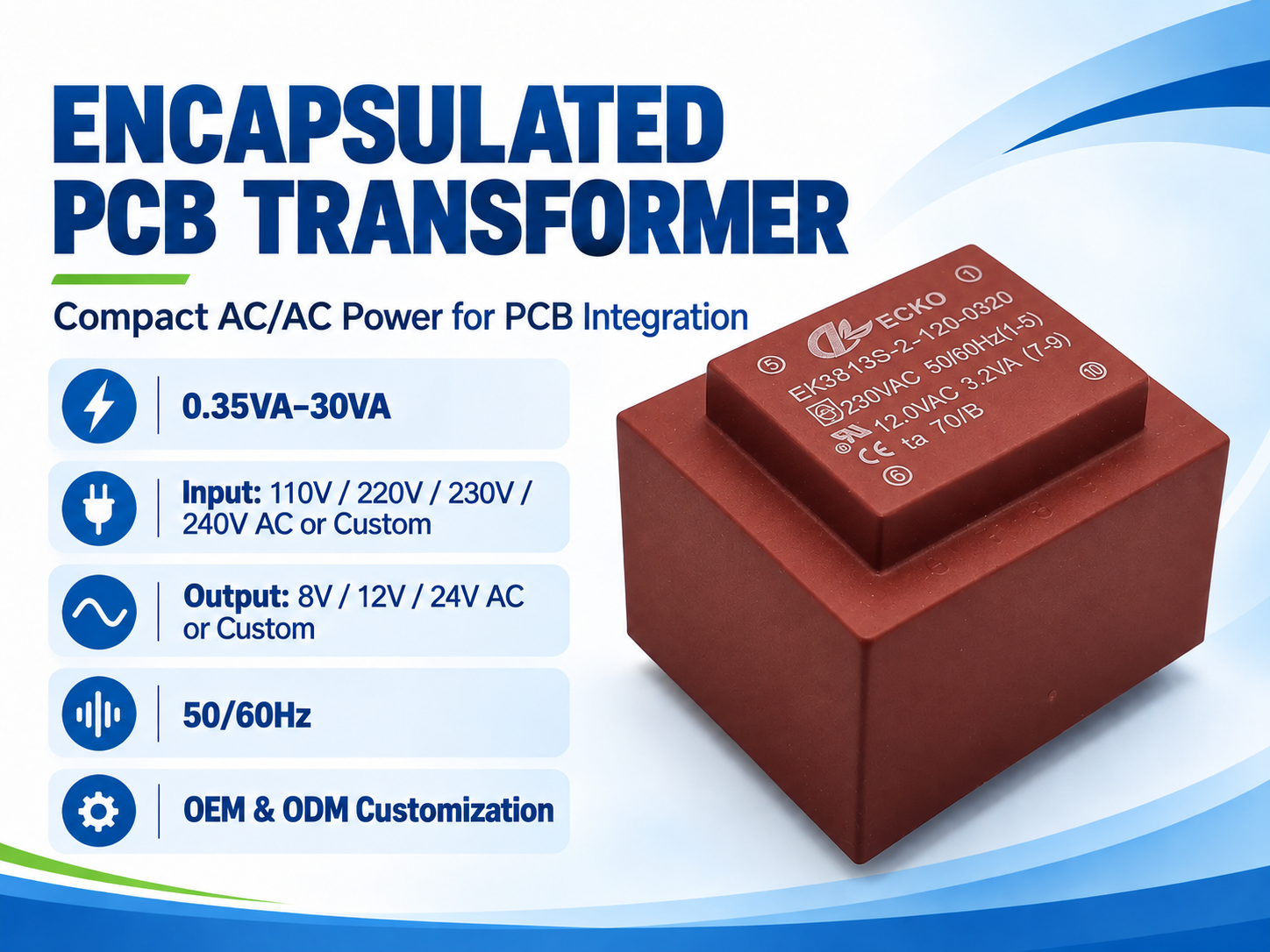
An encapsulated PCB transformer is a compact power transformer designed for direct mounting on printed circuit boards. The windings and core are enclosed in an insulating housing and encapsulated with resin to improve electrical insulation, mechanical stability, moisture resistance, and long-term reliability.
2. What is the difference between an encapsulated PCB transformer and an open-frame PCB transformer?
An encapsulated PCB transformer is protected by a molded housing and potting compound, while an open-frame PCB transformer has exposed windings and core structures. Encapsulation provides better protection against dust, moisture, vibration, and environmental contamination.
3. What power ratings are available for encapsulated PCB transformers?
Encapsulated PCB transformers can be manufactured in a wide range of power ratings, depending on the required input voltage, output voltage, PCB footprint, temperature rise, and application. Custom VA ratings can also be developed according to customer specifications.
4. Can you customize the input and output voltage?
Yes. We can customize primary and secondary voltages according to the customer's circuit requirements, including single-input, dual-input, single-output, dual-output, and multiple-secondary configurations.
5. Are encapsulated PCB transformers suitable for 50Hz and 60Hz?
Yes. Designs can be optimized for 50Hz, 60Hz, or 50/60Hz operation depending on the target market and electrical requirements.
6. Can an encapsulated PCB transformer be mounted directly onto a PCB?
Yes. The transformer can be designed with PCB pins at specified positions and spacing for through-hole mounting directly onto a printed circuit board.
7. What materials are commonly used for encapsulation?
High-quality insulating epoxy resin or other approved potting materials can be used depending on insulation, flame-retardant, thermal, and environmental requirements.
8. Can the transformer dimensions be customized?
Yes. Transformer dimensions, pin layout, mounting footprint, height, and housing structure can be customized where technically feasible.
9. What information is required for a quotation?
We normally require input voltage, output voltage, rated power or output current, frequency, dimensions, PCB pin layout, insulation requirements, application, and estimated order quantity.
10. Can you develop an encapsulated PCB transformer from an existing sample?
Yes. We can evaluate an existing transformer sample, drawing, specification sheet, or PCB layout and develop a compatible transformer according to the customer's technical requirements.
 EN
EN