EN
EN

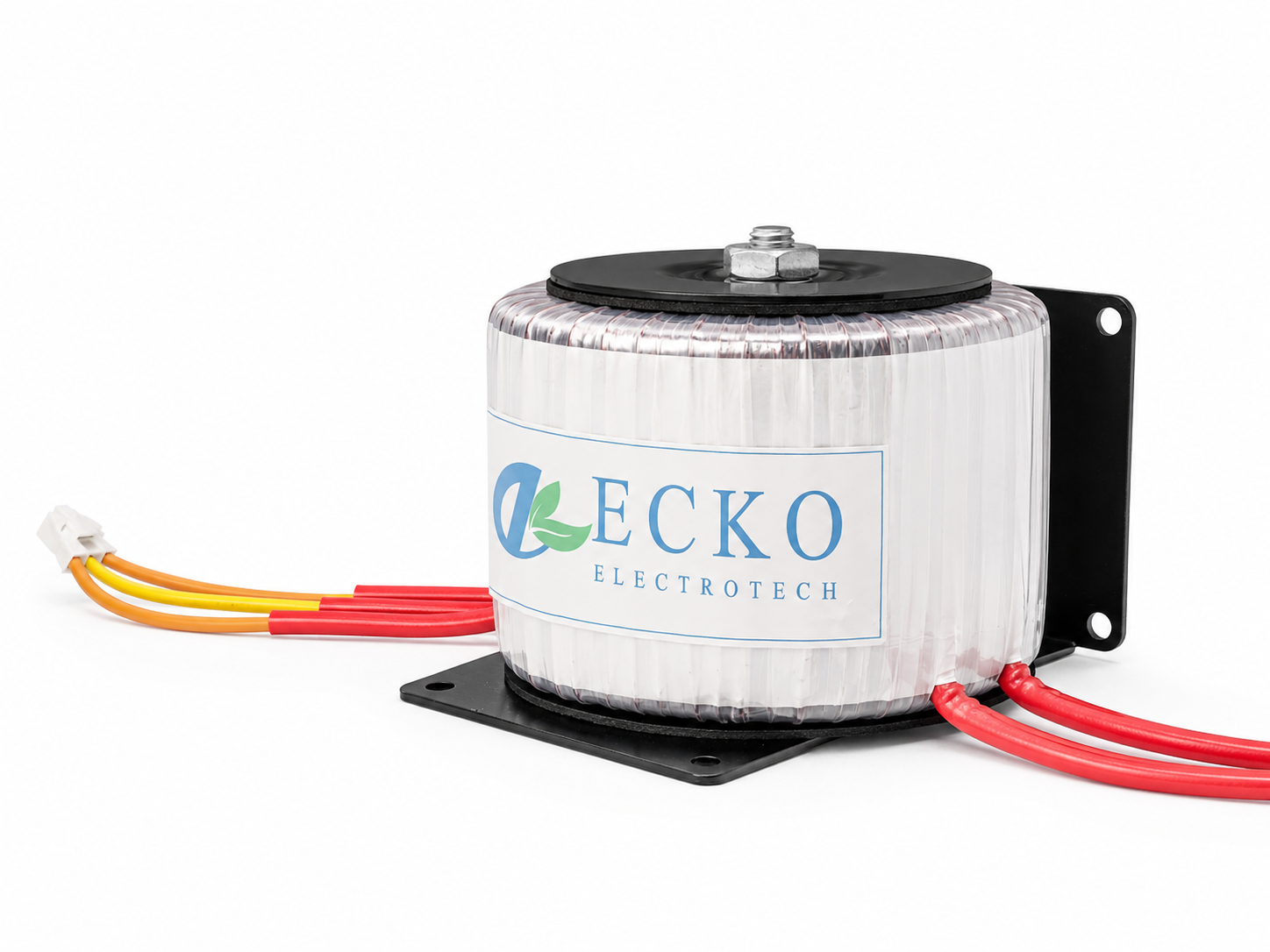
Custom Toroidal Transformer for Garage Door Openers
Compact, low-noise power engineered for motor starting current, repeated door cycles, control electronics and OEM installation constraints.
| Rated power | 130VA |
| Input | 110V–240V AC |
| Output | 12V AC or customized |
| Frequency | 50/60Hz |
| Winding | Copper |
| Insulation | Class B or customized |
| Application | Audio/Amplifiers |
| Customization | Voltage, dimensions, wires, shielding |
- Overview
- Recommended Products
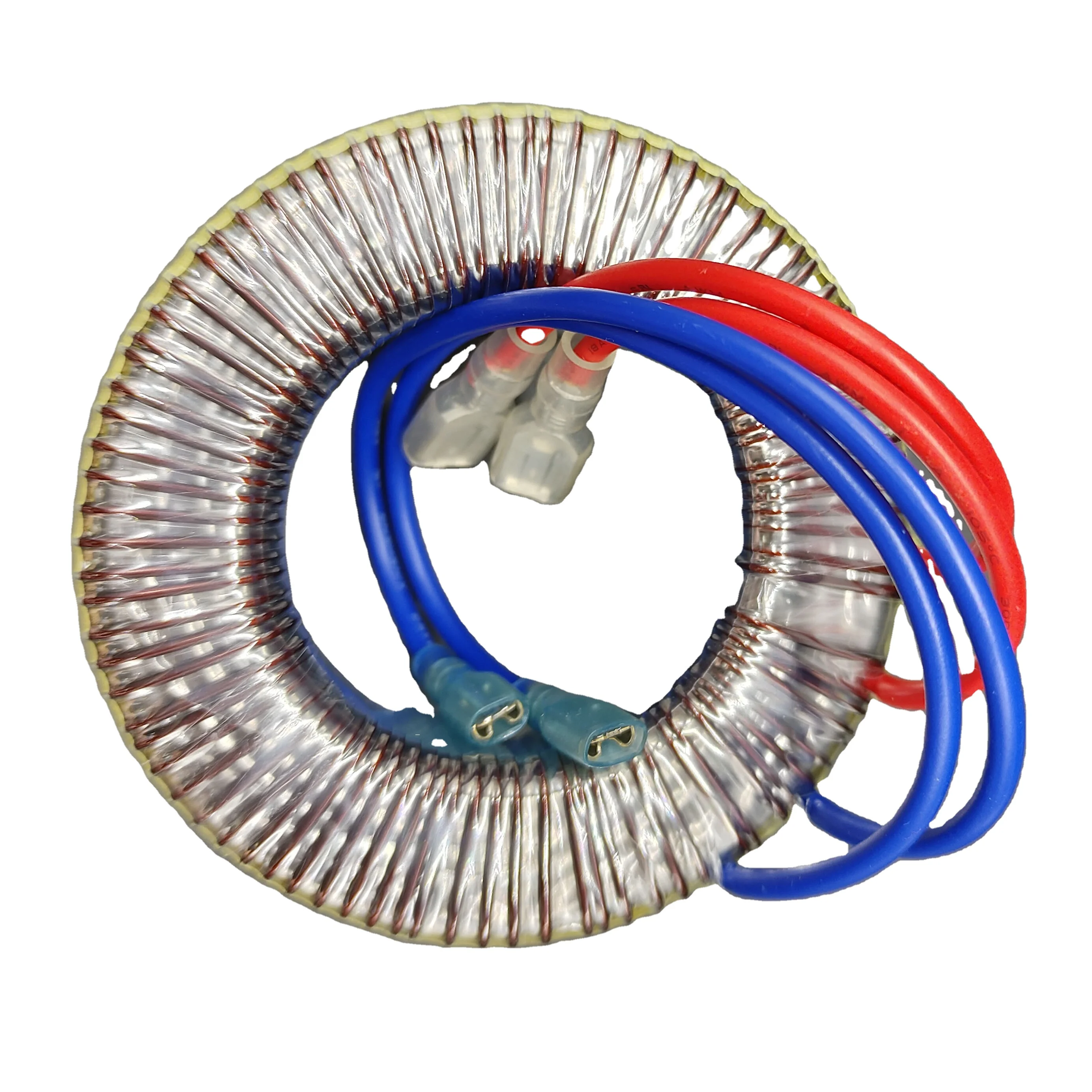
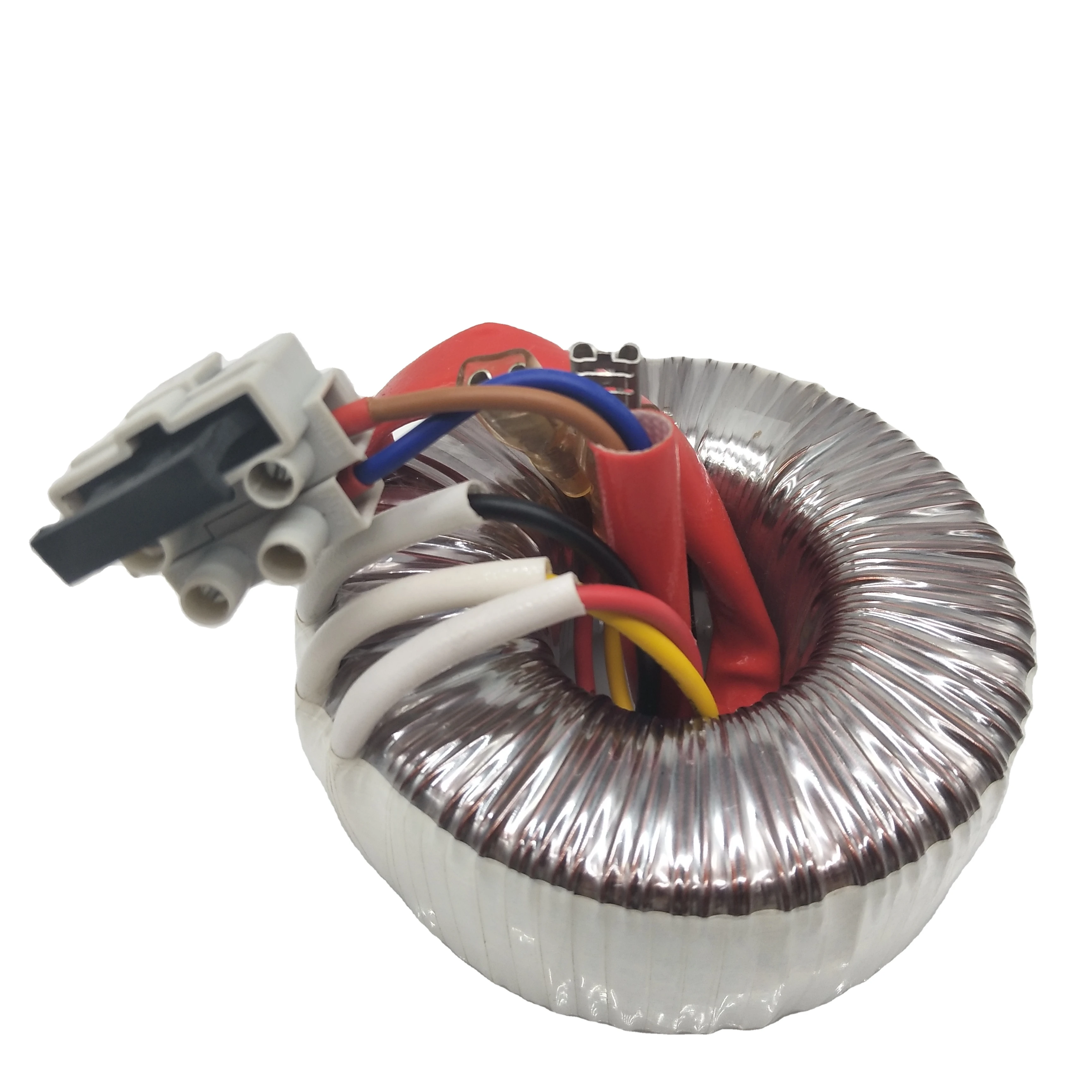
ECKO designs custom toroidal transformers for residential and commercial garage door operators. Each design can be matched to the mains supply, motor or DC-bus load, control board voltage, door cycle profile, available mounting space and target-market safety requirements.
Compared with a conventional laminated transformer of a similar rating, a toroidal construction can provide a lower profile, reduced stray magnetic field and quiet operation. The final design is verified against the actual startup and continuous-load conditions of the garage door system, rather than selected from motor wattage alone.
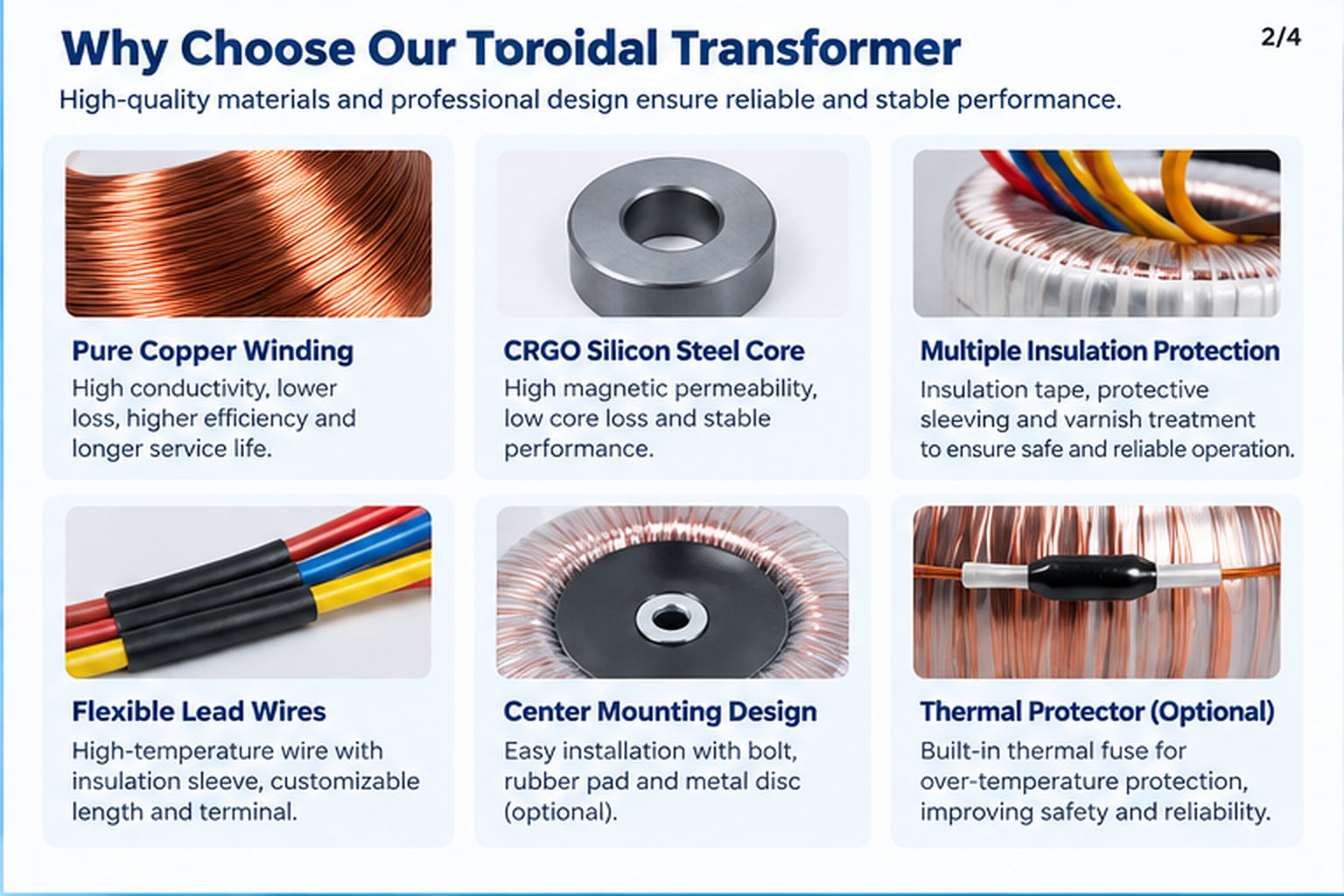
PRODUCT ADVANTAGES
CUSTOMIZATION OPTIONS
A garage door transformer should be specified as part of the complete operator, not as an isolated voltage-conversion component. The following options can be combined after ECKO reviews the motor, rectifier, control board, enclosure and target market.
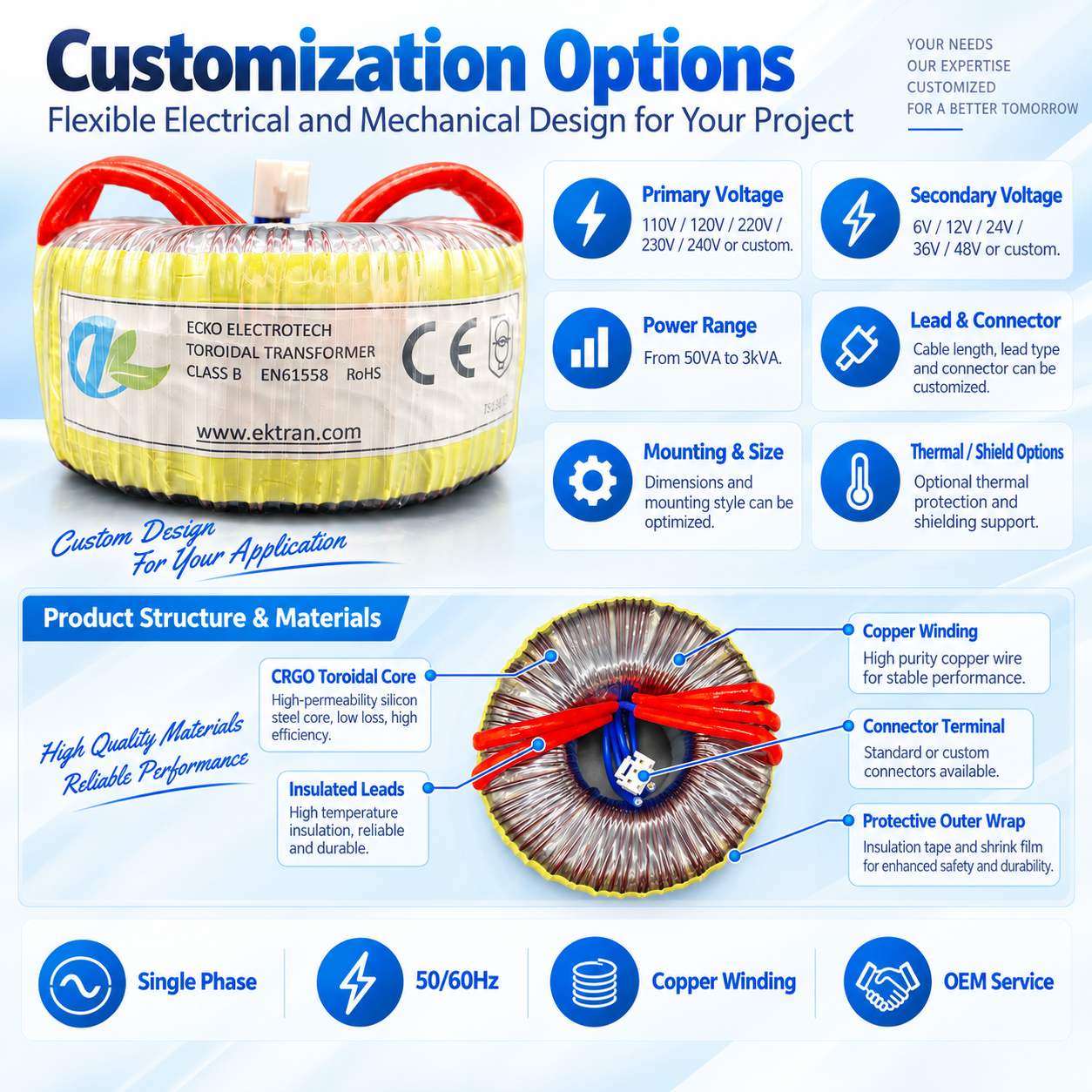
Need a non-standard voltage, limited installation height, separate motor and control windings, a specific connector or additional thermal protection? ECKO can develop the transformer around your garage door opener drawing and electrical load profile. Send the enclosure limits and operating data for a design review before sampling.
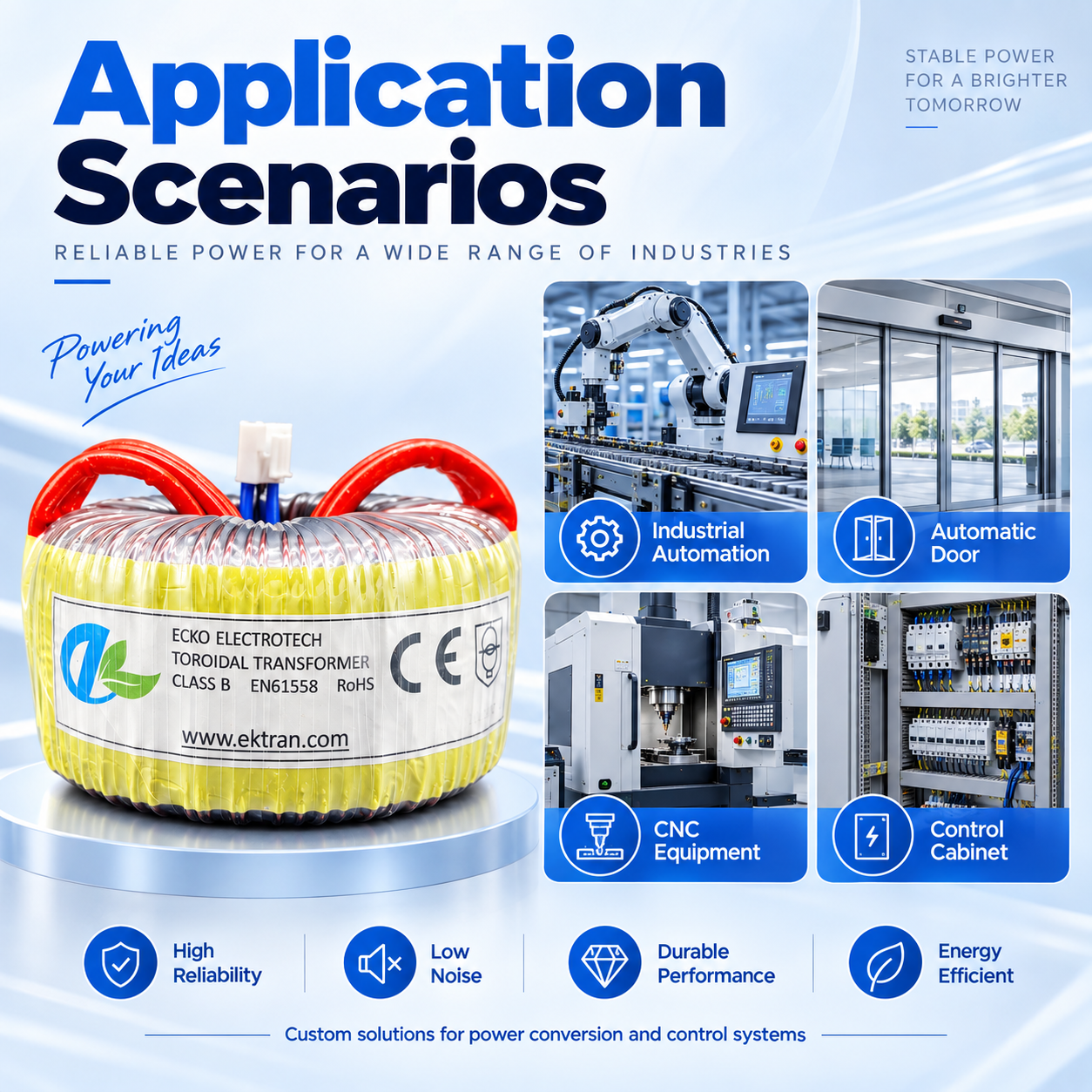
APPLICATION SCENARIOS WITH HTML COPY
WHY CHOOSE ECKO
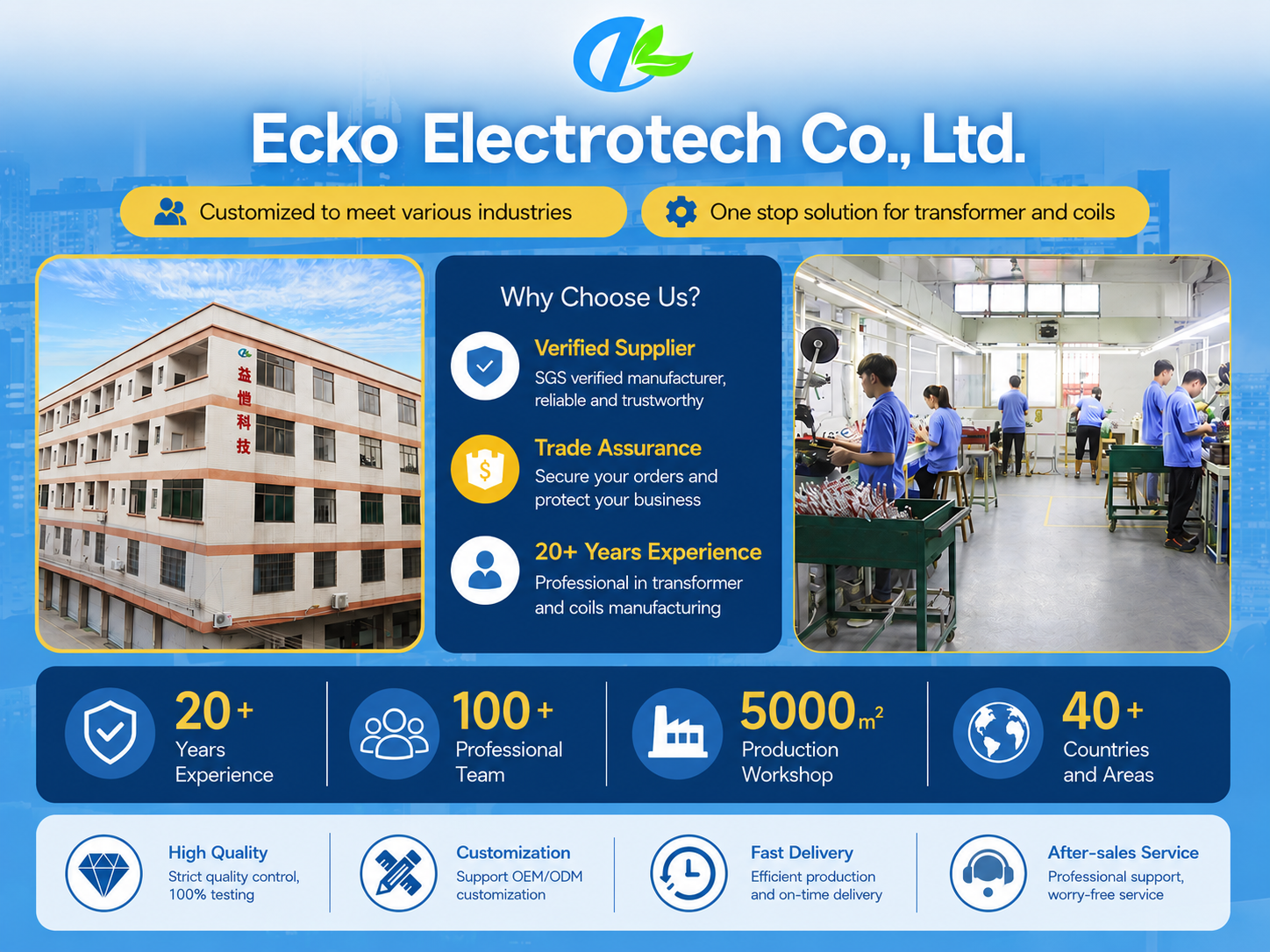
A useful supplier advantage is not a generic claim such as 'high quality.' It is the ability to convert the garage door operator's real electrical, thermal and mechanical requirements into a controlled transformer design that can be repeated in production.
QUALITY TESTING
Testing is divided into routine production checks and design-qualification tests. This is more accurate than claiming that every unit receives every possible laboratory test. The final inspection plan, limits and sampling level are defined on the approved specification.
Test / control |
What it verifies |
Typical control level |
Incoming material verification |
Core, wire, insulation, protection parts, leads and connectors match the approved BOM |
Incoming / lot control |
Winding resistance and continuity |
Correct conductor path, connection and resistance window |
100% routine |
Turns ratio / no-load output voltage |
Correct winding ratio and secondary identification |
100% routine |
No-load current and no-load loss |
Core assembly and winding behavior remain within the released limit |
100% routine where specified |
Load voltage / regulation |
Output remains within the approved range at defined running load |
Sample or 100% by project |
Dielectric withstand (Hi-Pot) |
Primary-secondary and other required insulation barriers withstand the specified test voltage |
100% routine to approved limit |
Insulation resistance |
Insulation condition between defined circuits meets the project requirement |
Routine or sampling by plan |
Thermal-protector function |
Fuse, thermostat or resettable protector matches the approved component and function |
Verification by plan |
Temperature rise |
Winding/core temperature under defined load, ambient, mounting and duty cycle |
Design qualification / periodic validation |
Motor-start / rectifier-capacitor load |
Voltage sag, heating and current behavior under the actual operator load profile |
Prototype qualification when required |
Audible noise and vibration |
Mechanical hum and mounting interaction are acceptable in the specified assembly |
Sample qualification / agreed production check |
Dimensional and visual inspection |
OD, height, center hole, leads, connectors, labels, workmanship and mounting kit match the drawing |
100% visual; dimensions by plan |
Standards and Certification Note
Where required, the transformer construction and test plan can be reviewed against IEC 61558-1 with the applicable particular part, such as IEC 61558-2-4 for isolating transformers or IEC 61558-2-6 for safety isolating transformers. North American projects may require UL 5085-1 together with the applicable Part 2 or Part 3, depending on circuit classification and end use.
CUSTOMIZATION PROCESS
The process below gives garage door manufacturers clear approval points before ECKO moves from application data to repeat production.
RFQ Engineering Checklist
Input voltage range and frequency
Required AC secondary voltage(s) and continuous current(s)
Motor running current, starting/peak current, stall current and duration
Rectifier type, DC load and reservoir-capacitor value, if applicable
Door cycles per hour/day and worst-case operating sequence
Maximum ambient temperature, enclosure ventilation and mounting orientation
Maximum transformer outer diameter, height, center hole and keep-out zones
Lead wire or connector drawing, pinout and required cable length
Thermal protection, shielding, acoustic and inrush requirements
Target countries, end-product standard, certification and documentation requirements
Estimated annual quantity, sample quantity and project schedule
PRODUCT-LEVEL FAQ
1. What information is required to design a toroidal transformer for a garage door opener?
Please provide the mains voltage range and frequency, required AC outputs, motor running/start/stall current, startup duration, duty cycle, rectifier and capacitor data, control-board loads, maximum ambient temperature, enclosure dimensions, mounting method, leads/connectors and target-market requirements. A motor nameplate alone is usually not enough to size the transformer correctly.
2. How should the transformer VA rating be selected for a garage door motor?
VA should be based on the RMS electrical load, startup current profile, acceptable voltage drop, operating time, cycle frequency and thermal conditions. Selecting VA from motor watts alone can understate the pulsed current drawn by the motor drive or rectifier-capacitor circuit. ECKO therefore reviews both continuous and transient loads before confirming the rating.
3. Can one toroidal transformer supply both the garage door motor and control PCB?
Yes. A transformer can use separate secondary windings for the motor/DC bus and for logic, relays, sensors, lighting or accessories. The required isolation, grounding/common reference, voltage tolerances and fault behavior must be defined so that the windings integrate correctly with the complete control circuit.
4. Can the secondary feed a bridge rectifier and large reservoir capacitor?
But the transformer must be designed for the non-sinusoidal charging current drawn by a capacitor-input rectifier. Please provide the DC voltage, continuous and peak DC current, bridge configuration, capacitor value, mains tolerance and motor-start profile. The AC secondary current can be significantly different from the DC load current.
5. Can you provide a dual 115/230 V primary for one global garage door platform?
Two primary windings can be connected in parallel for approximately 115 V operation and in series for approximately 230 V operation, subject to the approved wiring scheme. Clear lead identification, connector interlocks, labels and assembly instructions are important to prevent incorrect field or factory connection.
6. Can the transformer include several secondary voltages?
Single, center-tapped, dual and multiple isolated secondary windings are available. For example, one winding may supply the motor drive while another supplies logic or accessories. Please specify the current and tolerance for each output and whether the windings must be isolated or share a reference after rectification.
7. How can voltage drop during garage door motor startup be reduced?
ECKO can optimize core size, copper cross-section, winding arrangement and nominal secondary voltage after reviewing the peak current and minimum acceptable start voltage. The design should then be verified in the actual operator at low-line input, because wiring, rectifier losses, capacitor ESR and motor condition also affect the available voltage.
8. Can primary inrush current be reduced?
Inrush can be managed through appropriate operating flux density, core selection and winding design. If the breaker, relay or electronic switch has a strict surge limit, the equipment may also need an NTC, resistor/bypass circuit, zero-cross strategy or active soft-start. ECKO should review the complete input circuit rather than promise that the transformer alone will eliminate all inrush.
9. Which thermal protection options are suitable for a garage door transformer?
Options include a one-shot thermal fuse, thermostat, resettable thermal protector or coordinated external overcurrent/temperature protection. The correct device depends on insulation class, normal temperature, fault strategy, reset preference and end-product standard. Protector placement and rating are defined in the approved construction.
10. How do you design for commercial or high-cycle garage doors?
Please provide the maximum number of cycles per hour, open/close time, rest intervals, obstruction or stall behavior, ambient temperature and enclosure ventilation. ECKO can perform temperature-rise and functional validation using the agreed duty profile. A transformer suitable for an occasional residential cycle may not be suitable for a commercial high-cycle operator at the same nominal VA.
11. How is audible hum controlled?
Noise control can include core construction control, winding compression, impregnation, resin filling and appropriate mounting pads or hardware. System-level noise also depends on center-bolt installation, enclosure resonance, DC components on the mains and waveform distortion. Samples should be evaluated in the final opener assembly and mounting orientation.
12. Is magnetic or electrostatic shielding available?
The toroidal geometry already offers relatively low stray magnetic field, and optional electrostatic screens, flux bands or magnetic shields can be added when justified by the layout. ECKO will ask which circuits are sensitive, the transformer-to-PCB distance and the EMC problem the shield is intended to solve.
13. Can the outer diameter and height be customized?
The same approximate VA can often be configured as a lower-profile, larger-diameter unit or a taller, smaller-diameter unit. The options are limited by core availability, copper window, regulation, temperature rise, creepage/clearance, center-hole size and assembly constraints, so both maximum OD and maximum height should be supplied.
14. Is the transformer suitable for a humid or condensing garage?
Varnish impregnation, resin filling and protective wrapping can improve moisture resistance, but a standard open toroidal transformer should not automatically be described as waterproof. The garage door manufacturer must define humidity, condensation, pollution level and enclosure IP strategy. Leads, connectors, mounting and the complete equipment enclosure also require environmental protection.
15. What tests are performed before shipment?
Routine production tests can include winding resistance/continuity, turns ratio or no-load output voltage, no-load current, specified load checks, dielectric withstand, insulation resistance and visual inspection. Temperature rise, motor-start loading, acoustic behavior and other qualification tests are performed according to the approved project plan rather than automatically on every unit.
17. Can ECKO develop a replacement from an existing transformer sample?
When the sample is supported by electrical ratings, wiring information, load data and mechanical constraints. A photograph or physical size alone is not sufficient to reproduce safety margins and performance. ECKO will prepare a new controlled specification and sample for approval rather than treating an undocumented sample as the production standard.
18. How should samples be validated in the garage door opener?
Test the transformer in the complete operator at low, nominal and high mains conditions; cold and warm starts; repeated open/close cycles; worst-case door load; accessory operation; and any defined obstruction or stall event. Record secondary/DC-bus voltage, current, temperature, noise and control-board resets. Production approval should follow successful operator-level validation and drawing sign-off.