EN
EN

Sensitive electronic equipment forms the backbone of modern industrial operations, medical facilities, and research laboratories. However, these precision instruments face constant threats from electrical disturbances, voltage fluctuations, and ground loops that can cause irreparable damage or performance degradation. The question of why isolation transformers have become indispensable protective devices for such equipment stems from their unique ability to provide electrical isolation while maintaining power transfer efficiency.
The critical importance of isolation transformers becomes evident when considering the substantial financial losses and operational disruptions caused by equipment failures. Industries relying on sensitive electronic systems have discovered that isolation transformers serve as the first line of defense against electrical anomalies that can compromise equipment integrity. Understanding the fundamental reasons behind their crucial role helps engineers and facility managers make informed decisions about protecting their valuable electronic assets.
Electrical Protection Fundamentals
Galvanic Isolation Principles
Isolation transformers provide galvanic isolation between input and output circuits, creating a physical barrier that prevents direct electrical connection while allowing power transfer through electromagnetic induction. This fundamental principle protects sensitive electronic equipment from dangerous voltage surges, ground faults, and common-mode interference that can travel through direct electrical connections. The isolation barrier effectively breaks the path for unwanted electrical currents that might otherwise damage delicate components.
The galvanic isolation achieved by isolation transformers eliminates the risk of ground loops, which occur when multiple grounding points create unintended current paths. These ground loops can introduce noise, interference, and potential safety hazards that compromise the performance of sensitive electronic equipment. By isolating the equipment from the primary electrical system, isolation transformers ensure that ground-related issues cannot propagate to protected devices.
Medical equipment, laboratory instruments, and precision manufacturing systems particularly benefit from galvanic isolation because even minor electrical disturbances can affect measurement accuracy or cause operational failures. The physical separation provided by isolation transformers creates a clean electrical environment where sensitive equipment can operate without interference from the broader electrical infrastructure.
Voltage Regulation and Stability
Sensitive electronic equipment requires stable voltage levels to maintain optimal performance and prevent component degradation. Isolation transformers contribute to voltage stability by providing inherent regulation characteristics that help smooth out minor voltage fluctuations from the primary power source. This voltage regulation capability becomes crucial when supporting equipment that cannot tolerate even small deviations from specified operating voltages.
The transformer design allows for voltage adjustment through tap selection, enabling precise voltage matching for specific equipment requirements. Many sensitive electronic devices operate at voltages different from standard utility supplies, making isolation transformers essential for providing the correct voltage levels while maintaining isolation benefits. This voltage matching capability prevents stress on electronic components that might occur with improper voltage levels.
Industrial facilities often experience voltage variations due to load changes, utility fluctuations, or equipment switching events. Isolation transformers help buffer sensitive electronic equipment from these variations, providing a more stable operating environment that extends equipment life and maintains consistent performance. The improved voltage stability directly translates to reduced maintenance requirements and lower replacement costs for protected equipment.
Noise and Interference Suppression
Common-Mode Noise Elimination
Common-mode noise represents one of the most persistent threats to sensitive electronic equipment, manifesting as unwanted signals that appear simultaneously on both power conductors relative to ground. Isolation transformers excel at suppressing common-mode noise because their magnetic coupling does not transfer these ground-referenced signals between primary and secondary windings. This noise suppression capability proves essential for maintaining signal integrity in precision electronic systems.
Electronic equipment such as data acquisition systems, medical monitors, and analytical instruments rely on accurate signal processing that can be severely compromised by common-mode interference. Isolation transformers create a clean reference point for the secondary circuit, effectively filtering out noise that originates from the primary electrical system. This noise reduction directly improves measurement accuracy and system reliability.
The effectiveness of isolation transformers in common-mode noise suppression depends on their design characteristics, including winding techniques, core materials, and shielding arrangements. High-quality isolation transformers can achieve common-mode rejection ratios exceeding 100 dB, providing exceptional protection against noise interference that would otherwise degrade sensitive equipment performance.
Transient Surge Protection
Electrical transients pose significant risks to sensitive electronic equipment, with lightning strikes, switching operations, and motor starting events generating voltage spikes that can instantly damage vulnerable components. Isolation transformers provide inherent transient protection through their inductive characteristics, which naturally oppose rapid voltage changes and help limit the rate of voltage rise that reaches protected equipment.
The magnetic coupling in isolation transformers creates an impedance barrier that attenuates high-frequency transient energy while allowing normal power frequency signals to pass through efficiently. This frequency-selective filtering action protects sensitive electronic circuits from fast-rising voltage spikes that could cause immediate component failure or gradual degradation over time.
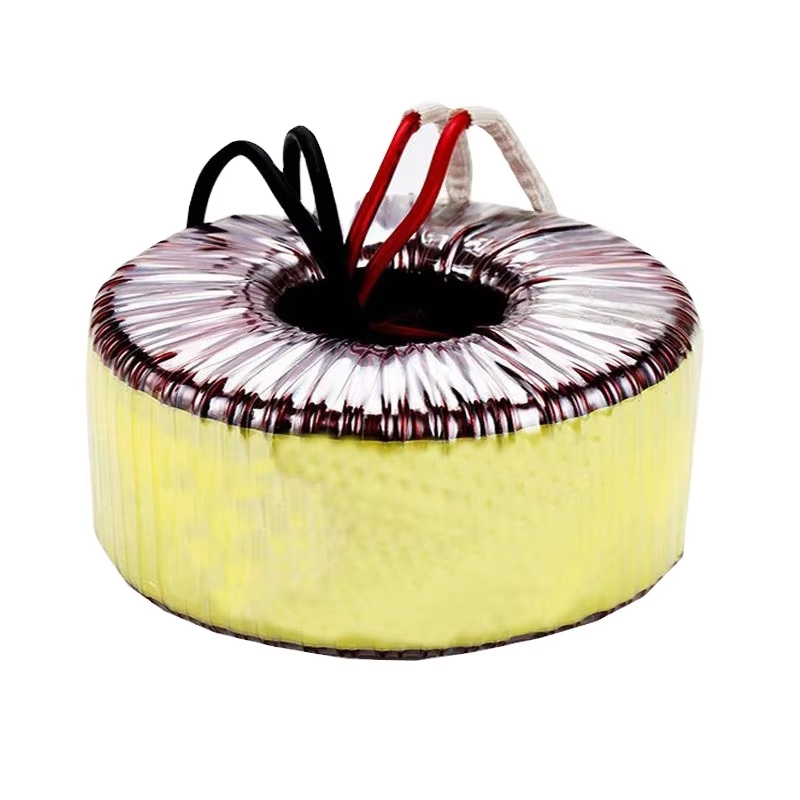
Many isolation transformers incorporate additional surge protection features such as surge arresters or filtering networks that enhance their transient suppression capabilities. These integrated protection systems provide comprehensive defense against various types of electrical disturbances, ensuring that sensitive electronic equipment remains protected under diverse operating conditions.
Safety and Compliance Considerations
Personnel Safety Enhancement
Isolation transformers significantly enhance personnel safety when working with sensitive electronic equipment by eliminating direct electrical connection to the primary power source. This isolation creates a separated electrical system where contact with secondary circuit conductors does not create a path to ground through the primary system, reducing the risk of electrical shock. Medical facilities and research laboratories particularly value this safety enhancement when personnel must interact closely with electronic equipment.
The safety benefits extend beyond shock protection to include fault current limitation and arc flash reduction. When faults occur in equipment protected by isolation transformers, the available fault current is limited by the transformer impedance, reducing the energy available for dangerous arc flash events. This current limitation provides additional protection for maintenance personnel and helps prevent equipment damage during fault conditions.
Emergency situations benefit from the safety features of isolation transformers because they allow for safer equipment shutdown and maintenance procedures. The electrical isolation enables technicians to work on secondary circuits with reduced risk, facilitating faster repairs and reducing downtime during critical operations.
Regulatory Compliance Requirements
Many industries mandate the use of isolation transformers for specific applications involving sensitive electronic equipment to meet safety and performance standards. Medical device regulations, laboratory accreditation requirements, and industrial safety standards often specify isolation requirements that can only be satisfied through proper transformer implementation. Compliance with these regulations ensures operational legitimacy and protects against liability issues.
International safety standards such as IEC 61010 for laboratory equipment and IEC 60601 for medical devices explicitly require electrical isolation in many applications. Isolation transformers provide a proven method for meeting these isolation requirements while maintaining the power delivery capabilities needed for sensitive electronic equipment operation. The standardized approach simplifies compliance verification and regulatory approval processes.
Insurance requirements and risk management policies increasingly recognize the value of isolation transformers in protecting sensitive electronic assets. Many insurance providers offer reduced premiums or improved coverage terms for facilities that implement proper electrical isolation practices, acknowledging the reduced risk of equipment damage and associated business interruption.
Application-Specific Benefits
Medical Equipment Protection
Medical electronic equipment demands the highest levels of electrical safety and performance reliability due to patient safety implications and critical care applications. Isolation transformers provide essential protection for medical devices by ensuring patient isolation from potentially dangerous electrical faults while maintaining precise power delivery required for accurate diagnostics and treatment. Patient safety regulations mandate specific isolation requirements that isolation transformers fulfill effectively.
Diagnostic equipment such as MRI systems, CT scanners, and patient monitoring devices rely on isolation transformers to maintain measurement accuracy and prevent interference from electrical noise. The clean power environment created by isolation transformers ensures that diagnostic readings remain accurate and reliable, supporting proper medical decision-making and patient care quality.
Life support equipment and surgical instruments require uninterrupted, clean power to function correctly during critical procedures. Isolation transformers provide the electrical stability and protection needed to ensure these devices operate reliably when patient lives depend on their proper function. The isolation also prevents electrical interference from affecting sensitive medical measurements or device operations.
Laboratory and Research Applications
Research laboratories utilize sensitive analytical instruments that require extremely stable and clean electrical power to produce accurate results. Isolation transformers protect these instruments from electrical disturbances that could affect measurement precision or cause calibration drift. The isolation also prevents ground loops and interference that might corrupt experimental data or compromise research validity.
Electron microscopes, mass spectrometers, and precision measurement devices operate at sensitivity levels where even minor electrical disturbances can affect results. Isolation transformers create the controlled electrical environment necessary for these instruments to achieve their specified performance parameters. The improved measurement stability directly contributes to research quality and experimental reproducibility.
Testing and calibration laboratories require traceability to national standards, which demands exceptional measurement accuracy and stability. Isolation transformers support these requirements by providing the electrical isolation and stability needed to maintain calibration accuracy and ensure measurement traceability. The protection extends equipment life and reduces the frequency of recalibration requirements.
FAQ
How do isolation transformers differ from regular transformers in protecting sensitive equipment?
Isolation transformers provide complete galvanic isolation between input and output circuits, creating physical separation that prevents electrical faults, ground loops, and noise from reaching sensitive equipment. Regular transformers may maintain electrical connection between primary and secondary circuits, offering limited protection against electrical disturbances that can damage sensitive electronic devices.
What voltage ratings should I consider when selecting isolation transformers for electronic equipment?
Select isolation transformers with voltage ratings that match your equipment requirements, typically ranging from 115V to 480V for industrial applications. Consider both input voltage availability and output voltage needs, ensuring the transformer can handle the equipment's full load current while providing appropriate voltage regulation for optimal performance and protection.
Can isolation transformers protect against all types of electrical disturbances?
Isolation transformers provide excellent protection against common-mode noise, ground loops, and many transient disturbances, but they may not protect against all electrical problems. Severe voltage surges, direct lightning strikes, or extremely high-energy transients might require additional protection devices such as surge arresters or power conditioning systems for complete protection.
How often should isolation transformers be maintained for sensitive equipment protection?
Isolation transformers typically require annual inspections including visual examination, connection tightness checks, and insulation resistance testing to ensure continued protection effectiveness. Critical applications may warrant more frequent monitoring, while routine maintenance intervals can be extended based on operating conditions and manufacturer recommendations for optimal equipment protection.
Table of Contents
- Electrical Protection Fundamentals
- Noise and Interference Suppression
- Safety and Compliance Considerations
- Application-Specific Benefits
-
FAQ
- How do isolation transformers differ from regular transformers in protecting sensitive equipment?
- What voltage ratings should I consider when selecting isolation transformers for electronic equipment?
- Can isolation transformers protect against all types of electrical disturbances?
- How often should isolation transformers be maintained for sensitive equipment protection?