EN
EN

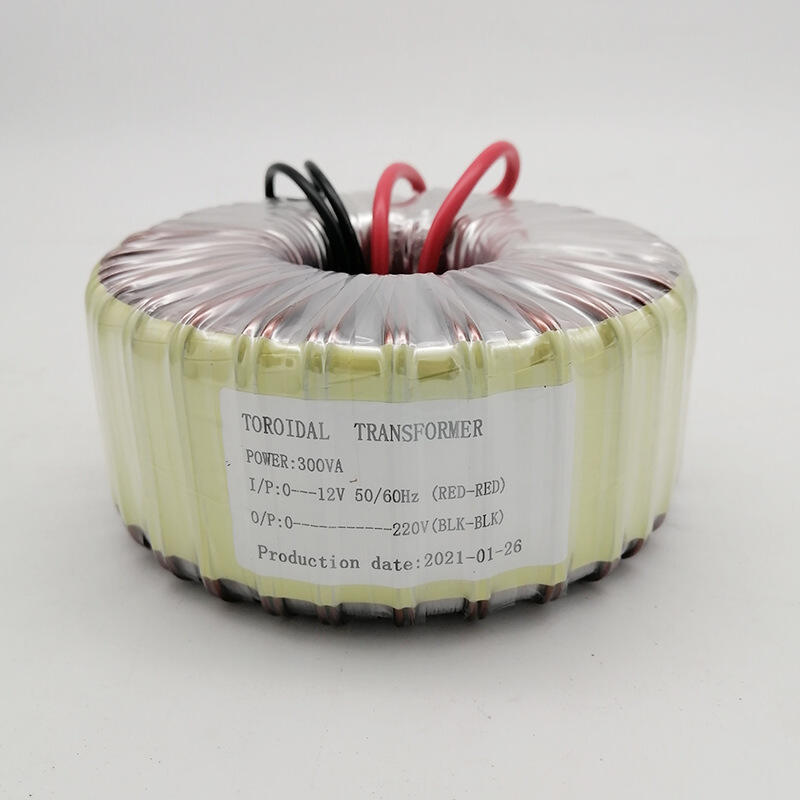
Toroidal transformers have revolutionized modern power electronics through their unique donut-shaped design and exceptional performance characteristics. These specialized electromagnetic components offer superior efficiency, reduced electromagnetic interference, and compact form factors that make them ideal for demanding applications. Unlike traditional laminated core transformers, toroidal transformers utilize a circular magnetic core wound with copper wire, delivering enhanced power density and thermal management. Their distinctive construction provides significant advantages in audio equipment, medical devices, industrial automation, and renewable energy systems where reliability and performance are paramount.
Superior Efficiency and Power Density
Optimized Magnetic Path Design
The circular geometry of toroidal transformers creates an optimal magnetic flux path that significantly reduces core losses compared to conventional designs. This efficient magnetic circuit minimizes hysteresis and eddy current losses, resulting in operating efficiencies often exceeding 95%. The continuous magnetic path eliminates air gaps and sharp corners found in traditional E-I core configurations, ensuring uniform flux distribution throughout the core material. Professional engineers consistently choose toroidal transformers for applications requiring maximum energy conversion efficiency.
Manufacturing precision plays a crucial role in achieving these efficiency gains, as the toroidal winding process ensures optimal conductor placement and minimal winding resistance. Advanced core materials such as grain-oriented silicon steel or amorphous metals further enhance the magnetic properties. The result is a transformer that generates less heat during operation, reducing cooling requirements and extending service life in critical applications.
Compact Form Factor Benefits
Space-constrained applications benefit tremendously from the compact design of toroidal transformers, which typically occupy 50% less volume than equivalent rated conventional transformers. This size reduction stems from the efficient use of core material and the elimination of external mounting brackets or clamps required by traditional designs. The self-supporting structure allows flexible mounting orientations and simplified integration into equipment chassis.
Weight reduction represents another significant advantage, with toroidal transformers weighing approximately 50% less than comparable E-I core units. This characteristic proves especially valuable in portable equipment, automotive applications, and aerospace systems where every gram matters. The reduced material usage also translates to cost savings in both manufacturing and shipping logistics.
Electromagnetic Interference Reduction
Minimized Stray Magnetic Fields
The toroidal geometry naturally contains magnetic fields within the core structure, dramatically reducing electromagnetic interference compared to traditional transformer designs. This self-shielding property eliminates the need for external magnetic shields in many applications, simplifying system design and reducing costs. Sensitive electronic circuits operating near toroidal transformers experience minimal interference, ensuring optimal performance in precision instrumentation and communication equipment.
Measurement data consistently shows stray field levels below 10% of those produced by conventional transformers at equivalent distances. This characteristic makes toroidal transformers particularly suitable for medical equipment, laboratory instruments, and audio applications where electromagnetic compatibility is critical. The reduced stray fields also minimize interaction between multiple transformers in dense equipment installations.
Enhanced Audio Performance
Audio enthusiasts and professional sound engineers recognize toroidal transformers for their superior performance in amplifiers, mixing consoles, and high-fidelity equipment. The low magnetic leakage and excellent regulation characteristics contribute to reduced distortion and improved dynamic range. These transformers maintain stable output voltages under varying load conditions, ensuring consistent audio quality across different operating scenarios.
The mechanical construction of toroidal transformers also contributes to reduced vibration and acoustic noise generation. The continuous winding technique and absence of lamination gaps minimize magnetostrictive effects that can cause audible humming in sensitive audio environments. Professional recording studios and concert venues often specify toroidal transformers to maintain the acoustic integrity of their installations.
Thermal Management and Reliability
Superior Heat Dissipation
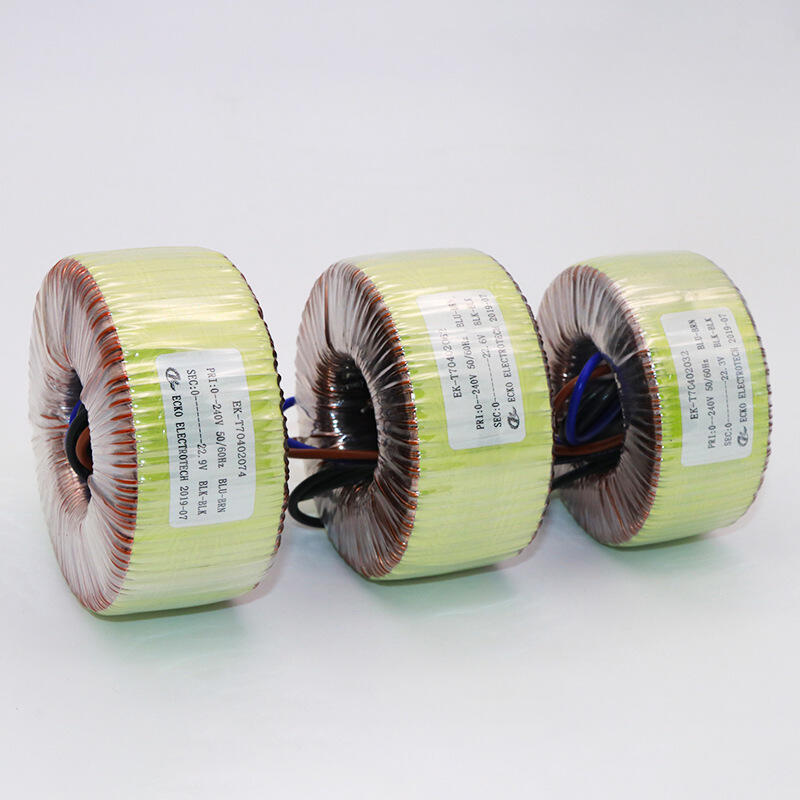
Thermal management represents a critical advantage of toroidal transformers, with their cylindrical shape providing optimal heat dissipation characteristics. The uniform surface area distribution allows effective heat transfer through natural convection and conduction, maintaining lower operating temperatures compared to conventional designs. This thermal efficiency extends component life and improves long-term reliability in demanding environments.
The absence of hot spots commonly found in E-I core transformers ensures uniform temperature distribution throughout the windings and core. This characteristic reduces thermal stress on insulation materials and conductor joints, minimizing the risk of premature failure. Industrial applications benefit from this enhanced thermal performance through reduced maintenance requirements and extended operational intervals.
Enhanced Mechanical Stability
The structural integrity of toroidal transformers surpasses that of traditional designs due to the self-supporting winding configuration and absence of mechanical joints in the core. This robust construction withstands vibration, shock, and thermal cycling better than laminated core alternatives. The continuous core material eliminates potential failure points associated with core lamination bonding and clamping systems.
Quality manufacturers employ specialized winding techniques that provide excellent mechanical stability under fault conditions. The distributed winding structure resists short-circuit forces more effectively than conventional designs, reducing the likelihood of mechanical damage during electrical transients. This reliability factor makes toroidal transformers preferred components in critical infrastructure and safety-related applications.
Application Versatility and Performance
Medical Equipment Applications
Medical device manufacturers increasingly specify toroidal transformers for their equipment due to stringent safety requirements and performance demands. The low electromagnetic interference characteristics ensure compatibility with sensitive diagnostic equipment and patient monitoring systems. Isolation transformers utilizing toroidal cores provide excellent patient safety through superior dielectric strength and leakage current control.
The compact size and light weight of toroidal transformers enable portable medical device designs while maintaining high power density requirements. MRI systems, X-ray equipment, and surgical instruments benefit from the reduced stray magnetic fields and improved electromagnetic compatibility. Regulatory compliance becomes easier when using toroidal transformers due to their inherently superior EMI performance.
Industrial Automation Integration
Industrial control systems and automation equipment rely on toroidal transformers for reliable power conversion in harsh environments. The superior thermal management and mechanical stability ensure continuous operation in factory settings with temperature variations, vibration, and electromagnetic noise. Variable frequency drives, servo controllers, and programmable logic controllers benefit from the clean power delivery and regulation characteristics.
Process control applications require precise voltage regulation and minimal interference with control signals. Toroidal transformers excel in these requirements through their excellent regulation characteristics and low electromagnetic emissions. The compact mounting options simplify panel integration and reduce overall system footprint in space-constrained control cabinets.
Cost-Effectiveness and Manufacturing Considerations
Material Efficiency Advantages
The efficient use of core material in toroidal transformers translates to significant cost advantages over conventional designs. The optimal magnetic circuit requires less core steel while delivering equivalent or superior performance, reducing raw material costs. Advanced winding techniques minimize copper usage through shorter conductor paths and optimal conductor placement within the core window.
Manufacturing efficiency gains result from simplified assembly processes and reduced component count compared to laminated core transformers. The elimination of complex clamping systems, mounting brackets, and assembly fixtures reduces production costs and manufacturing time. These economic benefits make toroidal transformers competitive even in cost-sensitive applications.
Long-term Value Proposition
The extended service life and reduced maintenance requirements of toroidal transformers provide substantial long-term value in industrial and commercial applications. Lower operating temperatures and reduced mechanical stress contribute to increased mean time between failures, reducing replacement costs and system downtime. Energy efficiency gains compound over the operational lifetime, delivering measurable cost savings through reduced power consumption.
Total cost of ownership calculations consistently favor toroidal transformers in applications where reliability and efficiency are important factors. The reduced cooling requirements and simplified installation procedures further contribute to lifecycle cost advantages. These economic benefits make toroidal transformers attractive investments for equipment manufacturers and end users alike.
Selection Criteria and Design Optimization
Power Rating and Voltage Considerations
Proper selection of toroidal transformers requires careful consideration of power rating, voltage requirements, and load characteristics. The excellent regulation properties allow closer matching to actual load requirements without oversizing, improving overall system efficiency. Voltage regulation typically remains within 2-3% from no-load to full-load conditions, enabling precise system voltage control.
Multiple secondary windings can be easily accommodated in toroidal designs, providing flexibility for complex power distribution requirements. The low internal impedance enables effective parallel operation of multiple units for increased power capacity. These characteristics make toroidal transformers suitable for both single-output and multi-output power supply applications.
Environmental and Safety Factors
Environmental considerations play an important role in transformer selection, with toroidal transformers offering advantages in temperature range, humidity resistance, and electromagnetic compatibility. The robust insulation systems and uniform heat distribution enable operation in demanding environmental conditions. UL, CSA, and international safety certifications are readily available for toroidal transformers in standard configurations.
Safety features such as thermal protection, overcurrent protection, and isolation voltage capabilities can be optimized during the design phase. The predictable thermal behavior of toroidal transformers simplifies thermal protection implementation and ensures reliable operation within specified parameters. These safety considerations make toroidal transformers preferred choices for critical applications.
FAQ
What makes toroidal transformers more efficient than conventional transformers
Toroidal transformers achieve higher efficiency through their optimized magnetic circuit design, which eliminates air gaps and provides a continuous flux path. This results in reduced core losses, lower operating temperatures, and efficiency ratings often exceeding 95%. The circular geometry also minimizes winding resistance through shorter conductor paths, further improving overall efficiency compared to traditional E-I core designs.
Are toroidal transformers suitable for high-power applications
Yes, toroidal transformers are available in power ratings from a few watts to several hundred kilowatts, making them suitable for both low and high-power applications. Their superior thermal management and power density characteristics actually make them particularly advantageous in high-power applications where space and efficiency are critical factors. Many industrial and utility applications successfully utilize large toroidal transformers for their superior performance characteristics.
How do toroidal transformers reduce electromagnetic interference
The toroidal geometry naturally contains magnetic fields within the core structure, creating a self-shielding effect that dramatically reduces stray magnetic fields compared to conventional transformer designs. This results in electromagnetic interference levels typically 90% lower than equivalent E-I core transformers, eliminating the need for external magnetic shielding in most applications and ensuring better electromagnetic compatibility with sensitive electronic equipment.
What are the main cost considerations when selecting toroidal transformers
While toroidal transformers may have higher initial costs compared to some conventional designs, they offer significant total cost of ownership advantages through improved efficiency, reduced cooling requirements, longer service life, and simplified installation. The compact size reduces enclosure costs, and the superior efficiency provides ongoing energy savings. In applications where reliability and performance are important, toroidal transformers typically provide better long-term value despite higher upfront investment.