EN
EN

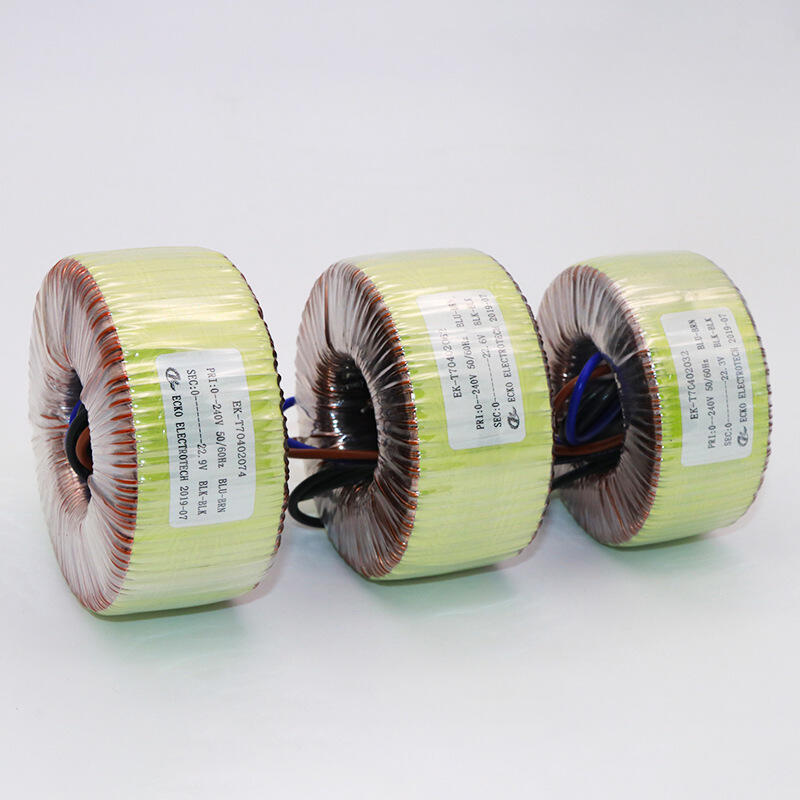
Toroidal transformers have revolutionized the power conversion industry through their innovative doughnut-shaped design, offering significant advantages over traditional laminated core transformers. These compact electrical devices utilize a unique toroidal core configuration that maximizes magnetic flux efficiency while minimizing physical footprint. The sophisticated engineering behind toroidal transformers enables them to deliver superior performance in space-constrained applications across various industries. Understanding how these transformers achieve both space savings and energy efficiency requires examining their fundamental design principles and operational characteristics.
Core Design Principles of Toroidal Transformers
Magnetic Circuit Optimization
The toroidal core design represents a breakthrough in magnetic circuit engineering, utilizing a continuous ring-shaped laminated steel core that eliminates air gaps present in traditional transformer designs. This seamless magnetic path ensures optimal flux linkage between primary and secondary windings, resulting in superior magnetic coupling efficiency. The circular geometry of toroidal transformers creates a closed magnetic loop that confines the magnetic field within the core material, reducing stray magnetic fields and electromagnetic interference.
Advanced silicon steel laminations in toroidal transformers are wound in a continuous spiral, maintaining grain orientation throughout the entire magnetic path. This construction method significantly reduces core losses compared to conventional E-I laminated transformers where grain direction changes at joints and corners. The uniform magnetic flux distribution achieved through toroidal design eliminates hot spots and reduces both hysteresis and eddy current losses, contributing to overall energy efficiency improvements.
Winding Configuration Advantages
Toroidal transformers feature evenly distributed windings wrapped around the entire circumference of the core, creating optimal coupling between primary and secondary coils. This uniform winding distribution ensures balanced magnetic flux linkage and minimizes leakage inductance, which directly translates to improved regulation and reduced losses. The symmetrical winding pattern also contributes to better thermal distribution, preventing localized heating that can degrade transformer performance and lifespan.
The compact winding geometry of toroidal transformers allows for shorter conductor lengths compared to traditional transformer designs, reducing copper losses and material costs. Multiple tapped windings can be efficiently accommodated within the toroidal structure, enabling versatile voltage configurations while maintaining the space-saving benefits. This winding efficiency makes toroidal transformers particularly suitable for applications requiring multiple output voltages or precise voltage regulation.
Space Efficiency Characteristics
Physical Footprint Reduction
The inherent geometry of toroidal transformers provides exceptional space utilization compared to rectangular or square transformer configurations. The circular cross-section allows for optimal packing density in equipment enclosures, with the central opening providing additional routing space for cooling air circulation or cable management. This three-dimensional space efficiency enables engineers to design more compact electronic systems without compromising transformer performance or accessibility for maintenance.
Mounting flexibility represents another significant space-saving advantage of toroidal transformers, as they can be oriented in any direction without affecting performance. The low-profile design enables horizontal mounting in shallow enclosures or vertical installation in narrow spaces, providing design engineers with greater layout flexibility. The absence of protruding terminals and the smooth, rounded exterior surface facilitate integration into aesthetically demanding applications where visual appeal matters.
Integration Benefits in Electronic Systems
Modern electronic equipment increasingly demands compact power solutions that deliver high performance within constrained spaces. Toroidal transformers excel in these applications due to their favorable power-to-size ratio, enabling designers to achieve required power ratings while minimizing overall system dimensions. The reduced magnetic field radiation from toroidal transformers allows for closer proximity to sensitive electronic components without causing interference or performance degradation.
The mechanical stability of toroidal transformers contributes to their space efficiency by eliminating the need for complex mounting structures or vibration dampening systems. The inherently balanced design reduces mechanical stress and vibration, allowing for secure mounting with minimal hardware. This simplified mounting approach not only saves space but also reduces assembly time and costs in manufacturing environments where efficiency matters most.
Energy Efficiency Mechanisms
Core Loss Minimization
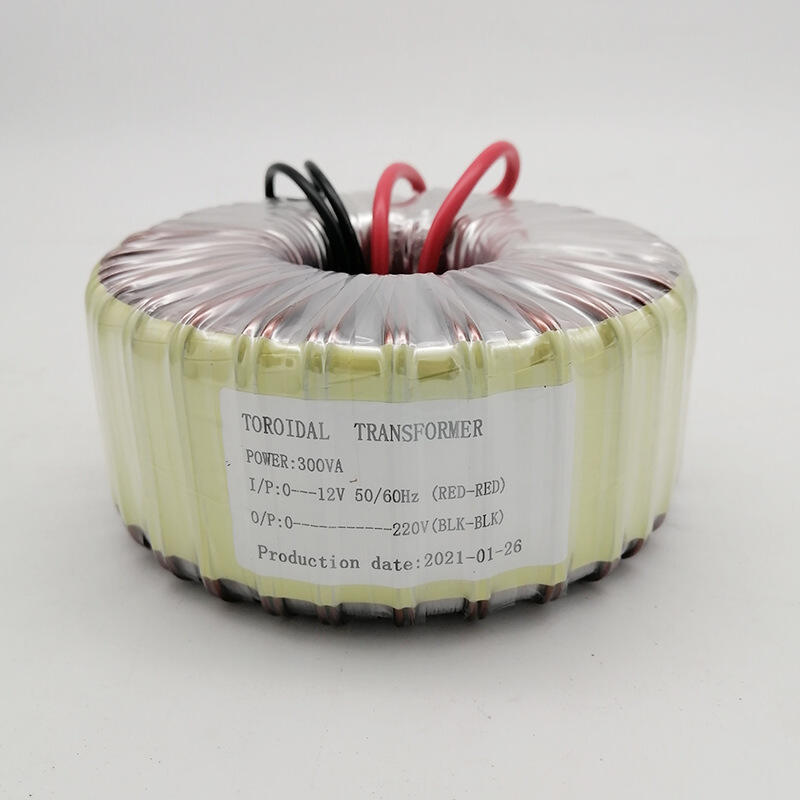
Energy efficiency in toroidal transformers stems primarily from their ability to minimize core losses through optimized magnetic circuit design. The continuous grain orientation in the wound core material reduces hysteresis losses by allowing magnetic domains to align more easily with alternating magnetic fields. This grain-oriented construction can reduce core losses by up to thirty percent compared to conventional transformer designs, translating directly into improved overall efficiency and reduced operating temperatures.
Eddy current losses are significantly reduced in toroidal transformers due to the uniform magnetic flux distribution and optimized lamination thickness. The circular flux path eliminates the sharp corners and joints found in traditional transformer cores where eddy currents typically concentrate and cause excessive heating. Advanced manufacturing techniques ensure consistent lamination thickness and interlaminar insulation, further minimizing eddy current formation and associated energy losses.
Copper Loss Optimization
The symmetric winding distribution in toroidal transformers enables optimal conductor utilization, reducing copper losses through shorter average winding lengths and improved current distribution. The uniform winding pattern ensures that all conductor segments carry equal current density, preventing hot spots and maximizing the effective utilization of copper material. This balanced current distribution also reduces skin effect losses at higher frequencies, making toroidal transformers particularly efficient in switching power supply applications.
Temperature management plays a crucial role in maintaining the energy efficiency of toroidal transformers throughout their operational life. The compact design and uniform heat distribution prevent excessive temperature rise that can increase conductor resistance and reduce efficiency. The smooth exterior surface and central opening facilitate natural convection cooling, maintaining optimal operating temperatures without requiring external cooling systems that would consume additional energy.
Manufacturing and Quality Advantages
Production Efficiency Benefits
The manufacturing process for toroidal transformers offers several advantages that contribute to their superior performance characteristics and cost-effectiveness. Automated winding equipment can achieve precise winding tension and uniform conductor placement, ensuring consistent electrical and mechanical properties across production batches. The continuous core winding process eliminates the assembly joints found in laminated transformers, reducing manufacturing complexity and improving reliability.
Quality control during toroidal transformer production benefits from the uniform geometry and predictable magnetic characteristics of the wound core design. Standardized testing procedures can accurately assess performance parameters, ensuring that each transformer meets specified efficiency and regulation requirements. The reduced manufacturing variations inherent in toroidal construction contribute to more predictable performance and longer service life in demanding applications.
Material Utilization Optimization
Toroidal transformers demonstrate superior material efficiency through optimized core and conductor utilization compared to traditional transformer designs. The wound core construction minimizes material waste during production, as the continuous steel strip can be precisely sized to match specific power requirements. This material optimization reduces both manufacturing costs and environmental impact while maintaining the performance advantages that make toroidal transformers attractive for energy-conscious applications.
The compact design of toroidal transformers enables higher power density ratings, allowing more electrical power to be handled per unit volume of core and conductor materials. This improved power density translates into material savings across entire product lines, making toroidal transformers an economically attractive choice for manufacturers seeking to optimize both performance and cost. The durability and reliability of toroidal construction also contribute to longer service life, further improving the overall value proposition.
Application-Specific Advantages
Audio Equipment Applications
High-fidelity audio equipment particularly benefits from the low electromagnetic interference characteristics of toroidal transformers, which produce minimal stray magnetic fields that can affect sensitive audio circuits. The reduced mechanical vibration and acoustic noise generated by toroidal transformers make them ideal for professional audio applications where signal purity and low noise floor are critical performance requirements. The compact form factor enables integration into space-constrained audio equipment while maintaining the power handling capacity needed for high-performance amplification systems.
The excellent regulation characteristics of toroidal transformers contribute to stable power supply voltages in audio equipment, reducing distortion and improving dynamic range. The low leakage inductance inherent in toroidal design minimizes power supply impedance variations that can affect audio performance, particularly in high-current demand situations. These characteristics make toroidal transformers particularly suitable for premium audio applications where performance cannot be compromised for space or cost considerations.
Industrial Control Systems
Industrial automation and control systems increasingly rely on toroidal transformers for reliable, efficient power conversion in space-constrained control panels and equipment enclosures. The robust construction and excellent thermal characteristics enable continuous operation in demanding industrial environments while maintaining efficiency and reliability standards. The reduced electromagnetic interference from toroidal transformers prevents disruption of sensitive control circuits and communication systems that are integral to modern industrial operations.
Safety considerations in industrial applications benefit from the inherent design characteristics of toroidal transformers, including reduced fire risk due to lower operating temperatures and improved fault current handling capabilities. The compact mounting requirements and flexible orientation options enable compliance with safety regulations while maximizing available space for other critical system components. These advantages make toroidal transformers an preferred choice for industrial designers focused on both performance and safety requirements.
FAQ
What makes toroidal transformers more space-efficient than conventional transformers
Toroidal transformers achieve superior space efficiency through their circular core design that eliminates the rectangular footprint of traditional transformers. The doughnut-shaped geometry allows for optimal three-dimensional space utilization, while the central opening provides additional room for cooling or cable routing. The compact mounting requirements and flexible orientation options enable installation in spaces where conventional transformers cannot fit, making them ideal for applications with strict size constraints.
How do toroidal transformers achieve better energy efficiency
Energy efficiency improvements in toroidal transformers result from reduced core losses through optimized magnetic circuit design and minimized copper losses via shorter winding lengths. The continuous grain-oriented core eliminates joints and air gaps that cause energy losses in conventional designs, while the uniform flux distribution reduces both hysteresis and eddy current losses. These design advantages can improve efficiency by several percentage points compared to traditional transformer technologies.
Are toroidal transformers suitable for high-frequency applications
Toroidal transformers perform exceptionally well in high-frequency applications due to their low leakage inductance and reduced electromagnetic interference characteristics. The uniform winding distribution and optimized magnetic coupling enable efficient operation at frequencies well above standard power line frequencies. The reduced skin effect losses and excellent thermal management make toroidal transformers particularly suitable for switching power supplies and other high-frequency power conversion applications.
What are the main cost considerations when choosing toroidal transformers
While toroidal transformers may have higher initial costs compared to conventional designs, their superior efficiency, compact size, and reliability often provide better long-term value. The reduced energy consumption translates into lower operating costs over the transformer lifetime, while the space savings can reduce overall system costs. The improved reliability and longer service life of toroidal transformers also contribute to reduced maintenance and replacement costs in demanding applications.