EN
EN

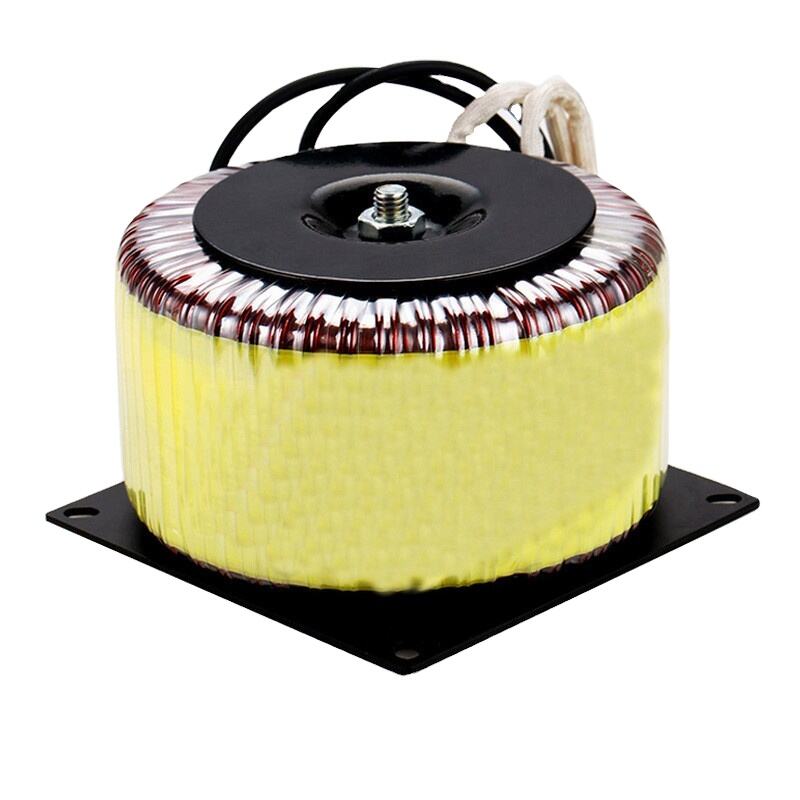
Audio transformers serve as critical components in amplifier circuits, fundamentally shaping the quality and clarity of sound reproduction. These electromagnetic devices facilitate impedance matching, signal isolation, and voltage conversion while maintaining the integrity of audio signals throughout the amplification process. Understanding how audio transformers optimize sound clarity requires examining their construction, electrical characteristics, and strategic implementation within various amplifier topologies. Professional audio engineers and circuit designers rely on these components to achieve superior performance metrics in both commercial and high-end audiophile applications.
Fundamental Principles of Audio Transformer Operation
Electromagnetic Induction and Signal Transfer
Audio transformers operate on the principle of electromagnetic induction, where alternating current flowing through the primary winding creates a varying magnetic field that induces voltage in the secondary winding. This process enables galvanic isolation between input and output circuits while transferring audio signals with minimal distortion. The core material, typically high-permeability silicon steel or specialized ferrite compositions, concentrates the magnetic flux and determines the transformer's frequency response characteristics. Proper core design ensures linear operation across the entire audio spectrum, from deep bass frequencies to extended treble ranges.
The turns ratio between primary and secondary windings establishes the voltage transformation ratio and impedance matching capabilities. Audio transformers achieve optimal power transfer by matching source impedance to load impedance, maximizing signal strength while minimizing reflections and standing waves. This impedance matching function proves essential in professional audio applications where long cable runs and multiple interconnected devices could otherwise compromise signal integrity.
Frequency Response and Bandwidth Optimization
High-quality audio transformers exhibit wide frequency response characteristics that preserve the natural timbre and dynamic range of musical content. The low-frequency response depends on primary inductance and core permeability, while high-frequency performance relates to leakage inductance and interwinding capacitance. Manufacturers optimize these parameters through careful winding techniques, core material selection, and geometric design considerations to achieve flat response curves extending from subsonic frequencies to well beyond human hearing limits.
Interleaved winding structures minimize leakage inductance and reduce high-frequency roll-off, ensuring that audio transformers maintain phase coherence across the frequency spectrum. This attention to phase relationships proves crucial for stereo imaging, soundstage depth, and overall musical authenticity in high-performance audio systems.
Impedance Matching and Load Optimization
Tube Amplifier Integration
Vacuum tube amplifiers require output transformers to match the high internal impedance of tubes to the low impedance of loudspeakers. Audio transformers in this application typically provide step-down ratios ranging from 25:1 to 100:1, converting the high-voltage, low-current output of tubes to the low-voltage, high-current requirements of dynamic speakers. The transformer's primary impedance must match the tube's optimal load impedance to achieve maximum power transfer and minimize distortion.
Premium tube amplifier designs incorporate specially wound output transformers with multiple secondary taps to accommodate various speaker impedances. These audio transformers feature extensive interleaving and careful attention to magnetic balance to suppress even-order harmonics while preserving the musical character that makes tube amplification so appealing to audiophiles.
Solid-State Amplifier Applications
While solid-state amplifiers typically operate without output transformers, audio transformers find important applications in input stages, balanced line interfaces, and specialized coupling circuits. Input transformers provide galvanic isolation and common-mode rejection while matching microphone or line-level sources to amplifier input stages. The isolation prevents ground loops and electrical interference that could degrade signal quality or create safety hazards in professional audio installations.
Balanced audio transformers enable long-distance signal transmission by converting unbalanced signals to balanced format and vice versa. This capability proves essential in recording studios, live sound reinforcement, and broadcast facilities where audio signals must travel significant distances without picking up electromagnetic interference from power lines, lighting systems, or digital equipment.
Core Materials and Construction Techniques
Laminated Steel Cores
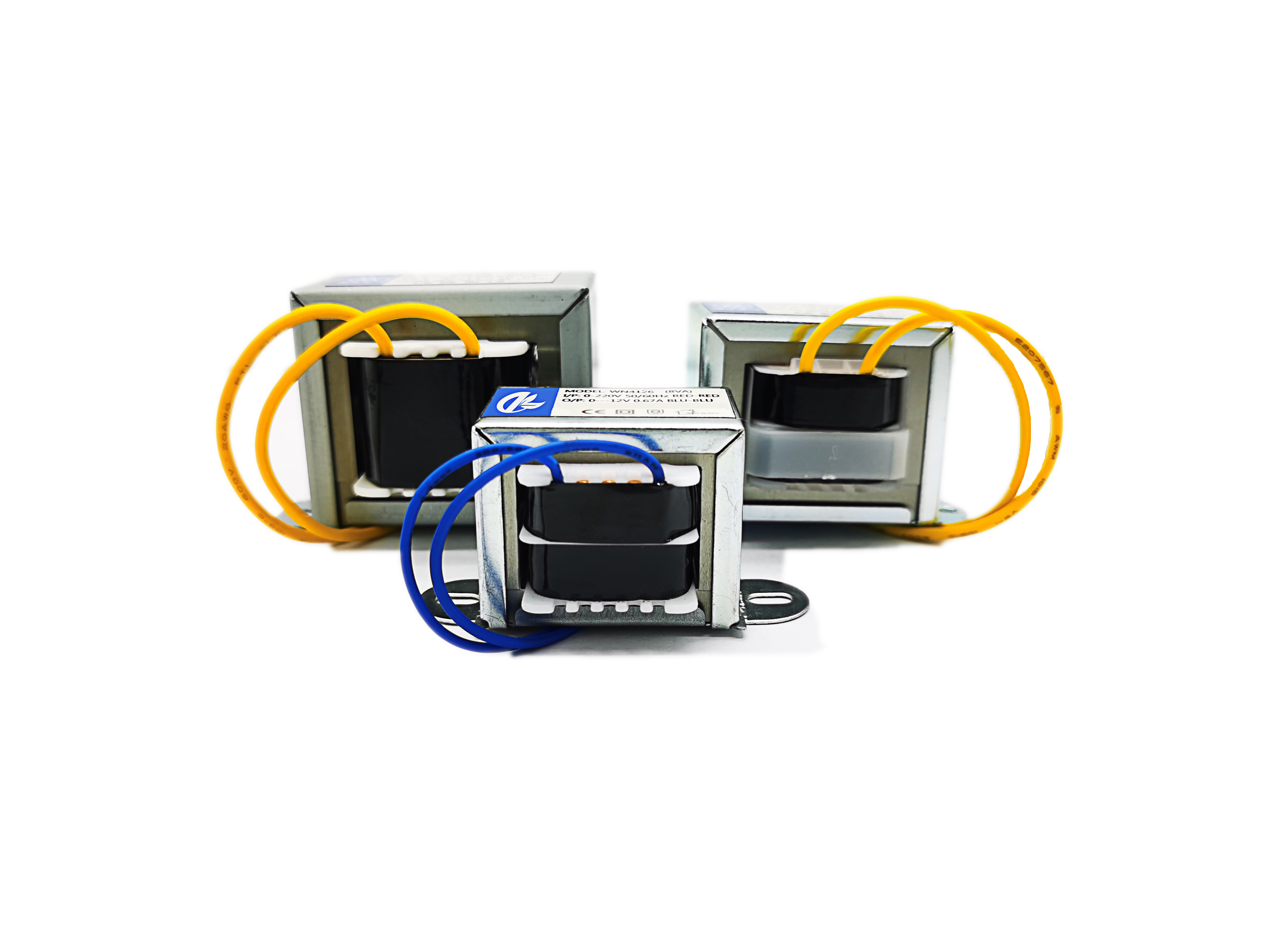
Traditional audio transformers utilize laminated silicon steel cores constructed from thin stampings to minimize eddy current losses and hysteresis distortion. The grain-oriented steel provides high permeability and low coercivity, enabling efficient energy transfer with minimal magnetic losses. Core geometry significantly influences transformer performance, with C-cores and E-I cores representing the most common configurations for audio applications.
Advanced core designs incorporate air gaps to prevent magnetic saturation at high signal levels while maintaining linear operation. The gap length requires careful optimization to balance low-frequency response against power handling capability. Audio transformers designed for high-level applications may feature multiple air gaps distributed around the magnetic circuit to minimize fringing effects and maintain uniform flux distribution.
Specialty Core Materials
High-end audio transformers often employ specialty core materials such as amorphous metals, nanocrystalline alloys, or carefully selected ferrites to achieve superior performance characteristics. Amorphous steel cores exhibit extremely low coercivity and reduced hysteresis losses, resulting in lower distortion and improved dynamic range. These advanced materials command premium prices but deliver measurable improvements in sonic quality that justify their use in reference-grade audio equipment.
Nanocrystalline cores combine the benefits of ferrite and steel construction, offering high permeability with excellent frequency response characteristics. Audio transformers utilizing these materials demonstrate exceptional linearity and low noise performance, making them ideal for precision measurement equipment and high-resolution audio reproduction systems.
Winding Techniques and Electrical Characteristics
Interleaved and Sectional Winding Methods
Professional-grade audio transformers employ sophisticated winding techniques to minimize leakage inductance, reduce interwinding capacitance, and optimize frequency response. Interleaved windings alternate primary and secondary sections throughout the coil structure, reducing magnetic leakage and improving high-frequency performance. This construction method requires precise calculation of turn distributions and careful attention to insulation requirements between winding layers.
Sectional winding techniques divide the primary and secondary windings into multiple sections wound concentrically around the core. This approach simplifies manufacturing while maintaining good coupling between windings. The choice between interleaved and sectional construction depends on the specific performance requirements, manufacturing constraints, and cost considerations for each transformer design.
Wire Selection and Insulation Systems
Audio transformers require high-quality copper wire with appropriate insulation systems to ensure long-term reliability and optimal electrical performance. Oxygen-free copper conductors minimize resistive losses and prevent oxidation over time. Wire gauge selection balances resistance losses against winding space utilization, with larger conductors reducing losses but requiring more physical space within the transformer structure.
Insulation systems must withstand operating voltages while maintaining minimal thickness to maximize space utilization. Modern audio transformers utilize polyester, polyimide, or specialized enamel insulation systems that provide excellent dielectric strength and thermal stability. The insulation system significantly impacts transformer longevity and electrical performance in demanding applications.
Distortion Characteristics and Measurement
Total Harmonic Distortion Analysis
Audio transformers introduce various forms of distortion that must be carefully controlled to maintain signal fidelity. Total harmonic distortion results primarily from magnetic nonlinearities in the core material and asymmetries in the magnetic circuit. High-quality audio transformers achieve THD levels below 0.1% at rated power levels, with even lower distortion at typical operating levels.
Measurement of transformer distortion requires specialized test equipment and careful attention to measurement technique. The test signal level, frequency, and load conditions significantly influence measured distortion levels. Comprehensive testing evaluates distortion across the frequency spectrum and at various power levels to characterize transformer performance under realistic operating conditions.
Phase Response and Group Delay
Phase response characteristics of audio transformers affect stereo imaging, soundstage reproduction, and overall musical coherence. Linear phase response across the audio bandwidth preserves the temporal relationships between frequency components that define musical timbre and spatial information. Group delay variations can blur transient response and degrade the perception of musical attack and decay characteristics.
Modern audio transformers achieve excellent phase linearity through careful attention to core design, winding geometry, and magnetic circuit optimization. Measurement of phase response requires vector analysis equipment capable of resolving small phase shifts across wide frequency ranges. These measurements prove essential for characterizing transformer performance in high-resolution audio applications.
Installation and Integration Considerations
Mechanical Mounting and Vibration Control
Proper mechanical mounting of audio transformers prevents vibration-induced microphonics and ensures stable electrical performance over time. Transformer cores can exhibit magnetostriction effects that generate mechanical vibrations at signal frequencies and their harmonics. These vibrations can couple into sensitive circuit elements and degrade overall system performance.
Professional installations utilize vibration-damping materials and isolation mounting systems to minimize mechanical coupling between transformers and surrounding circuitry. Proper mounting techniques also account for thermal expansion and contraction cycles that could stress transformer windings or connections over time.
Electromagnetic Compatibility
Audio transformers can both generate and be susceptible to electromagnetic interference, requiring careful attention to shielding and orientation within electronic equipment. Magnetic shielding materials such as mu-metal or oriented silicon steel reduce external field interactions while preventing transformer fields from affecting nearby sensitive circuits.
Strategic positioning of audio transformers relative to other magnetic components minimizes field interactions and prevents ground loop formation. The transformer orientation should consider both mechanical convenience and electromagnetic compatibility requirements to achieve optimal system performance.
Performance Optimization Strategies
Load Matching and Impedance Considerations
Optimal performance from audio transformers requires careful attention to load impedance matching and operating point selection. Mismatched loads can cause frequency response irregularities, increased distortion, and reduced power handling capability. The transformer's impedance ratio must accurately match source and load requirements while accounting for tolerance variations in connected equipment.
Professional audio systems often incorporate multiple impedance taps on audio transformers to accommodate various load conditions and system configurations. This flexibility enables system optimization while maintaining compatibility with diverse equipment types and installation requirements.
Thermal Management and Power Handling
Thermal considerations significantly impact the performance and longevity of audio transformers in high-power applications. Core losses, winding resistance, and magnetic losses all contribute to heat generation that must be managed through appropriate thermal design. Adequate ventilation, heat sinking, and thermal monitoring ensure reliable operation under demanding conditions.
Power handling capabilities of audio transformers depend on thermal limits rather than magnetic saturation in most applications. Conservative thermal design margins provide reliability and maintain performance consistency across varying environmental conditions and load cycles.
FAQ
What impedance ratios are commonly used in audio transformer applications
Common impedance ratios for audio transformers range from 1:1 for isolation applications to 100:1 for tube amplifier outputs. Microphone input transformers typically use ratios between 1:5 and 1:10 to match low-impedance microphones to high-impedance amplifier inputs. Line-level transformers often employ 1:1 or 1:2 ratios for impedance matching and signal isolation. The specific ratio selection depends on source impedance, load impedance, and desired voltage transformation requirements.
How do audio transformers affect frequency response in amplifier circuits
Audio transformers can influence frequency response through several mechanisms including primary inductance limitations at low frequencies and leakage inductance effects at high frequencies. High-quality designs maintain flat response from below 20 Hz to beyond 20 kHz with minimal phase shift. Poor transformer design may exhibit bass roll-off due to insufficient primary inductance or treble roll-off from excessive leakage inductance. Proper specification and selection ensure that audio transformers enhance rather than limit amplifier performance.
What maintenance requirements apply to audio transformers in professional equipment
Audio transformers require minimal routine maintenance when properly installed and operated within specifications. Periodic inspection should verify secure mounting, intact insulation, and clean connections. Environmental factors such as humidity, temperature extremes, and vibration can affect long-term reliability. Professional installations benefit from regular electrical testing to monitor insulation resistance and verify continued performance specifications. Replacement becomes necessary when electrical parameters drift beyond acceptable limits or when physical damage occurs.
Can audio transformers improve signal-to-noise ratio in amplifier circuits
Yes, audio transformers can improve signal-to-noise ratio through several mechanisms including common-mode rejection, ground loop elimination, and impedance optimization. Balanced input transformers provide excellent common-mode rejection that eliminates interference pickup in long cable runs. Isolation transformers break ground loops that could introduce hum and noise into audio signals. Proper impedance matching optimizes signal levels while minimizing noise contributions from following amplifier stages. These benefits make audio transformers valuable components in noise-sensitive professional audio applications.
Table of Contents
- Fundamental Principles of Audio Transformer Operation
- Impedance Matching and Load Optimization
- Core Materials and Construction Techniques
- Winding Techniques and Electrical Characteristics
- Distortion Characteristics and Measurement
- Installation and Integration Considerations
- Performance Optimization Strategies
-
FAQ
- What impedance ratios are commonly used in audio transformer applications
- How do audio transformers affect frequency response in amplifier circuits
- What maintenance requirements apply to audio transformers in professional equipment
- Can audio transformers improve signal-to-noise ratio in amplifier circuits