EN
EN

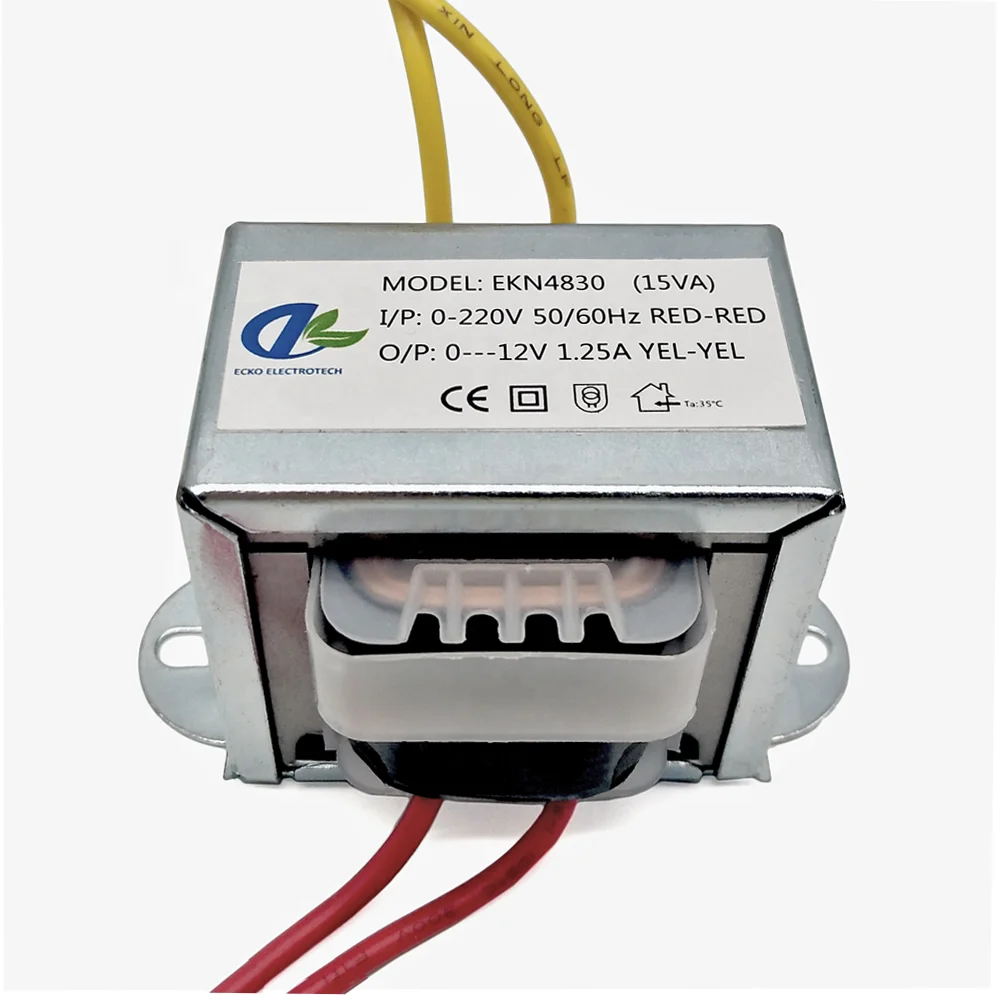
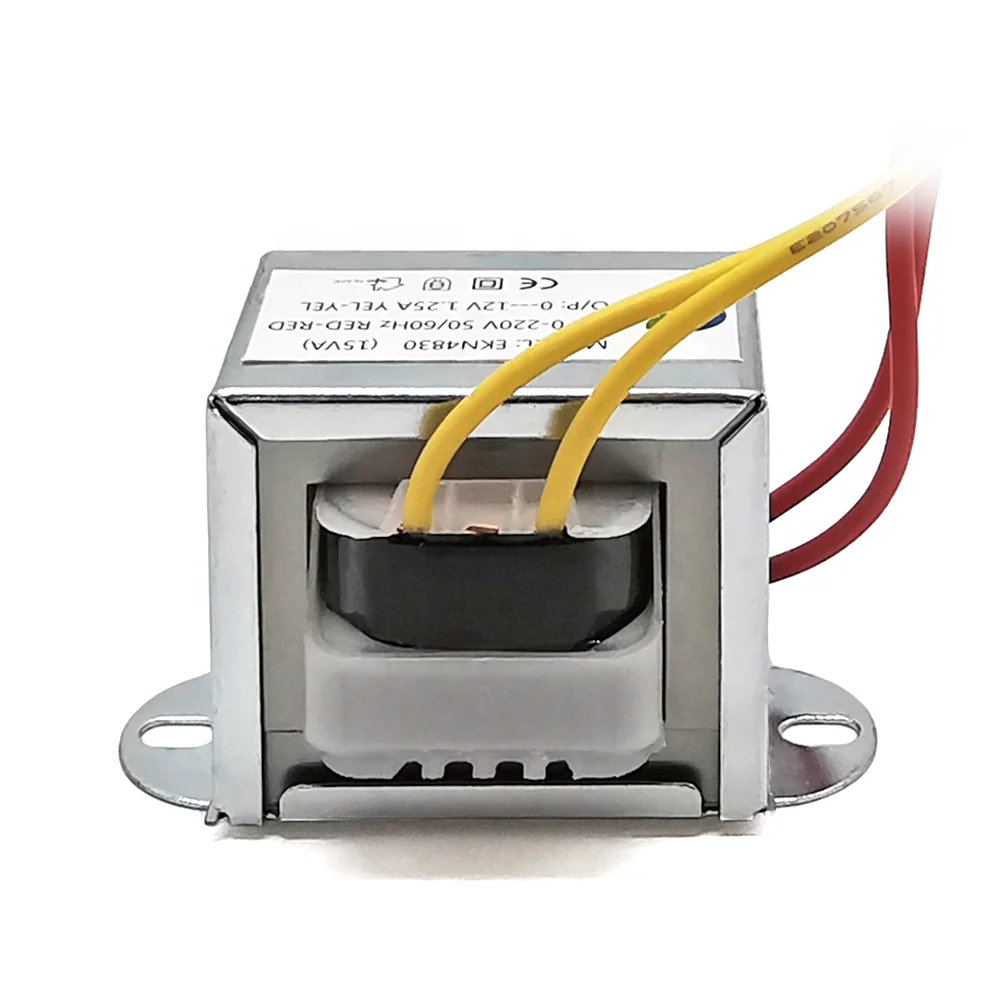
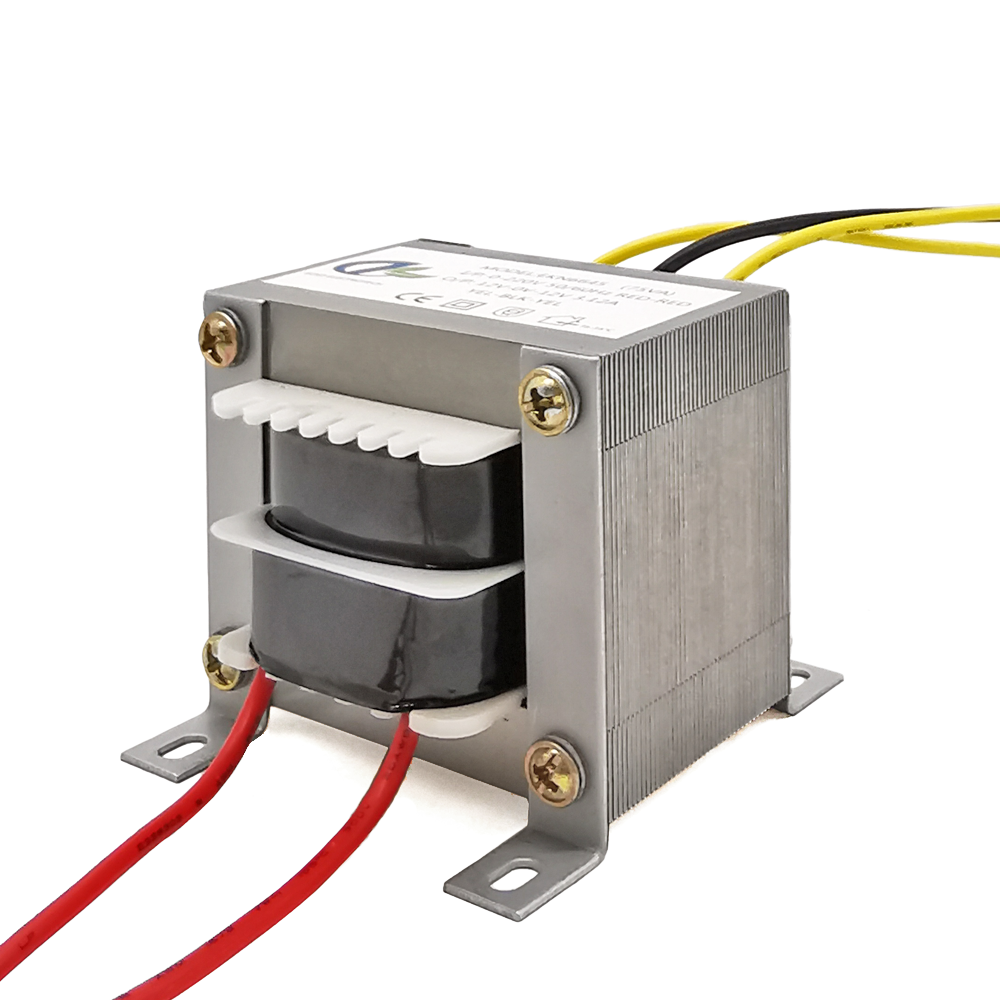
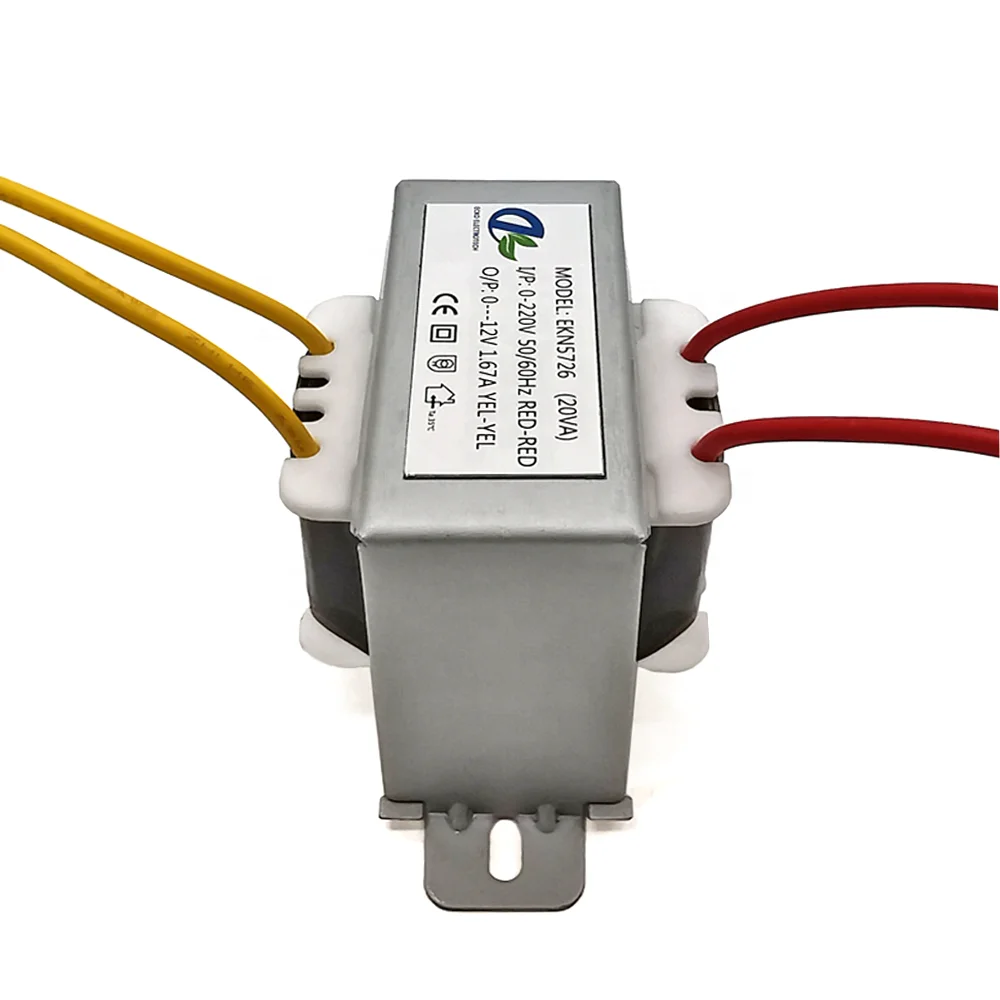
Custom 15VA EI Laminated Transformer for Professional Audio Equipment
Tailored input and output voltages, dimensions, lead wires and shielding options for amplifiers, Hi-Fi systems and studio equipment.
| Parameter | Specification |
|---|---|
| Product Type | EI Laminated Transformer with Mounting Clamp |
| Rated Power | 15VA |
| Input Voltage | 110–240V AC |
| Output Voltage | 24V AC or customized |
| Frequency | 50/60Hz |
| Winding Material | Copper |
| Insulation Class | Class F or customized |
| Core Type | EI laminated silicon steel core |
| Mounting Type | Metal clamp mounting |
| Typical Application | Audio amplifiers |
| Customization | Voltage, dimensions, wires, terminals and shielding |
Final specifications are subject to the approved drawing and sample.
- Overview
- Recommended Products
- Input voltage and frequency
- Output voltage and current
- Rated power
- Operating duty cycle
- Maximum dimensions
- Mounting-hole requirements
- Lead-wire or terminal specifications
- Insulation class
- Ambient temperature
- Required shielding or thermal protection
- Applicable certification or safety standard
Designed for Reliable Audio Power Applications
1. Stable Voltage Output
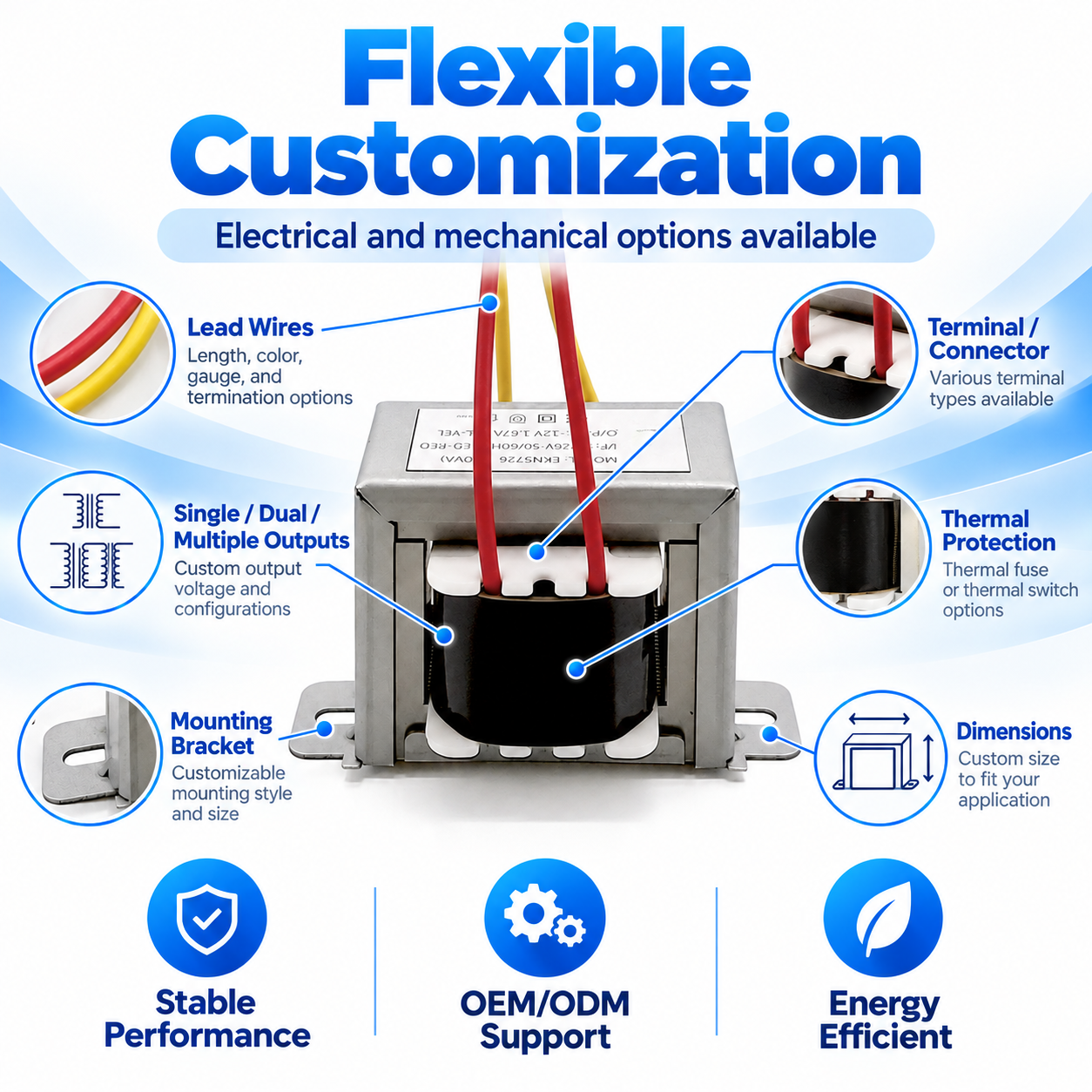
The transformer is designed to provide stable secondary voltage under the specified operating conditions. The winding design can be optimized according to the required input range, output voltage and load characteristics.
2. Copper Windings
Copper windings provide reliable electrical conductivity and support consistent long-term performance. Wire diameter and winding construction are selected according to the rated power, current and allowable temperature rise.
3. Low-Noise Design
The EI core assembly, winding arrangement and mechanical clamping can be optimized to reduce vibration and operating hum. This makes the transformer suitable for audio amplifiers and other noise-sensitive electronic equipment.
4. Secure Clamp-Mounted Construction
The metal mounting clamp holds the laminated core firmly and provides a convenient installation method. Clamp dimensions and mounting-hole positions can be adapted to the customer’s enclosure.
5. Application-Specific Engineering
The transformer can be designed around the customer’s actual operating voltage, load current, duty cycle, installation space and temperature-rise requirements—not only nominal voltage and power.
6. Flexible Protection Options
Thermal fuses, electrostatic shields, insulation systems and other protection options can be incorporated according to the application and applicable safety requirements.
Customization Options
Custom-Built to Match Your Equipment
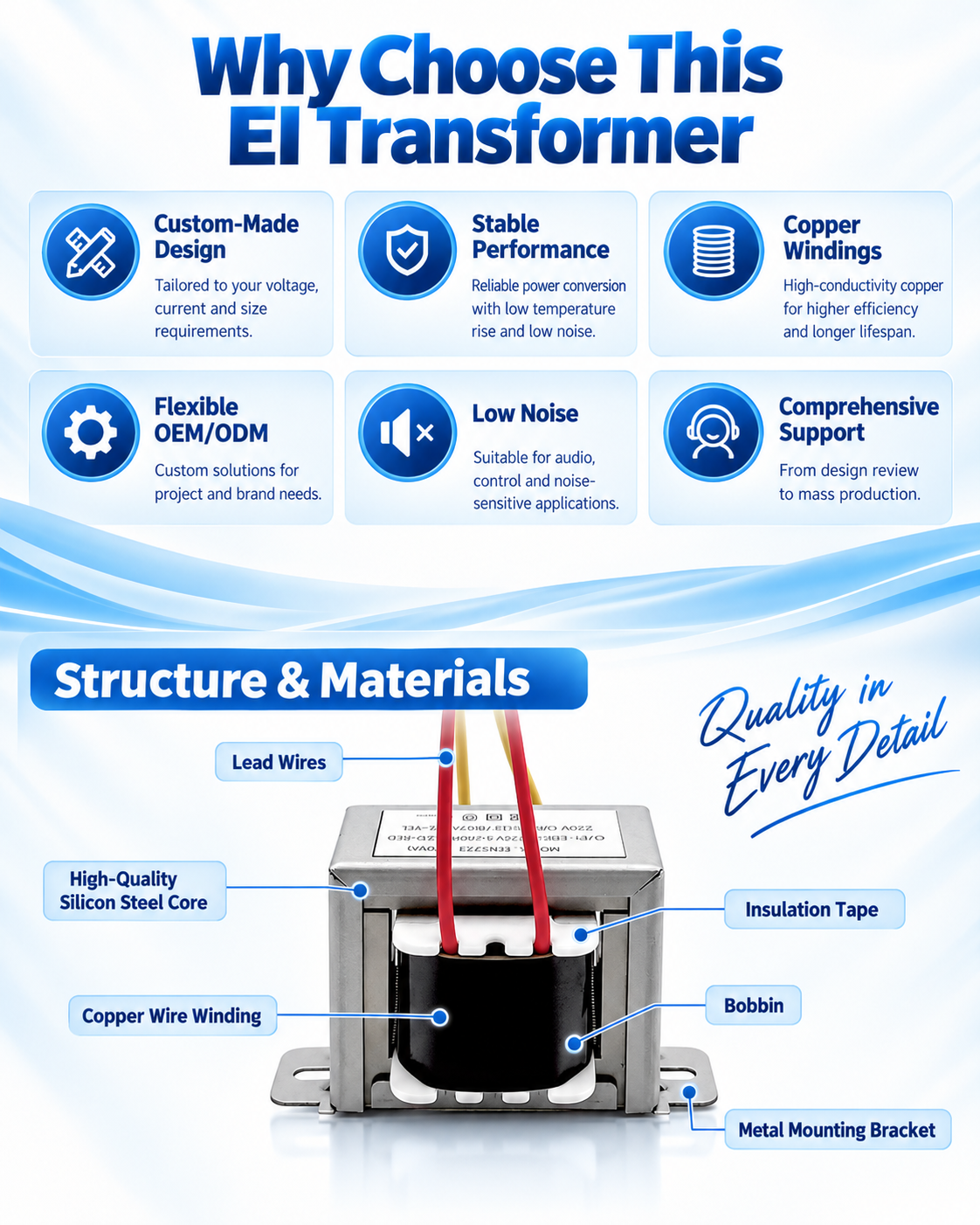
Primary and Secondary Voltage
Single or multiple primary and secondary windings can be designed for different input and output voltage requirements.
Rated Power
Rated power can be adjusted according to the equipment load, operating time, installation conditions and allowable temperature rise.
Transformer Dimensions
Core size, overall height and installation dimensions can be customized to fit the available space inside your equipment.
Lead Wire Length and Color
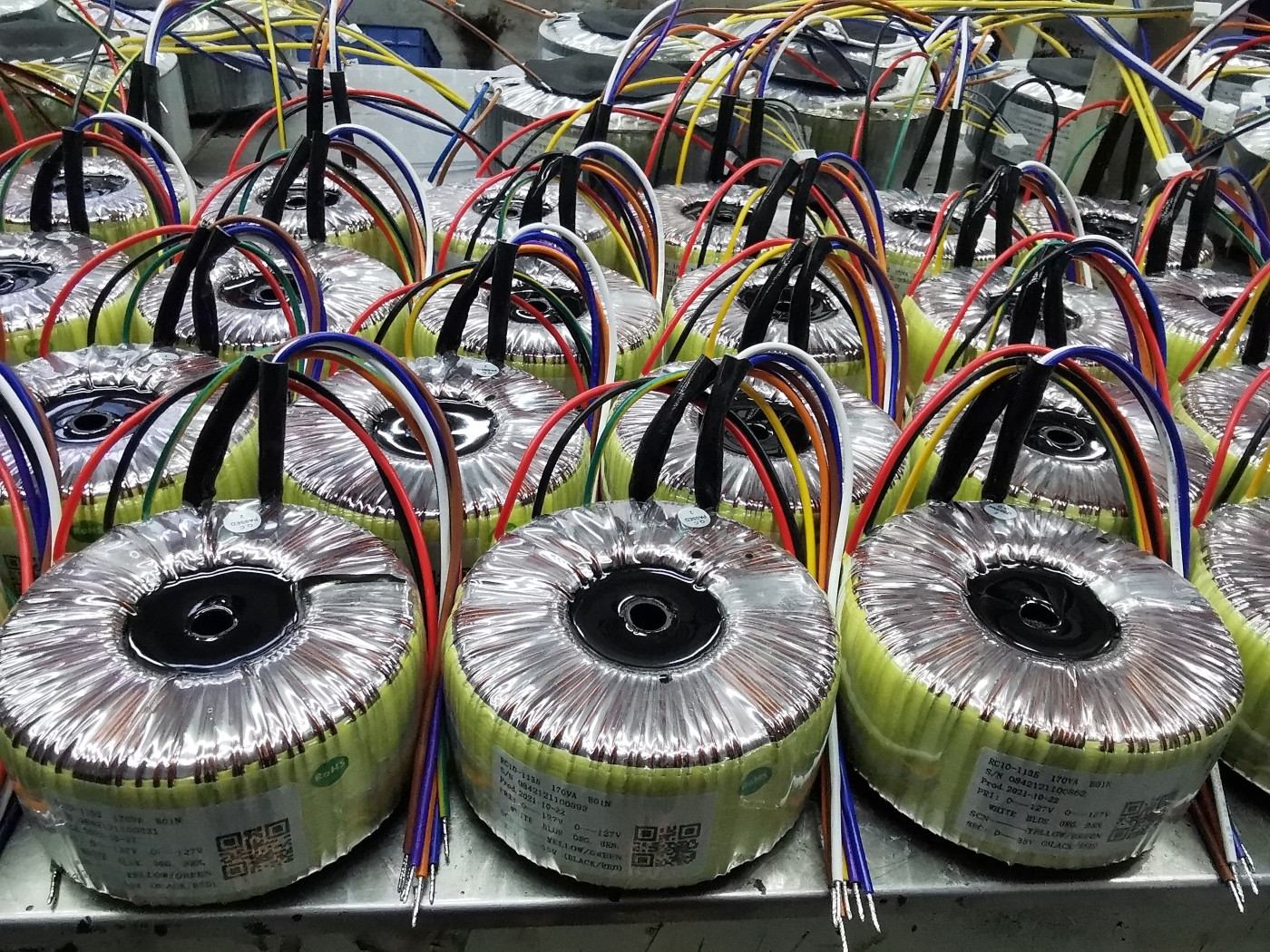
Lead wire length, wire gauge, insulation type and color coding can be produced according to your wiring diagram.
Terminals and Connectors
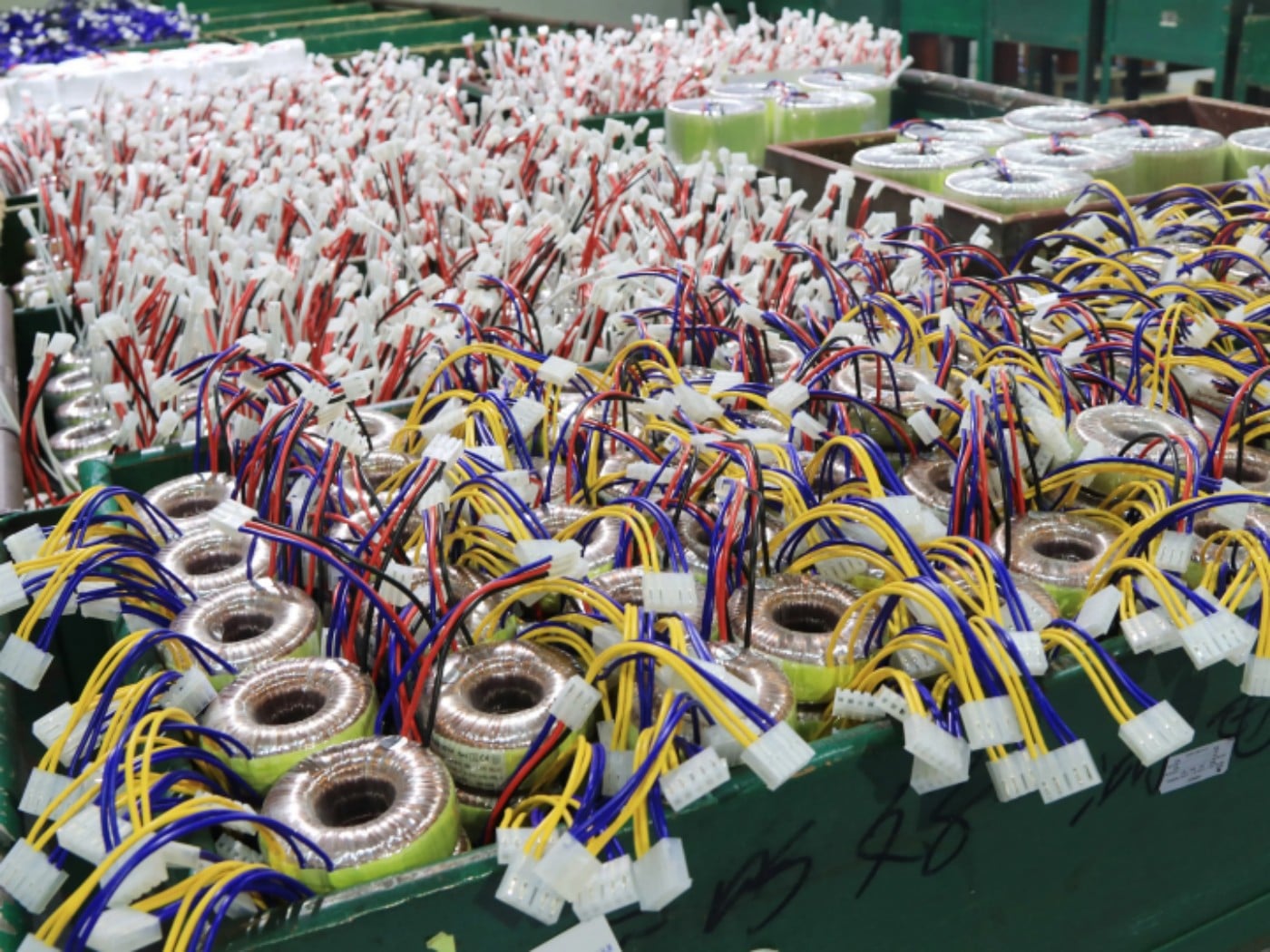
Available connection options include flying leads, solder terminals, terminal blocks and customer-specified connectors.
Electrostatic Shield
An electrostatic shield can be added between the primary and secondary windings to help reduce capacitive noise coupling.
Thermal Fuse
Internal thermal fuses or thermal protectors can be incorporated according to the required operating temperature and protection design.
Mounting Hardware
Metal clamps, mounting plates, screws, insulating pads and other installation accessories can be supplied where required.
Application Scenarios
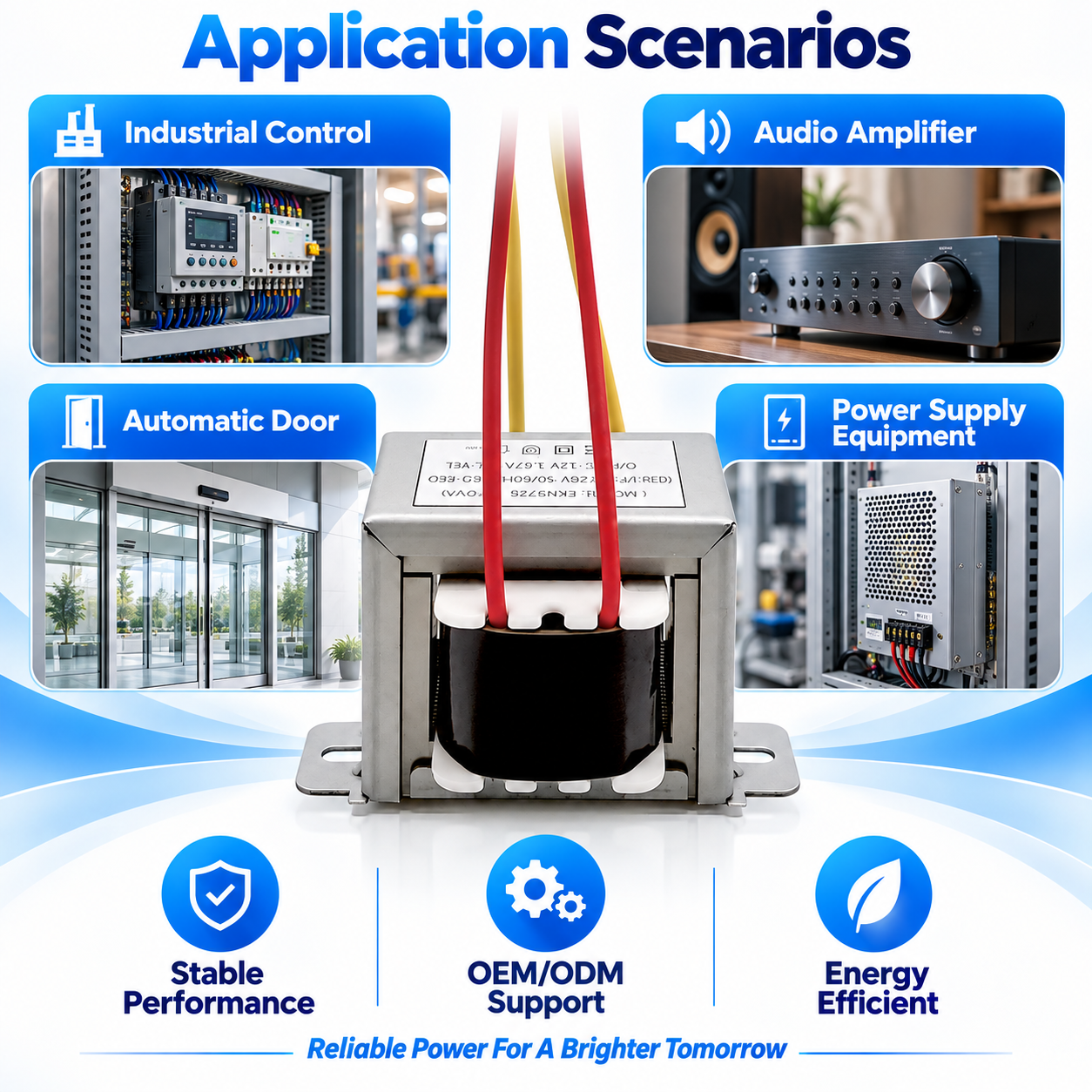
EI Transformer Applications
EI transformers provide reliable voltage conversion, electrical isolation and stable power delivery. With customizable voltages, power ratings, dimensions and mounting options, they are widely used in audio, industrial and electronic equipment.
Professional Audio Amplifiers
Provides isolated AC power for amplifier power-supply circuits where dependable voltage conversion and mechanical durability are required.
Hi-Fi Audio Systems
Suitable for integrated amplifiers, power amplifiers and other Hi-Fi equipment requiring a customized low-voltage AC supply.
Pre-Amplifiers
Can be designed for low-power audio signal equipment with application-specific voltage, shielding and noise-control requirements.
Automation and Control Systems
They can supply low-voltage AC power to relays, contactors, sensors and control circuits. Multiple secondary windings can be designed for equipment requiring different operating voltages.
Test and Measurement Equipment
EI transformers provide isolated power for laboratory instruments, testing devices and measurement systems. Voltage regulation, no-load current and insulation requirements can be optimized for the application.
Consumer and Commercial Electronics
EI transformers are also used in power supplies, charging equipment, lighting controllers and other commercial electronics requiring durable and cost-effective AC voltage conversion.
Why Choose ECKO?
Engineering and Manufacturing Support from Prototype to Production.
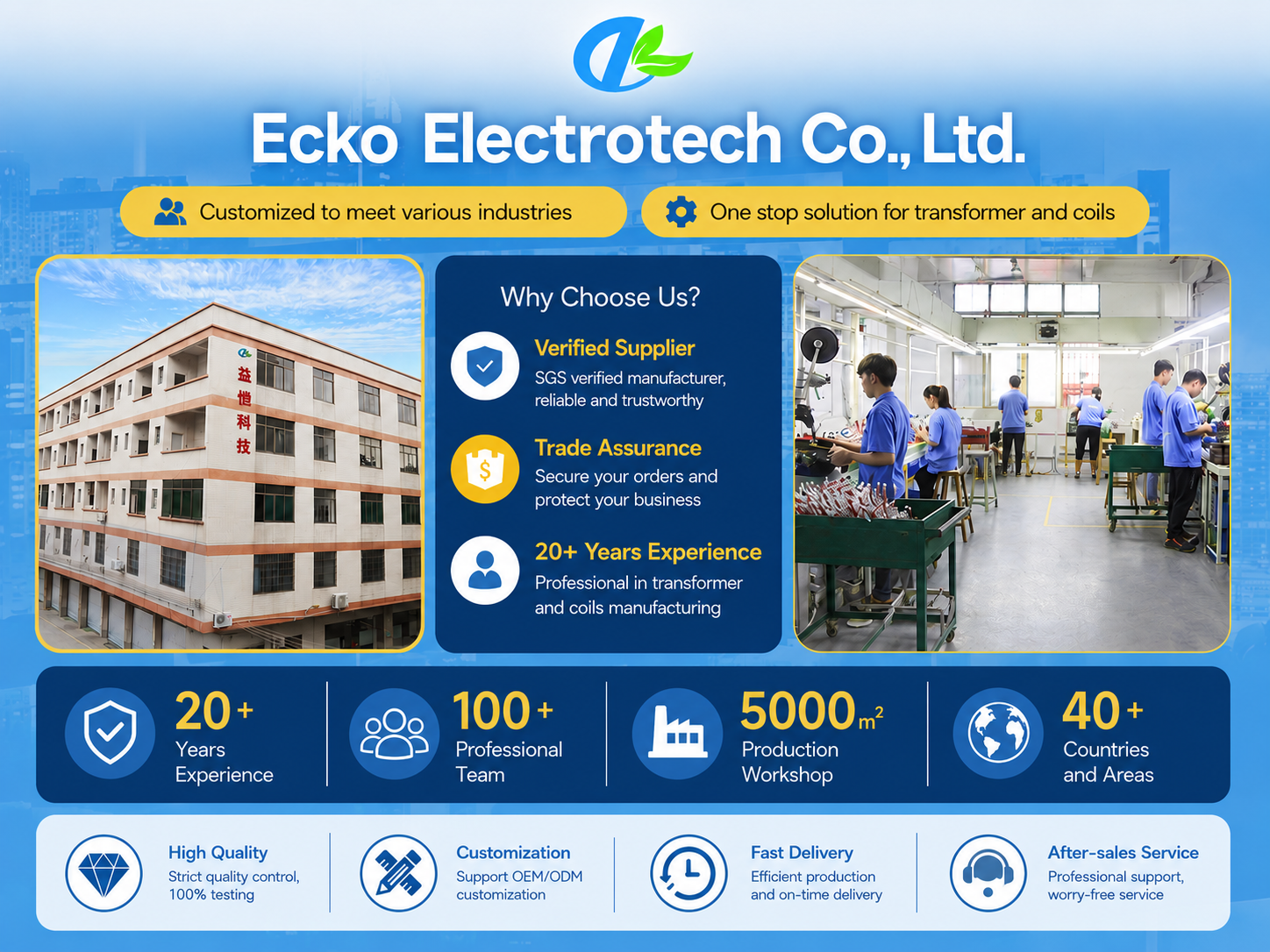
Transformer Manufacturing Experience
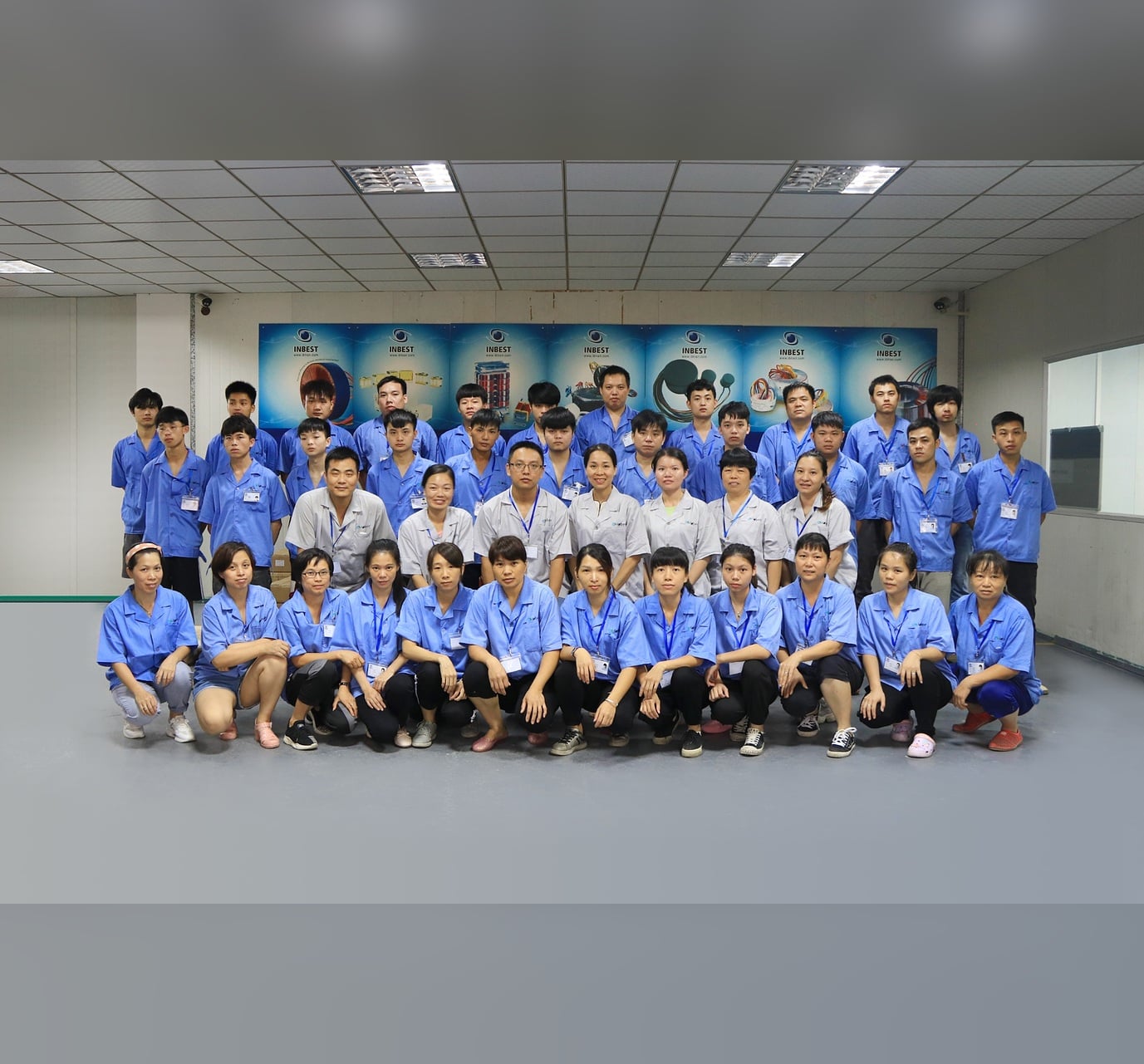
ECKO has manufactured customized transformer and wound components for industrial and commercial applications since 2000.
Engineering Design Support
Our engineering team evaluates electrical specifications, installation restrictions, insulation requirements and operating conditions before production.
Prototype Production
Prototype transformers can be produced for electrical, mechanical and application testing before mass production.
100% Electrical Testing
Production units undergo specified electrical tests before shipment to verify conformity with approved requirements.
Custom Low-Volume Production
We support customized transformer projects with flexible production quantities, subject to product design and material requirements.
Material Traceability
Key production materials can be managed through documented purchasing, incoming inspection and production records.
Drawing and Sample Approval
Mechanical drawings, electrical specifications and prototype samples can be submitted for approval before mass production.
Production and Test Documentation
Inspection records, test reports and other technical documents can be provided according to the project requirements.
Quality Testing
Electrical and Mechanical Verification
Each transformer is inspected according to its approved technical specification and quality-control requirements.
| Test Item | Purpose |
|---|---|
| Visual Inspection | Checks workmanship, insulation, wires, terminals, labels and overall appearance |
| Dimension Inspection | Confirms overall size, mounting dimensions and lead-wire requirements |
| Turns Ratio Test | Verifies the relationship between the primary and secondary windings |
| No-Load Voltage Test | Confirms secondary voltage without an applied load |
| No-Load Current Test | Evaluates magnetizing current and core assembly performance |
| Full-Load Voltage Test | Confirms output voltage under the specified rated load |
| Hi-Pot Test | Verifies dielectric strength between required circuits and accessible parts |
| Insulation Resistance Test | Checks the insulation resistance between windings and other specified parts |
| Temperature-Rise Test | Verifies thermal performance under defined operating conditions when required |
Test voltage, duration, acceptance limits and test conditions are determined by the approved specification and applicable project requirements.
Customization Process
From Your Requirements to Mass Production
1. Submit Requirements
Provide the input voltage, output voltage, rated current or power, frequency, dimensions, application and required approvals.
2. Engineering Evaluation
Our engineers evaluate electrical feasibility, core selection, winding structure, insulation system, temperature rise and mounting requirements.
3. Quotation and Drawing
We provide a commercial quotation and, where applicable, a technical drawing or specification sheet for confirmation.
4. Prototype Production
Prototype units are manufactured according to the confirmed electrical and mechanical requirements.
5. Sample Approval
The customer tests the samples and confirms the electrical performance, dimensions and installation compatibility.
6. Mass Production
Production begins according to the approved sample, drawing, bill of materials and quality requirements.
7. Final Inspection
Finished transformers undergo the required inspections and electrical tests before packing and shipment.
Product FAQ
Frequently Asked Questions
1. What information is required for customization?
Please provide:
2. Can the transformer dimensions and mounting clamp be customized?
The core size, overall dimensions, clamp shape and mounting-hole positions can be adjusted where technically feasible. A drawing of the available installation space is recommended.
3. Do you test every transformer?
Production transformers undergo the specified electrical inspections before shipment. Typical tests include turns ratio, no-load voltage, no-load current, Hi-Pot and insulation resistance. Additional tests can be arranged according to the approved inspection plan.
4. What is the typical temperature rise?
Temperature rise depends on input voltage, frequency, loading, core design, winding construction, ambient temperature and ventilation. We recommend defining the permitted temperature rise during the design stage instead of using one fixed value for every transformer.
5. Can you provide voltage-regulation data?
No-load voltage, rated-load voltage and voltage regulation can be measured or specified for an approved design. Please provide the exact load current and operating conditions.
6. Can you provide inductance and no-load current?
No-load current can be measured as part of the transformer evaluation. Primary inductance can also be measured under defined frequency, voltage and test-equipment conditions. Because inductance varies with the test method and magnetic operating point, the required measurement conditions should be agreed in advance.
7. Can the transformer support multiple output windings?
Multiple isolated or series-connected secondary windings can be designed, subject to available winding space, insulation requirements and total rated power.
8. Can the transformer be supplied with connectors?
We can supply flying leads, crimp terminals, terminal blocks or customer-specified connectors. Please provide the connector brand, part number, pin definition and wire requirements.
9. What causes the output voltage to be higher without a load?
A transformer’s no-load output voltage is normally higher than its rated full-load voltage because there is little voltage drop across the windings without load. The design must therefore consider both no-load and full-load voltage requirements.
10. Can you manufacture according to our existing sample?
We can evaluate an existing transformer sample together with its electrical specifications and installation requirements. Critical performance parameters should still be confirmed through a drawing or technical specification before production.