EN
EN

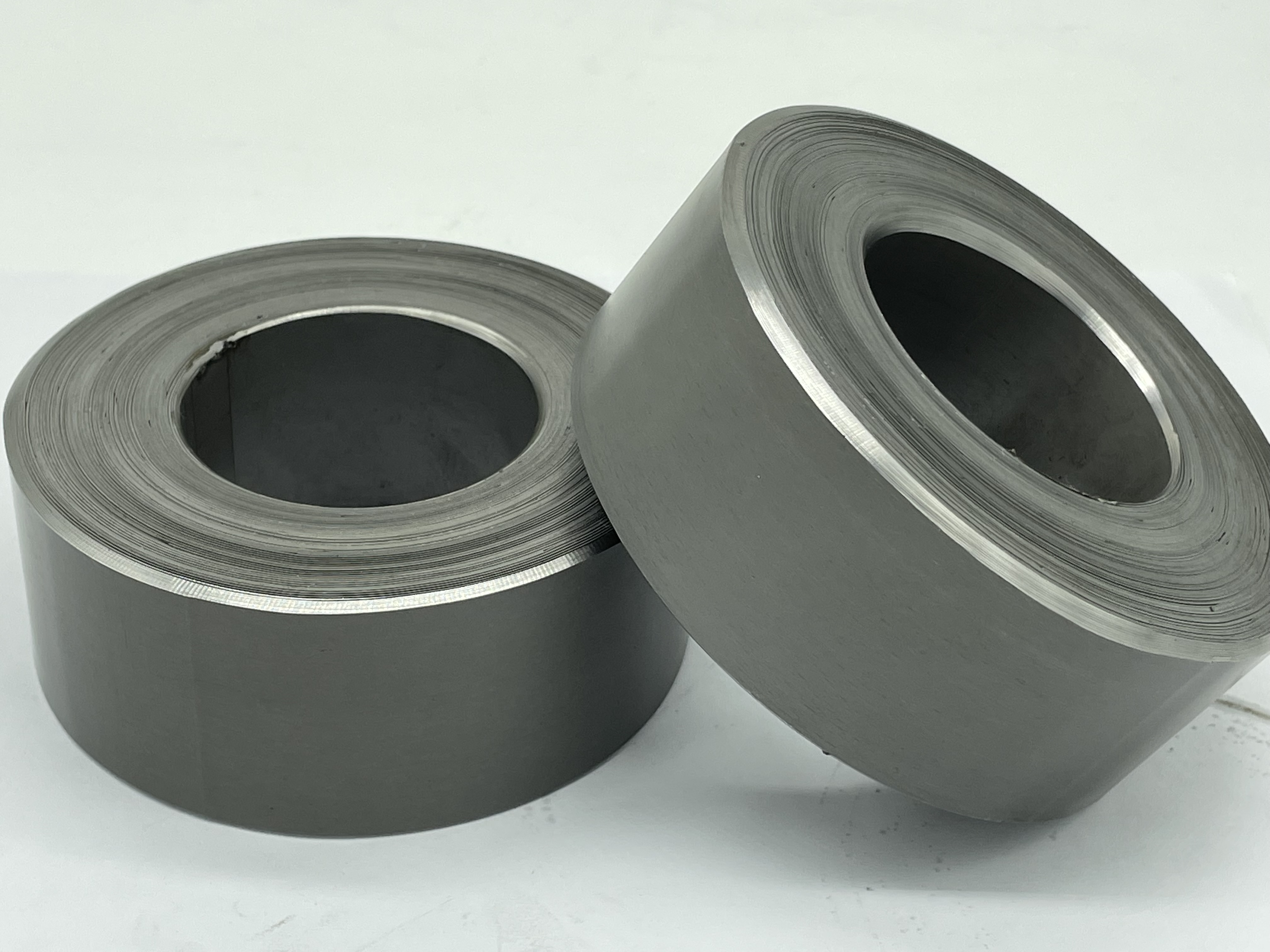
The choice between a silicon steel core and alternative core materials represents one of the most critical decisions in transformer and inductor design. A silicon steel core has been the industry standard for decades, offering a proven balance of magnetic performance, cost-effectiveness, and manufacturing maturity. However, amorphous and nanocrystalline alternatives have emerged as compelling options, each bringing distinct advantages and trade-offs that directly impact efficiency, thermal behavior, and total cost of ownership. Understanding how a silicon steel core compares to these emerging technologies is essential for engineers and procurement teams making informed investment decisions in power conversion equipment.
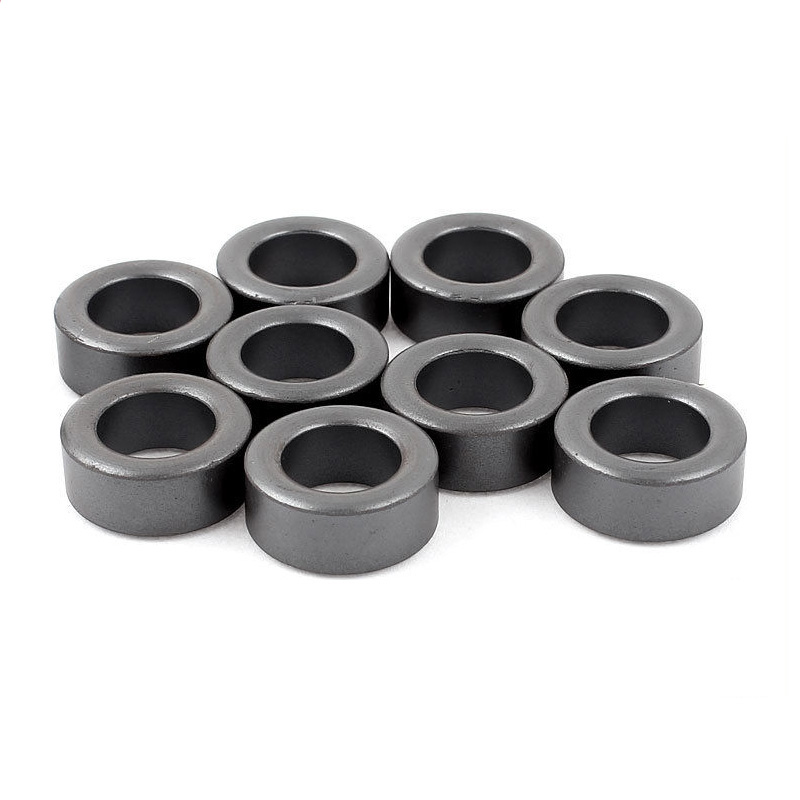
This comparison goes beyond simple performance metrics. A silicon steel core delivers reliable saturation characteristics, established thermal management pathways, and extensive historical performance data across diverse industrial applications. The silicon steel core material structure, composed of grain-oriented or non-grain-oriented electrical steel, enables predictable core loss calculations and straightforward design scaling. In contrast, amorphous and nanocrystalline cores operate under fundamentally different magnetic principles, requiring design engineers to rethink saturation behavior, thermal dynamics, and mechanical robustness. This article examines the practical implications of each material choice and provides decision-making frameworks for selecting the right core technology for your application.
Understanding Silicon Steel Core Technology and Performance Characteristics
Core Material Composition and Magnetic Properties
A silicon steel core consists of iron-silicon alloy laminations, typically containing between 0.5% and 4% silicon content by weight. The silicon steel core structure is carefully controlled through thermal processing and grain alignment to achieve optimal magnetic permeability and minimize core losses. The silicon steel core material undergoes specific rolling and annealing sequences that establish grain orientation, which directly influences how effectively the core carries magnetic flux. This controlled crystal structure makes a silicon steel core highly predictable across temperature ranges and operating frequencies. Engineers have accumulated over a century of design experience with silicon steel core materials, resulting in standardized loss curves, established thermal coefficients, and well-documented saturation flux densities that simplify design calculations and prototype validation.
Core Loss and Efficiency Performance
The core loss profile of a silicon steel core depends heavily on operating frequency and flux density. At 50/60 Hz industrial frequencies, a silicon steel core demonstrates moderate core losses, typically ranging from 0.8 to 1.5 watts per kilogram depending on material grade and flux density. A silicon steel core exhibits predictable hysteresis losses and eddy-current losses, both of which scale reliably with frequency and flux changes. This predictability enables design engineers to establish accurate efficiency models and thermal budgets. However, at higher switching frequencies encountered in modern power electronics, a silicon steel core experiences significant core loss increases due to frequency-dependent eddy-current effects, making it less suitable for high-frequency applications. The thermal behavior of a silicon steel core is well-characterized, with established temperature derating curves that guide thermal management strategy across diverse climates and duty cycles.
Amorphous Core Materials: Performance Advantages and Design Challenges
Lower Core Loss and Superior Efficiency Gains
Amorphous core technology eliminates the crystalline grain structure entirely, creating a glassy, non-crystalline material with dramatically lower core losses compared to a silicon steel core. An amorphous core achieves core losses 50% to 75% lower than comparable silicon steel core materials at the same operating frequency and flux density. This exceptional core loss reduction translates directly into higher efficiency transformers and inductors, reducing operating temperature and extending equipment lifespan. For distribution transformers operating continuously, amorphous core materials deliver cumulative energy savings that offset the material premium over years of service. The efficiency advantage of an amorphous core becomes particularly pronounced in low-load conditions, where silicon steel core losses constitute a larger percentage of total consumption. Applications such as rural electrification, green energy integration, and data center power distribution increasingly favor amorphous core designs because efficiency improvements compound across millions of operating hours.
Higher Saturation Flux Density Limitations and Design Constraints
Despite superior core loss performance, amorphous core materials operate at lower saturation flux densities compared to a silicon steel core, typically reaching 1.2 to 1.4 tesla versus 1.8 to 2.0 tesla for silicon steel core designs. This lower saturation point forces designers to increase core cross-sectional area to handle equivalent power levels, increasing material volume, weight, and physical size. An amorphous core design targeting the same kVA rating as a silicon steel core design will necessarily require larger transformer dimensions and higher material costs. Mechanical fragility represents another amorphous core limitation; the glassy material is more prone to physical damage and develops micro-cracks under mechanical stress or thermal cycling. Amorphous core materials also exhibit higher core losses at very low frequencies, making them less suitable for certain specialized applications. Design engineers selecting an amorphous core must carefully balance efficiency gains against higher capital costs, space constraints, and mechanical robustness requirements specific to the installation environment.
Nanocrystalline Core Materials: Balanced Performance and Emerging Applications
Intermediate Performance and Saturation Characteristics
Nanocrystalline core technology represents a middle ground between silicon steel core materials and amorphous alternatives, achieving grain sizes in the nanometer range through carefully controlled crystallization. A nanocrystalline core delivers core losses approximately 20% to 40% lower than a silicon steel core while maintaining higher saturation flux densities around 1.6 to 1.8 tesla. This positioning makes a nanocrystalline core attractive for applications where efficiency improvements are valuable but space or weight constraints limit the attractiveness of amorphous cores. A nanocrystalline core offers superior frequency response compared to silicon steel core designs, enabling better performance in switching power supplies and high-frequency inductive components. The mechanical properties of a nanocrystalline core generally exceed amorphous alternatives, with improved resistance to thermal cycling and mechanical stress. However, a nanocrystalline core maintains higher costs than comparable silicon steel core materials, requiring justification through measurable efficiency gains or application-specific performance requirements.
Thermal Stability and Long-Term Reliability
Nanocrystalline core materials demonstrate excellent thermal stability across extended temperature ranges, with saturation flux density maintaining relatively consistent values from cryogenic to elevated operating temperatures. A nanocrystalline core exhibits gradual, predictable core loss increases as operating temperature rises, similar to silicon steel core behavior but with lower absolute loss values. The crystalline structure of a nanocrystalline core resists thermal degradation better than amorphous materials, making it suitable for applications in challenging thermal environments. A nanocrystalline core design generally requires less sophisticated thermal management compared to high-efficiency amorphous alternatives operating at reduced loss levels. Field reliability data for nanocrystalline cores now extends to two decades in many applications, providing sufficient historical performance evidence for mission-critical equipment selection. For engineers prioritizing long-term operational stability alongside efficiency improvements, a nanocrystalline core often represents the optimal technology balance between proven reliability and performance advancement.
Comparative Decision Framework and Application Selection Criteria
Economic Analysis and Total Cost of Ownership
Selecting between a silicon steel core, amorphous core, and nanocrystalline core requires rigorous economic analysis comparing upfront material costs against operating efficiency gains over the equipment lifespan. A silicon steel core offers the lowest initial capital cost, making it the default choice for price-sensitive applications or equipment with short expected operational lives. Amorphous core designs justify higher upfront costs through exceptional efficiency, particularly in continuously-operated distribution equipment rated for 20+ year service lives in developed electrical grids. A nanocrystalline core occupies the middle ground, requiring moderate cost premiums that justify easily in industrial frequency conversion or switching power supply applications where efficiency and performance improvements deliver measurable business value. Environmental and energy cost considerations increasingly tip decisions toward lower-loss alternatives; many jurisdictions now mandate efficiency standards that effectively eliminate silicon steel core options from new equipment specifications. Design engineers must quantify regional electricity costs, equipment duty cycles, and ownership timelines to build defensible economic models supporting core material selection decisions.
Application-Specific Performance Requirements and Operational Constraints
A silicon steel core remains the optimal choice for cost-constrained utility distribution applications, industrial power transformers operating at standard frequencies, and equipment with well-established design methodologies and supply chains. A silicon steel core design excels when space and weight are unlimited, thermal management is straightforward, and efficiency improvements do not provide sufficient economic benefit to justify material cost premiums. Amorphous core technology becomes compelling for energy-critical applications such as data centers, renewable energy integration points, and utility distribution in high-electricity-cost regions where continuous operation drives cumulative efficiency value. A nanocrystalline core serves high-frequency switching applications, precision inductive components, and situations requiring both efficiency improvements and exceptional frequency response. Applications involving extreme thermal environments, severe mechanical vibration, or challenging electromagnetic compatibility requirements benefit from careful evaluation of how material choice impacts long-term reliability and maintenance costs.
FAQ
What is the primary efficiency advantage of amorphous or nanocrystalline cores compared to a silicon steel core?
Amorphous cores achieve 50% to 75% lower core losses than silicon steel core materials at equivalent operating conditions, while nanocrystalline cores deliver 20% to 40% reductions. These improvements result from the amorphous lack of crystalline grain boundaries and the nanocrystalline ultra-fine grain structure, both of which minimize eddy-current losses and hysteresis losses. For equipment operating thousands of hours annually, these efficiency differences translate into substantial cumulative energy and cost savings. A silicon steel core, while less efficient, maintains lower material costs and simpler design methodologies that often make it economically optimal for shorter-term applications or cost-sensitive markets.
Can a nanocrystalline core replace a silicon steel core in existing transformer designs without major modifications?
A nanocrystalline core cannot always serve as a direct drop-in replacement for a silicon steel core due to differences in saturation flux density, permeability characteristics, and thermal coefficients. However, a nanocrystalline core can replace a silicon steel core if design engineers recalculate core sizing, winding configurations, and thermal parameters to account for the higher permeability and different saturation behavior of nanocrystalline material. A nanocrystalline core typically allows modest reductions in core cross-section compared to silicon steel core designs at equivalent power ratings, improving efficiency and sometimes reducing overall transformer volume. Full electromagnetic simulation and prototype testing are recommended before implementing a nanocrystalline core in mission-critical applications to verify performance consistency across the expected operating envelope.
Which core material offers the best long-term reliability: silicon steel core, amorphous core, or nanocrystalline core?
A silicon steel core has demonstrated exceptional long-term reliability over more than a century of widespread use, with well-documented failure modes and established maintenance practices across diverse installations and climate regions. A nanocrystalline core now shows two decades of proven field reliability with excellent thermal cycling resistance and consistent performance across temperature variations. Amorphous cores, while chemically stable, show greater susceptibility to mechanical damage and thermal cycling stress compared to nanocrystalline cores, requiring more careful installation and environmental protection. For mission-critical applications where failure consequences are severe, a nanocrystalline core generally represents the optimal reliability choice, combining proven operational stability with efficiency improvements that justify higher initial costs.
Table of Contents
- Understanding Silicon Steel Core Technology and Performance Characteristics
- Amorphous Core Materials: Performance Advantages and Design Challenges
- Nanocrystalline Core Materials: Balanced Performance and Emerging Applications
- Comparative Decision Framework and Application Selection Criteria
-
FAQ
- What is the primary efficiency advantage of amorphous or nanocrystalline cores compared to a silicon steel core?
- Can a nanocrystalline core replace a silicon steel core in existing transformer designs without major modifications?
- Which core material offers the best long-term reliability: silicon steel core, amorphous core, or nanocrystalline core?