EN
EN

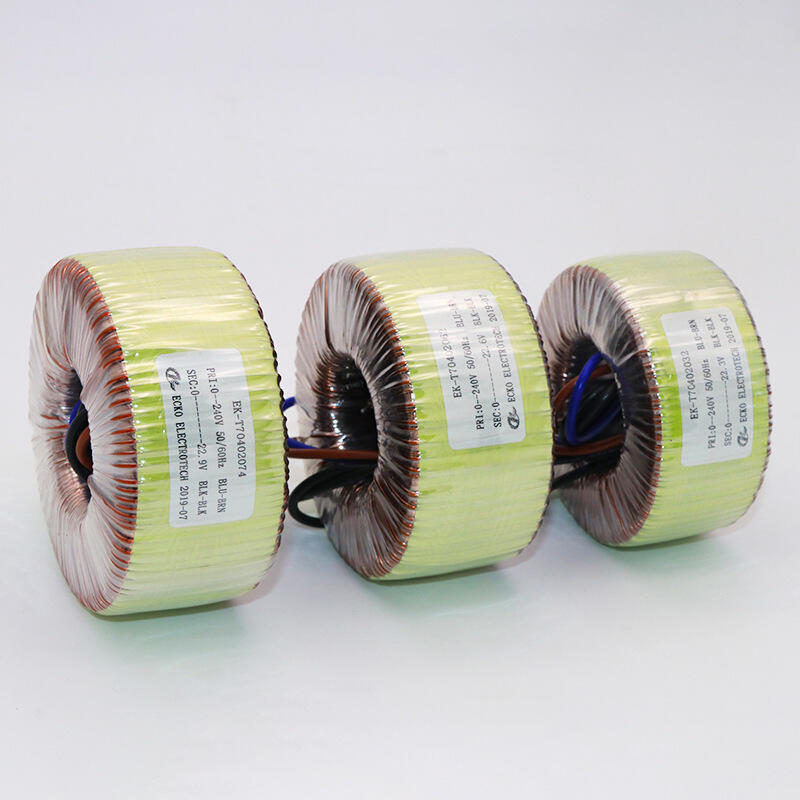
Modern audio systems demand exceptional performance from their core components, with amplifier transformers serving as the critical foundation for delivering high-quality sound reproduction. These specialized electrical devices play an essential role in converting electrical energy while maintaining signal integrity across various power levels. The relationship between transformer design and audio performance directly impacts the overall listening experience, making the selection of appropriate amplifier transformers crucial for both professional and consumer applications.
Understanding Amplifier Transformer Design Principles
Core Material Selection and Magnetic Properties
The magnetic core represents the heart of effective amplifier transformers, determining both power handling capabilities and distortion characteristics. High-grade silicon steel laminations provide superior magnetic permeability while minimizing eddy current losses that can introduce unwanted noise into audio signals. Advanced core geometries, including toroidal and EI configurations, offer distinct advantages for different amplifier applications. The grain orientation within the core material significantly influences the transformer's ability to handle high-frequency components without saturation.
Engineers carefully balance core cross-sectional area with magnetic flux density to optimize power transfer efficiency. Larger core areas allow for higher power handling without approaching magnetic saturation, which becomes critical when amplifier transformers must support dynamic audio signals with wide amplitude variations. The selection of appropriate core materials directly correlates with the transformer's ability to maintain linear operation across the entire audio spectrum.
Winding Techniques and Electrical Characteristics
Precision winding techniques determine the electrical performance characteristics of amplifier transformers under various load conditions. Primary and secondary winding ratios establish voltage transformation relationships while simultaneously affecting impedance matching between circuit stages. Copper wire gauge selection influences both current carrying capacity and internal resistance, with heavier gauge conductors providing lower losses at higher power levels. Interleaving techniques between primary and secondary windings help minimize leakage inductance, which can cause phase shifts and frequency response irregularities.
The physical arrangement of windings also impacts electromagnetic interference and crosstalk between channels in multi-channel amplifier systems. Careful attention to winding symmetry and layer distribution ensures consistent performance across all transformer outputs. Professional-grade amplifier transformers often incorporate specialized insulation materials that maintain their dielectric properties under thermal stress and high voltage conditions.
Power Output Capabilities and Thermal Management
Maximum Power Rating Considerations
Determining appropriate power ratings for amplifier transformers requires careful analysis of both continuous and peak power requirements. The transformer must handle sustained power output while providing adequate headroom for transient peaks that characterize real-world audio signals. Thermal rise calculations become essential when specifying transformers for high-power applications, as excessive heat generation can lead to premature component failure and degraded performance. Modern amplifier transformers utilize advanced thermal modeling to predict operating temperatures under various load scenarios.
Power handling capabilities depend on multiple factors including ambient temperature, ventilation conditions, and duty cycle patterns. Conservative derating practices help ensure reliable long-term operation even under demanding conditions. The relationship between transformer size, weight, and power output reflects fundamental physical limitations that cannot be overcome through design optimization alone. Engineers must balance performance requirements with practical constraints such as chassis space and weight limitations.
Heat Dissipation and Cooling Strategies
Effective thermal management enables amplifier transformers to maintain consistent performance across extended operating periods. Heat generation occurs primarily through core losses and copper losses, with the relative contribution of each varying based on operating frequency and load conditions. Toroidal transformer designs offer inherent advantages in heat dissipation due to their compact geometry and efficient magnetic field distribution. Surface area optimization through finned housings or heat sinks can significantly improve thermal performance in space-constrained applications.
Active cooling systems become necessary for the highest power applications where natural convection proves insufficient. Fan-assisted cooling must be carefully designed to avoid introducing mechanical noise that could compromise audio quality. Temperature monitoring systems provide valuable feedback for dynamic thermal management, allowing amplifier circuits to adjust their operating parameters based on real-time thermal conditions.
Distortion Minimization Techniques
Magnetic Saturation Prevention
Preventing magnetic saturation represents a fundamental requirement for maintaining low distortion in amplifier transformers throughout their operating range. Saturation occurs when the magnetic core reaches its maximum flux density, causing the relationship between applied voltage and magnetic field to become nonlinear. This nonlinearity directly translates to harmonic distortion in the output signal, particularly affecting low-frequency performance where transformer cores experience the highest flux levels. Proper core sizing ensures adequate magnetic headroom even during peak signal conditions.
DC offset in the primary winding can push the magnetic core toward saturation even at modest AC signal levels. Air gaps in the magnetic circuit help prevent DC saturation while maintaining acceptable AC performance characteristics. The trade-off between DC tolerance and AC efficiency requires careful consideration based on the specific amplifier topology and expected operating conditions. Advanced core materials with higher saturation flux densities provide additional margin against saturation-induced distortion.
Frequency Response Optimization
Achieving flat frequency response across the audio spectrum requires careful attention to parasitic elements within amplifier transformers. Leakage inductance creates high-frequency rolloff that can affect transient response and overall bandwidth performance. Minimizing leakage inductance through tight magnetic coupling between windings helps extend the useful frequency range of the transformer. Distributed capacitance between windings can cause resonant peaks that introduce coloration to the audio signal.
Phase response linearity becomes increasingly important in high-fidelity audio applications where accurate signal reproduction takes priority over simple power delivery. Group delay variations across the audio spectrum can cause audible artifacts even when amplitude response remains relatively flat. Careful transformer design can minimize these phase-related distortions while maintaining adequate power handling capabilities. Computer modeling tools help predict frequency response characteristics during the design phase, reducing the need for extensive prototype testing.
Applications in Professional Audio Systems
Studio Monitor and Reference Systems
Professional studio environments demand amplifier transformers with exceptional linearity and minimal coloration to ensure accurate audio monitoring and mixing decisions. Reference monitor systems require transformers that maintain consistent performance across wide dynamic ranges without introducing audible artifacts. The neutral character of well-designed transformers becomes essential when audio professionals need to evaluate subtle mix balance adjustments and frequency response variations. Temperature stability ensures consistent monitoring performance throughout extended recording sessions.
Multi-way speaker systems often incorporate multiple amplifier channels, each requiring dedicated transformer sections with matched electrical characteristics. Channel-to-channel consistency prevents imaging shifts and tonal imbalances that could compromise stereo or surround sound reproduction. Isolation between channels helps maintain proper separation and prevents crosstalk that might blur spatial information in complex mixes. Professional-grade amplifier transformers often incorporate additional shielding to minimize interference from external electromagnetic sources.
Live Sound Reinforcement Applications
Live sound applications present unique challenges for amplifier transformers due to variable load conditions and demanding reliability requirements. Concert and touring systems must operate reliably under extreme conditions while delivering consistent power output to large-scale speaker arrays. The ability to handle reactive loads and impedance variations becomes critical when driving multiple speaker cabinets with different electrical characteristics. Robust construction techniques help ensure reliable operation despite physical vibration and temperature cycling.
Power distribution considerations become complex in large venue applications where multiple amplifier channels must operate from common transformer secondaries. Load balancing and current sharing help optimize system efficiency while preventing individual transformer sections from becoming overloaded. Fault tolerance features protect both the amplifier transformers and connected equipment from damage during abnormal operating conditions. Modular transformer designs facilitate field servicing and component replacement when necessary.
Selection Criteria for Optimal Performance
Electrical Specification Matching
Proper specification matching ensures that amplifier transformers operate within their optimal performance envelope while meeting system requirements. Voltage ratio selection must account for both primary supply variations and secondary load requirements across the expected operating range. Current ratings should provide adequate margin above normal operating levels to accommodate transient conditions and aging effects. Impedance matching between transformer outputs and amplifier input stages affects both power transfer efficiency and noise performance.
Regulation characteristics determine how well the transformer maintains consistent output voltage under varying load conditions. Tight regulation becomes particularly important in amplifier applications where supply voltage variations can affect bias conditions and overall performance. The transformer's ability to maintain stable operation during load changes directly impacts the amplifier's dynamic response characteristics. Specification sheets should include performance data across the full range of expected operating conditions.
Mechanical and Environmental Considerations
Physical size and mounting requirements significantly influence transformer selection for space-constrained amplifier designs. Weight distribution affects chassis balance and mechanical stability, particularly in portable or rack-mounted applications. Mounting orientation can impact both thermal performance and magnetic field radiation patterns that might affect nearby sensitive circuits. Vibration resistance becomes important in mobile applications or environments with significant mechanical disturbance.
Environmental protection levels must match the intended operating conditions to ensure reliable long-term operation. Humidity resistance, temperature cycling tolerance, and contamination protection all factor into transformer longevity and maintenance requirements. Compliance with relevant safety standards ensures proper installation practices and reduces liability concerns in commercial applications. Documentation and certification requirements vary by application and geographic region.
FAQ
What determines the power rating of amplifier transformers
The power rating depends on core size, copper wire gauge, thermal design, and intended duty cycle. Larger cores handle higher flux levels without saturation, while heavier wire gauges reduce resistive losses. Thermal management capabilities limit continuous power output, making cooling design critical for high-power applications.
How do toroidal designs compare to traditional EI core transformers
Toroidal amplifier transformers offer lower magnetic radiation, reduced size, and improved efficiency compared to EI core designs. The circular geometry provides better magnetic field containment and typically results in lower noise levels. However, EI cores may offer cost advantages and easier customization for specific voltage requirements.
What causes distortion in amplifier transformers and how can it be minimized
Distortion primarily results from magnetic saturation, nonlinear core materials, and parasitic elements like leakage inductance. Prevention strategies include proper core sizing, high-quality magnetic materials, tight winding coupling, and avoiding DC offset in the primary circuit. Quality control during manufacturing also affects long-term distortion performance.
Why is impedance matching important for amplifier transformer performance
Proper impedance matching maximizes power transfer efficiency and minimizes reflections that can cause frequency response irregularities. Mismatched impedances result in power loss, potential instability, and degraded signal quality. The transformer's impedance characteristics must complement both the driving circuit and the load requirements for optimal performance.